
EN 50604
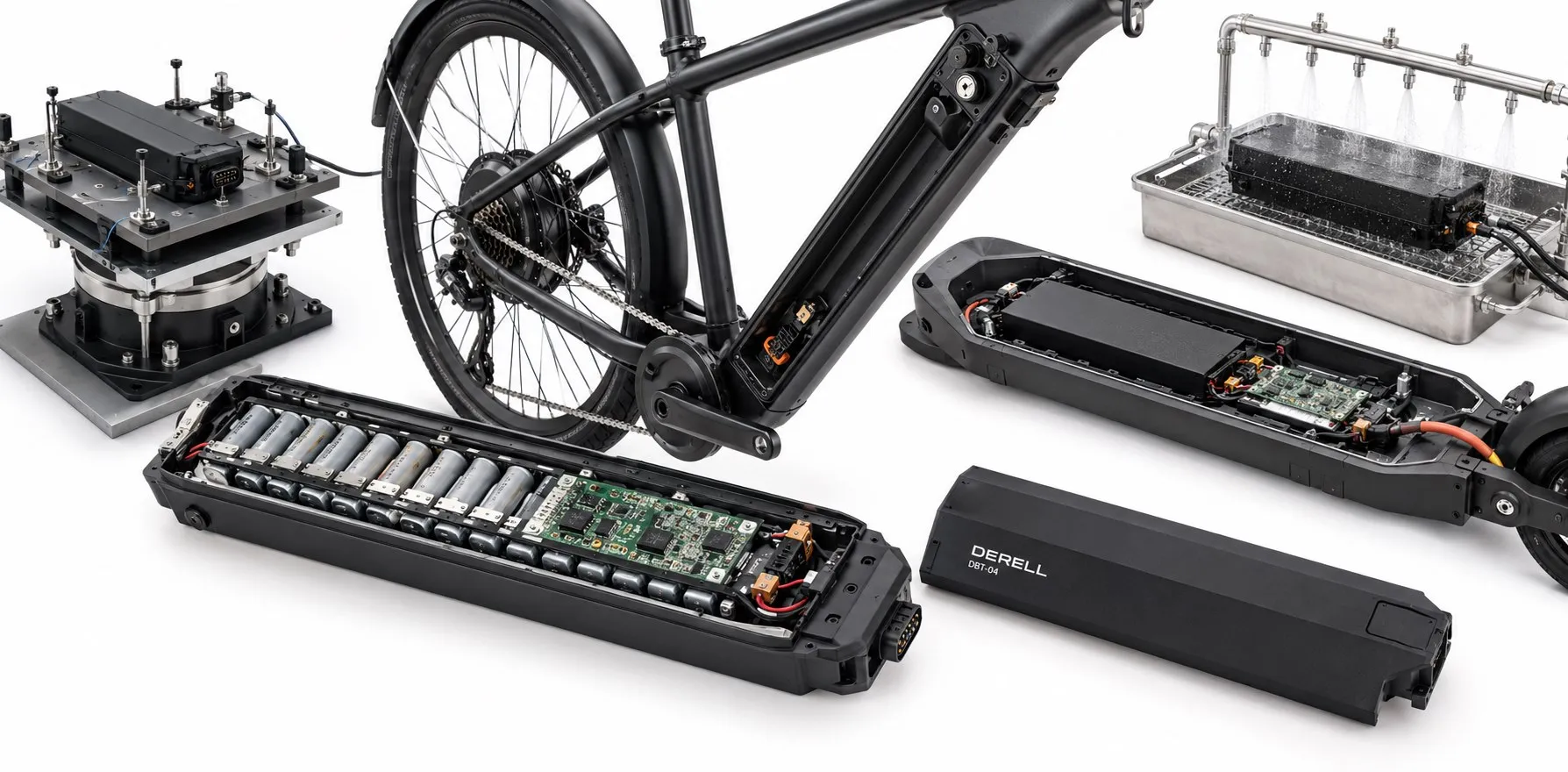
Battery safety in light electric vehicles: beyond capacity
EN 50604-1 is the key document behind the EN 50604 reference for rechargeable lithium batteries used in light electric vehicles. It sets out general safety requirements and test methods. Choosing a lithium-ion battery for an e-bike or another relevant light vehicle involves more than comparing capacity and advertised range. The battery chemistry, protective electronics and connections all matter.
Which edition and which product?
The European text comprises EN 50604-1:2016 with amendments A1:2021 and A2:2025, shown in consolidated form as EN 50604-1:2016+A1+A2:2025. Amendment A2 clarifies questions raised by test institutes about applying the standard. A report that says only “EN 50604” leaves the edition and amendments unclear.
The standard addresses traction battery packs and systems in voltage classes A and B. Relevant applications include L1–L7 vehicles and electrically propelled or assisted cycles. Check the precise scope for removable packs and the built-in arrangements covered by the document. A cell assessment and a complete pack assessment are different tasks; the IEC 62660 series is a relevant reference for electric vehicle cells.
What does a safety assessment examine?
The test framework considers mechanical stresses, climatic exposure, electrical hazards and system functionality. Topics include condensation during temperature changes, thermal shock, simulated accident conditions, water immersion and fire exposure. The question is how the battery behaves under defined stresses, rather than simply whether it powers the vehicle. Applicable tests and acceptance criteria must follow the relevant edition and the product's scope.
An immersion test does not grant unrestricted waterproof use. Nor does a safety assessment promise a particular range or service life for every battery type. The standard should not be treated as a general safety manual covering battery storage operations, vehicle production or repair and maintenance services.
Protection depends on the complete design
A suitably designed battery management system, or BMS, monitors cell voltages, current and temperature, with protection against overcharge, over-discharge, excessive current and overtemperature. Temperature measurement may use an NTC sensor; current measurement may use a shunt or a Hall-effect current sensor. A fuse provides another protective element. These are design examples, not a requirement for every pack to use identical components.
“Includes a BMS” is not enough to establish safety. Measurement accuracy, protection thresholds, connections and fault response determine what the system actually does. Modifying or bypassing the protection changes the battery configuration that was assessed.
Charger compatibility is more than a matching plug
Use a battery charger approved for the battery system. Check charging voltage, current limits, chemistry, polarity and any required communication. A physically compatible connection accessory does not establish electrical compatibility. In a system using CAN communication, matching voltage and connector shape does not establish that the required messages and charging permission are present.
Consider the whole electric vehicle and charging system: the battery, motor control and charger operate together. Vehicle charging standards address different questions from battery pack safety. The battery's nominal voltage alone is insufficient to select the charger's output settings.
A practical energy comparison: nominal 36 V × 10 Ah ≈ 360 Wh, while 36 V × 15 Ah ≈ 540 Wh. The second battery pack carries more nominal energy. That calculation does not establish greater safety or vehicle compatibility. Current capability, weight, mounting and manufacturer approval still need checking.
Keep the standards' purposes separate
IEC 62133 concerns portable rechargeable battery safety; IEC 62660 addresses electric vehicle cells; UN 38.3 concerns lithium battery transport testing. For non-rechargeable primary batteries, consult the IEC 60086 series. These scopes do not substitute for one another. Start with the application when using our battery standards guide.
Editor's note: Ask what the evidence covers, not just whether a certificate exists. Request the report number, pack model, cell type, BMS version and approved charger. The report must match the product being supplied. Reusing the same enclosure with different cells does not automatically bring the changed product within an earlier assessment.
Related reading
Lithium-ion batteries · Battery chargers · IEC 62660 · IEC 62133 · Vehicle charging standards · Battery standards
Sources: EN 50604-1:2016+A1+A2:2025 · A2:2025 · SIST · VDE SPEC 90035 · VDE · Texas Instruments