
What is the difference between torque and power?
Hello esteemed colleagues,
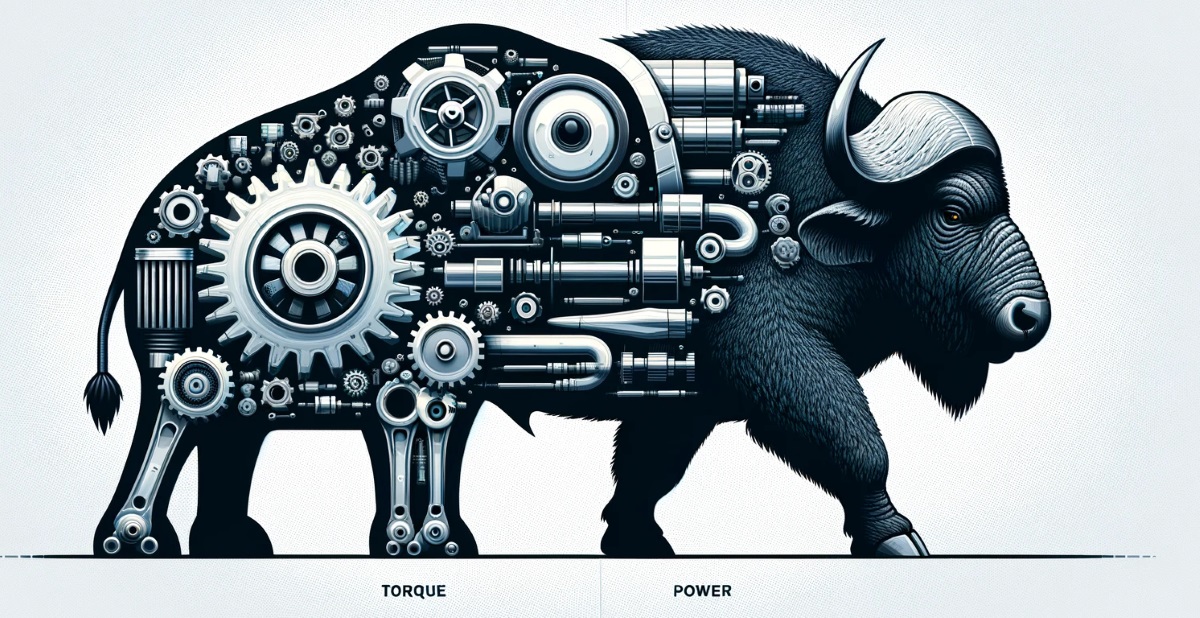
Torque and power are both measures of an engine's or motor's performance, but they are different concepts that tell us different things. Here's a detailed yet simple explanation:
Torque
What it is: Torque is the rotational force that an engine or motor produces. Imagine trying to open a tight jar lid; the force you apply to twist the lid is essentially torque.
Units: Measured in Newton-meters (N·m) or pound-feet (lb·ft).
When it's Important: Torque is crucial at lower speeds and helps to get a vehicle moving from a standstill. It's also important in situations requiring a lot of force, like pulling heavy loads.
Simple Analogy: Think of torque as the "muscle" of an engine. More torque means the engine can do more "heavy lifting."
Power
What it is: Power is the rate at which work is done, or equivalently, how fast torque is delivered. If torque is about "how much," power is about "how fast."
Units: Measured in watts (W) or horsepower (hp).
When it's Important: Power becomes more critical at higher speeds and for acceleration. It's what helps your car reach a high speed quickly.
Simple Analogy: Think of power as the "speed" of an engine. More power means the engine can do the work more quickly.
Key Difference
Torque gives you the "strength" or "muscle" to do work, but it doesn't tell you how quickly that work will be done.
Power tells you how fast the work can be done. It's torque multiplied by the speed of rotation (RPM, or Revolutions Per Minute).
So, in a nutshell:
Torque = "How much work can be done"
Power = "How fast that work is done"
They are closely related but answer different questions about an engine's performance.
"Torque and motors that produce torque are present in every aspect of our lives, whether in electrical or mechanical forms. We've tried to answer the most frequently asked questions about the torque capacities of electric motors below.
- What is the difference between torque and power?
- What are the units of torque?
- Why is torque important when selecting a motor?
- What advantages does a high-torque motor provide?
- What disadvantages does a low-torque motor bring?
- How is a balance between torque and speed achieved?
- What is the relationship between torque and horsepower in cars?
- Why do electric vehicles generally produce high torque?
- How can torque be increased?
- What is the effect of torque on mechanical systems?
- What is the relationship between torque and rotational speed?
- How are motors categorized based on their torque-producing capacity?
- What types of motors produce high torque?
- How is torque control achieved?
- What is a torque multiplier and how is it used?
- What problems can sudden torque increases cause?
- Is there a difference in torque between stepper motors and servo motors?
- What is the starting torque?
Your shopping cart is empty!