
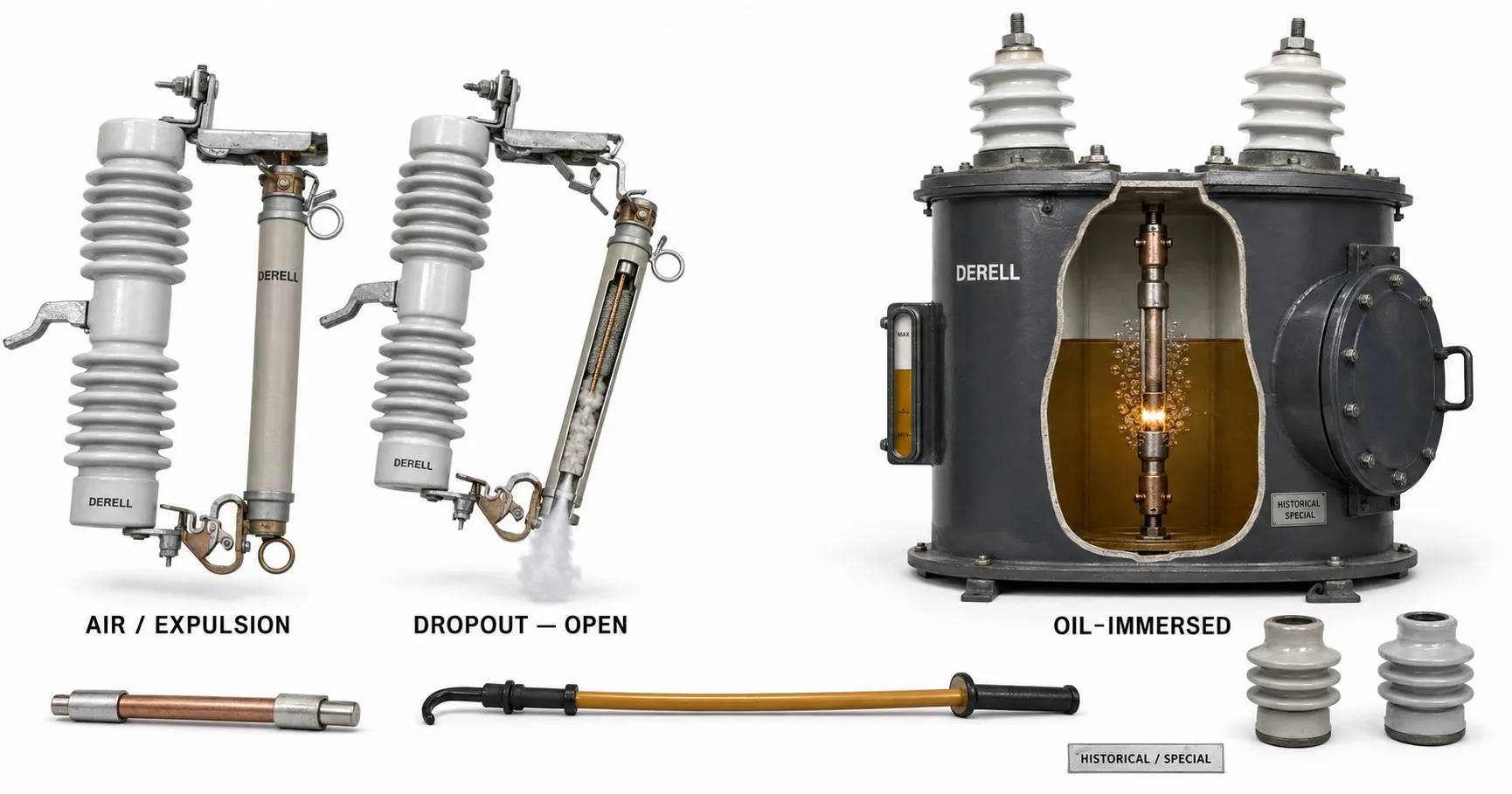
High-voltage fuses are protective devices used to limit damage caused by excessive current in distribution transformers, voltage transformers, motor circuits and capacitor circuits. Also used in medium-voltage distribution, these products require selection based on system voltage, load behaviour, interrupting capability and mechanical compatibility. Browse the fuse product range for product options.
How does a high-voltage fuse work?
The fusible element inside an electrical fuse responds to the heat produced by current flowing through it. When sufficient overcurrent persists for long enough, the element melts. However, melting is only the first stage of interruption: the resulting electrical arc must also be extinguished. The body, internal construction and arc-quenching arrangement are designed to complete this process under specified voltage and fault-current conditions.
A fuse should therefore not be treated as a simple threshold switch that opens the instant its rated current is exceeded. Operating time depends on the magnitude of the current. A transformer fuse that must withstand a short energisation surge may behave differently from a fuse selected for another load. Differences between fuse types involve the interrupting method and protection characteristic as well as physical appearance.
Current-limiting and expulsion fuses
Current-limiting fuses reduce peak fault current and let-through energy within the current-limiting region specified by the manufacturer. Common constructions surround the fusible elements with quartz filler inside an insulating body. The degree of current limitation is not the same at every current level. Assess equipment short-circuit withstand using the manufacturer's cut-off and let-through energy curves.
Expulsion fuses use the flow and cooling effect of gases produced during arcing to help interrupt the circuit. In dropout arrangements, movement of the fuse tube to the open position also helps identify an operated assembly. Their interrupting behaviour differs from that of current-limiting fuses. Choosing the appropriate fuse type depends on the installation, protected equipment and requirements of the existing switchgear.
Operation in air or under oil is a separate application requirement. A fuse intended for under-oil use must meet the specified sealing and temperature conditions. Assess the arc-quenching method and the surrounding installation medium separately.
Six specifications to compare
Voltage and system type: The rated voltage or specified operating voltage range must suit the highest system operating voltage. A higher kV rating alone does not establish suitability. Check AC/DC application, frequency and permitted operating conditions in the technical documentation.
Rated current: Select the fuse current rating by considering continuous load current, transformer rating, energisation inrush, motor starting and ambient conditions. The fuse must carry normal operating current while opening in time to protect the equipment. Two products with the same ampere rating can respond differently to the load.
Breaking capacity and interrupting range: The calculated prospective short-circuit current must not exceed the stated breaking capacity. Some types also have a specified minimum breaking current. The upper kA rating is therefore only part of the assessment: the lower fault currents that the fuse can interrupt must also be known.
Time-current characteristic and coordination: Compare the fuse curve with temporary load currents, the protected equipment's withstand curve and other protective devices. A fast-acting or time-delay characteristic alone is not a complete selection criterion. Compare the fuse selection criteria against the application's actual current levels and durations.
Body, connections and striker mechanism: Match length, diameter, end caps, contact surfaces and mounting. For striker-equipped models, verify striker force, travel and compatibility with the tripping mechanism. The presence of a striker does not establish identical tripping functionality in every assembly.
Installation and operating environment: Compare indoor/outdoor use, temperature, heating inside enclosed switchgear, altitude and operation in air or under oil with the manufacturer's limits. In industrial fuse applications, power dissipation and mounting conditions also matter alongside nameplate ratings. Check the applicable fuse standards and documented scope for the specific model being purchased.
Transformer, motor and capacitor applications
When selecting a primary-side fuse for a power transformer, consider energisation inrush and coordination with secondary protection as well as normal load. For motor circuits, starting duration and frequency matter; capacitor applications require consideration of switching currents and the particular circuit characteristics. Transformer capacity or motor kW alone is insufficient selection information.
In relay-protected arrangements, establish the division of duties between the fuse, circuit breaker or contactor and protection relay. The ratio and application suitability of current transformers in the measurement and protection chain are also part of this arrangement. Auxiliary control relays, instrument transformers and high-voltage fuses must each be selected according to their technical function and operating limits.
Information needed before ordering or replacement
If the required option is not listed, send the relevant seller the existing part number or a clear nameplate photograph, system voltage, load type and rating, fuse length and diameter, end connections and mounting details. Include the short-circuit calculation, protection design and striker information where available. Prices, availability and delivery terms are determined through the relevant product listing or seller.
Installing a higher-rated fuse without investigating why the original fuse operated can change the behaviour of the protection arrangement. When assessing signs that a fuse needs replacement, continuity testing alone is insufficient; the body, connections and mechanism also require inspection. High-voltage inspection and replacement must be performed by authorised personnel under the site's safe working procedure and the applicable fuse replacement safety precautions.
Complementary panel control and indication products
For the installation's auxiliary control circuits, explore relays and sockets, power supplies, control push buttons, indicator lights and auxiliary contacts. Other options are available in the switchgear and control components category. Check each component's supply voltage, contact rating, insulation and mechanical compatibility against the requirements of its own circuit.