
FAQ For Robotic
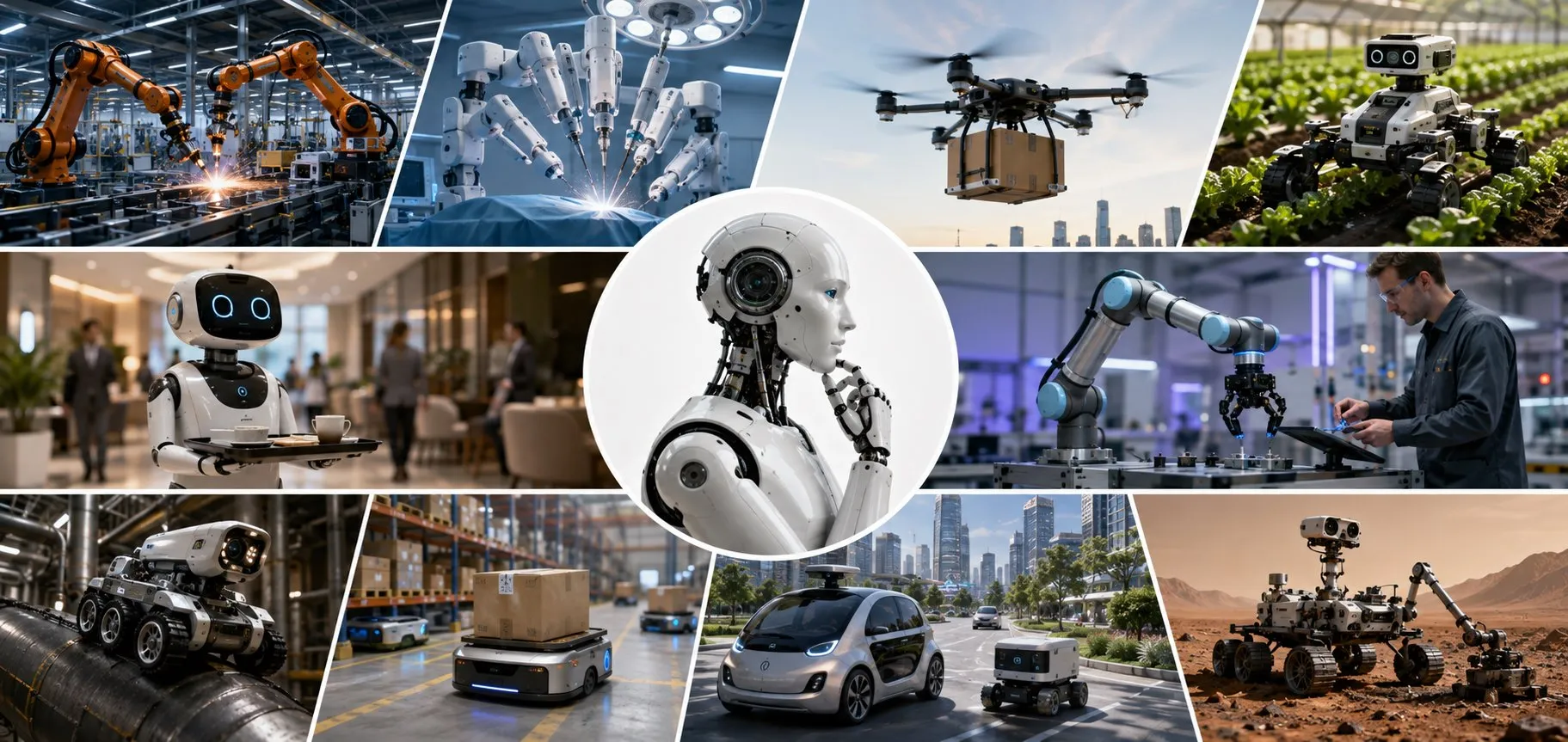
A practical starting point for understanding robots
What makes a robot work, and what can it realistically do? This guide brings together questions about robot hardware, control, artificial intelligence, applications and safety. Each question opens a detailed explanation. The short descriptions help you choose the topic that matches your interests.
For a first introduction, begin with components and operating principles, then explore sensors, actuators and programming. For an application, also consider risks, practical limitations and operating conditions. Robots come in many forms: a humanoid shape and machine learning are not requirements for every robotic system.
Start with the fundamentals
What is robotics?
How mechanics, electronics and software work together.
What are the main components of a robot?
Structure, power, sensors, actuators and controllers.
How does a robot work?
From observations to decisions, movement and feedback.
How does a robot differ from a machine?
Programmable motion and flexibility in performing tasks.
What types of robots are there?
Robot arms, mobile platforms and other configurations.
What is a humanoid robot?
Human-like form, balance and movement.
Explore sensing, control and learning
How do sensors and actuators work in robotics?
Connecting measurements with physical action.
What does programming contribute to robotics?
Task sequences, motion commands and failure handling.
How does artificial intelligence relate to robotics?
Perception, decisions and adaptable behaviour.
How is machine learning applied to robotics?
Learning from data and distinguishing training from operation.
Find applications beyond the laboratory
How are robots used across industries?
Production, assembly, handling and inspection.
Where do we encounter robotics in everyday life?
Examples from domestic and service applications.
How are robots used in medicine and healthcare?
Healthcare tasks and the limits of each application.
What do robots contribute to space exploration?
Remote operations, exploration and demanding environments.
What is the role of robotics in autonomous vehicles?
Perception, localisation and motion planning.
Assess risks, limitations and wider effects
What safety issues matter in robotics?
Application hazards and protective measures.
What limits current robot technology?
Manipulation, generalisation, physical limits and integration.
What ethical questions arise in robotics?
Responsibility, privacy and effects on people.
How does robotics affect employment and the economy?
Changing jobs, skills and productivity.
Where is robotics heading?
Emerging capabilities and unresolved challenges.
A brief literary background
The name robot became widely known through Karel Čapek’s play R.U.R. — Rossum’s Universal Robots, published in 1920 and performed in 1921. His brother Josef Čapek suggested the name, drawing on the Czech word robota, associated with forced labour and drudgery. The play’s artificial workers were not simply early versions of modern metal robot arms.
Isaac Asimov’s fiction helped establish the language and ideas of robotics. His story Runaround, published in 1942, presented the Three Laws together. Their hierarchy can be summarised as follows.
First: Prevent harm to people, including harm caused by failing to act.
Second: Follow human orders when doing so does not violate the first rule.
Third: Preserve the robot’s own existence when that does not conflict with the first two rules.
Robots in fiction and popular culture
Which films and series explore robots?
Fictional robots and their relationships with people.
This guide explains the underlying concepts. Check application details against the relevant manufacturer documentation. You may share the content with attribution to Otomasyon AVM.
References: Czech Republic — Origins of the word robot · Computer History Museum — Asimov’s account (PDF) · Universal Robots — Application safety