
How does a pump work?
Hello valued colleagues,
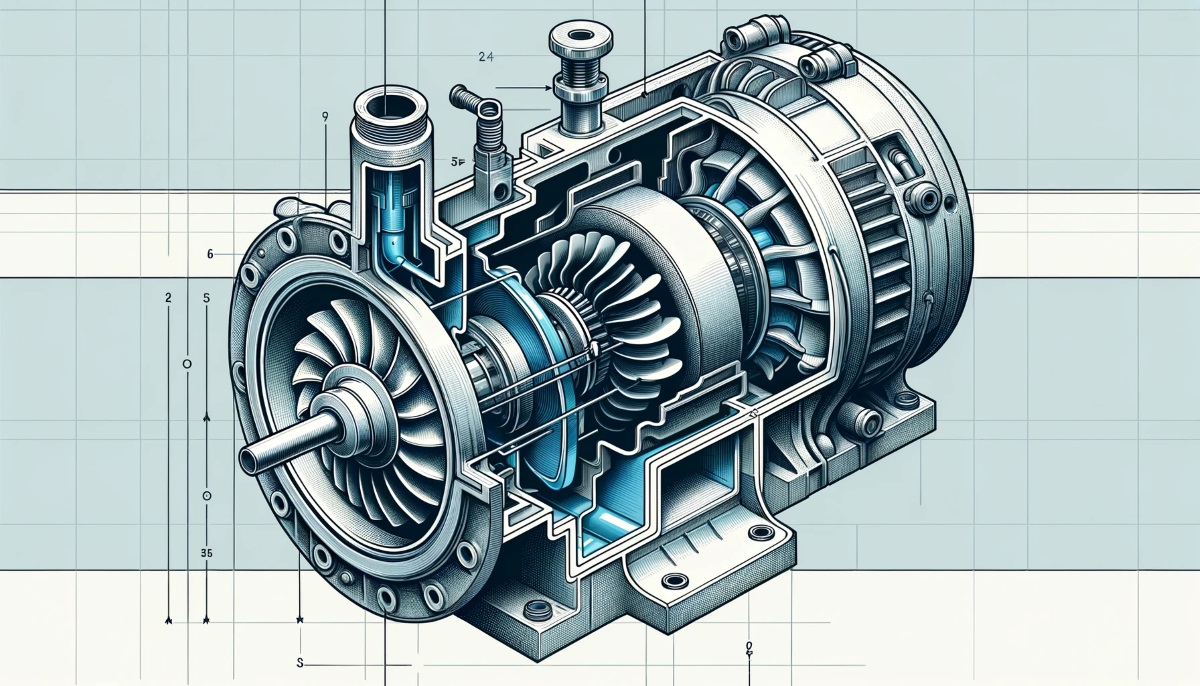
The basic working principle of a pump depends on its type, but generally, pumps function by creating a low-pressure area into which fluid is drawn and then pushed out under high pressure.
Let's discuss the operation of two main types of pumps: centrifugal pumps and positive displacement pumps.
Centrifugal Pumps: These pumps operate on the principle of centrifugal force. The pump has an impeller, which is a wheel with vanes. When the impeller spins, it creates centrifugal force which pulls fluid into the pump. This fluid is then pushed along the impeller's vanes and flung outwards, increasing its pressure as it moves from the center of the pump to the outer edges. From there, the fluid moves into the pump's discharge piping and is moved to where it's needed.
Positive Displacement Pumps: These pumps work on a different principle. They create pressure through the displacement of a fixed volume of fluid. These pumps have a cavity which opens and allows fluid into the pump. This cavity is then sealed off and the volume inside is reduced (or displaced), which increases the pressure. This forces the fluid out of the pump. After this, the cavity reopens, the old fluid is expelled, new fluid enters, and the process repeats.
These are the basic working principles of pumps. However, there are many types of pumps with different designs and mechanisms, all used for specific applications. It's also important to remember that pumps require a power source, which could be a motor or an engine, to operate.
Expanding the potential of pump systems with illuminating questions that can come to mind about pump machines can be very exciting. On the other hand, the conveniences that neglected pumps bring to our life are undeniable. Some example questions from our visitors:"
- What exactly is a pump used for?
- What are the different functions of various pumps?
- What are the key components of a pump?
- What type of pumps should I choose for home use?
- How is the maintenance and repair of pumps conducted?
- What factors should be considered when selecting a pump?
- Which pumps are better in terms of energy efficiency?
- What are the differences between water pumps and oil pumps?
- What is the general durability and lifespan of a pump?
- What should I do if a pump overheats?
- Which brands should I prefer when buying a pump?
- What are the differences between industrial pumps and household pumps?
- How do I calculate the power of a pump?
- How do I identify a water pump failure and what should be done?
- How much does a pump cost and what type of expenses can arise?
- What are the advantages and disadvantages of portable pumps?
- How do I reduce a pump's energy consumption?
- What is the environmental impact of pumps?
- What is the noise level of a pump and how can it be reduced?
Your shopping cart is empty!