
What is a transistor?
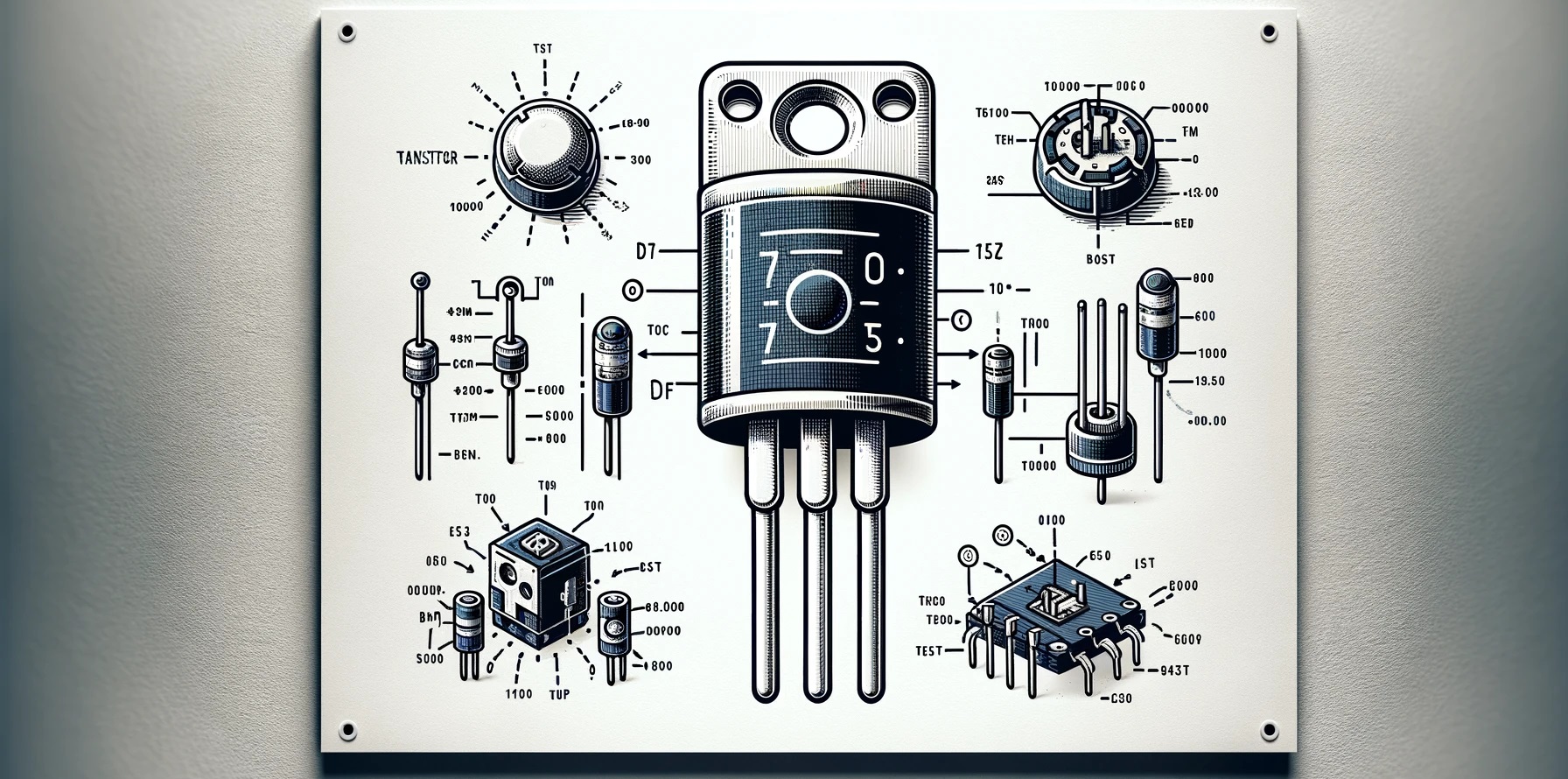
Hello dear friends,
A transistor is a semiconductor device used to amplify or switch electronic signals and electrical power. It is one of the basic building blocks of modern electronic devices. The function of a transistor comes from its ability to use a small signal applied between one pair of its terminals to control a much larger signal at another pair of terminals.
There are different types of transistors, but the two most common types are:
Bipolar Junction Transistor (BJT): This has three layers and two PN junctions. It comes in two types: NPN and PNP. The three layers are called the collector, base, and emitter.
Field-Effect Transistor (FET): This transistor uses an electric field to control the shape and hence the conductivity of a channel of one type of charge carrier in a semiconductor material. The most common type of FET is the Metal-Oxide-Semiconductor FET (MOSFET).
Transistors have several applications, including:
Signal amplification: Amplifying weak signals, such as those from a radio receiver or microphone.
Switching: Working as a digital on/off switch, which forms the foundation for digital electronics, like in CPUs.
Signal modulation: Modulating signals, as in AM (Amplitude Modulation) or FM (Frequency Modulation) radios.
Voltage regulation: Regulating the output voltage of power supplies.
The invention of the transistor in the 1940s by John Bardeen, Walter Brattain, and William Shockley was a revolutionary moment in the history of electronics, paving the way for the miniaturization of circuits and the development of integrated circuits, microprocessors, and the whole field of modern electronics.
Transistors can be categorized based on their structures, operating principles, and applications. Here are some of the different types of transistors:
Bipolar Junction Transistor (BJT):
NPN: Consists of two n-type semiconductor materials separated by a p-type semiconductor.
PNP: Consists of two p-type semiconductor materials separated by an n-type semiconductor.
Field-Effect Transistor (FET):
JFET (Junction Field-Effect Transistor): Can be either n-type or p-type and operates via a junction.
MOSFET (Metal-Oxide-Semiconductor Field-Effect Transistor):
n-channel MOSFET: Uses electrons as the carrier.
p-channel MOSFET: Uses holes (positive charge carriers) as the carrier.
Unijunction Transistor (UJT): Also known as a single-junction transistor, typically used in triggering circuits.
Darlington Transistors: Consists of two BJTs connected together to provide high current gain.
Phototransistors: These are light-sensitive transistors and are used in optoelectronic circuits.
Thin Film Transistor (TFT): Particularly used in display technology, such as in Thin Film Transistor Liquid Crystal Displays (TFT-LCD).
FINFET: A 3D transistor structure used in modern high-performance integrated circuits.
Bipolar Darlington Pair: A configuration involving two or more BJTs combined together.
This is just a sampling of the various types of transistors. In electronics, there are many specialized applications and variations of transistors, making them a fundamental component of modern electronic systems.
"The topic of electronic components is broad in scope, encompassing a diverse range of products. Here are the answers to the most common questions posed by our valued visitors."
- What is an integrated circuit?
- What is a crystal oscillator?
- What is an LED (Light Emitting Diode)?
- What is a radio frequency (RF) module?
- What is a ceramic resonator?
+ Back to Main page
"These
questions often include those that many people might have about the
component parts of electronic devices. Each user or student will have
their own specific questions depending on a particular situation or
application. The answers provided are not binding and do not express
absolute certainty. You are free to share the article above, citing it as a source. 04/2020."
Your shopping cart is empty!