
What is a diode?
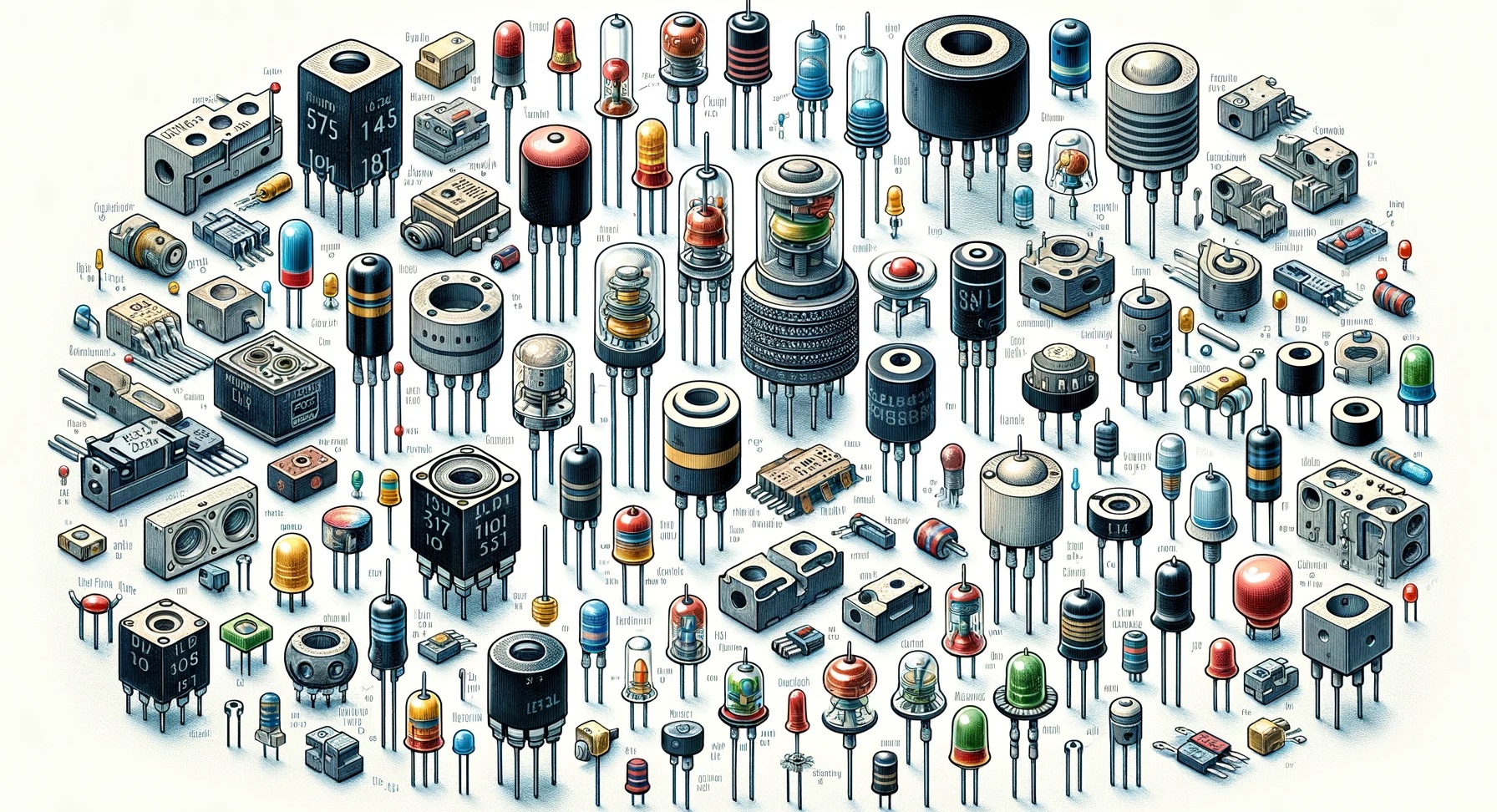
Hello dear friends,
Here are some key points about diodes:
P-N Junction: Most diodes are made with semiconductor materials such as silicon, germanium, or selenium. The basic diode consists of a p-n junction, which is an interface between two types of semiconductor material: p-type (positive) and n-type (negative).
Forward Bias: When a positive voltage is applied to the p-type material (anode) and a negative voltage to the n-type material (cathode), the diode is said to be forward-biased. In this condition, current flows easily from the anode to the cathode.
Reverse Bias: If the polarity is reversed, the diode is said to be reverse-biased. In this condition, minimal current flows, unless the diode breaks down.
Rectification: Because of its unidirectional conductivity, the primary function of a diode in many circuits is to convert alternating current (AC) to direct current (DC). This process is known as rectification.
Types of Diodes: There are various types of diodes designed for specific applications. Some common types include Light Emitting Diodes (LEDs), Zener diodes (which allow current to flow in reverse after a specific breakdown voltage is reached), Schottky diodes, photodiodes (which generate electricity when exposed to light), and more.
Applications: Diodes have a plethora of applications in electronic circuits. They're used in power supply rectifiers, signal demodulators, voltage regulators, switches, signal modulators, and many other applications.
In essence, the diode is a crucial component in modern electronics, providing a fundamental function in controlling the direction of current flow.
"The topic of electronic components is broad in scope, encompassing a diverse range of products. Here are the answers to the most common questions posed by our valued visitors."
- What is an integrated circuit?
- What is a crystal oscillator?
- What is an LED (Light Emitting Diode)?
- What is a radio frequency (RF) module?
- What is a ceramic resonator?
+ Back to Main page
"These
questions often include those that many people might have about the
component parts of electronic devices. Each user or student will have
their own specific questions depending on a particular situation or
application. The answers provided are not binding and do not express
absolute certainty. You are free to share the article above, citing it as a source. 04/2020."
Your shopping cart is empty!