
UL 2054
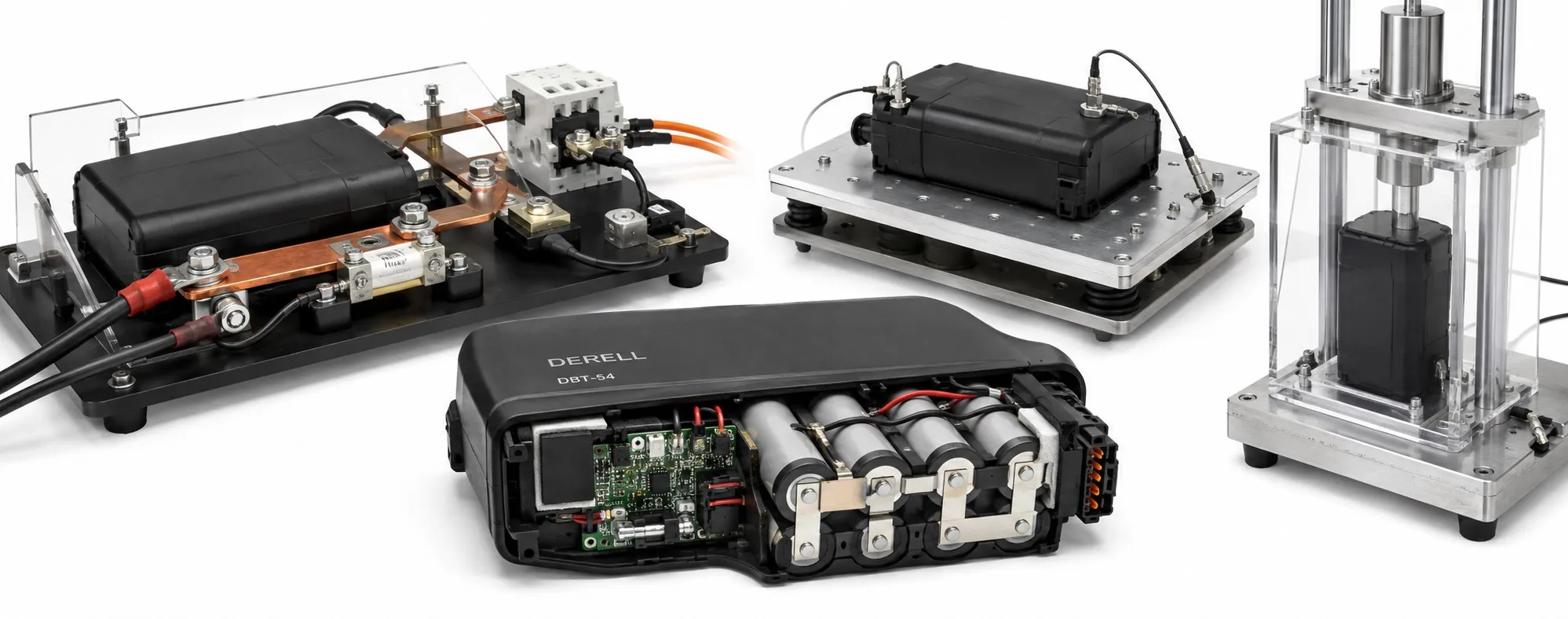
What a battery safety assessment actually covers
UL 2054 addresses portable primary and rechargeable batteries used to power products. Its central concern is reducing fire and explosion risks. A battery may contain one electrochemical cell or several cells connected in series, parallel, or a combination of both. Understanding what a cell does is useful, but evaluating a complete battery pack involves more than checking the cells inside it.
The title Household and Commercial Batteries does not make UL 2054 a universal approval for every battery installation. Start with the intended application. Primary lithium, lithium-ion, NiMH and NiCd batteries have different charging and protection needs. Chemistry, construction and intended use all matter when selecting the assessment route.
Safety certification is not a capacity promise
A UL 2054 assessment does not guarantee rated capacity, service life or cycle life. Those claims need their own evidence. If an application needs a pack to deliver a specified runtime after hundreds of charge cycles, ask for the relevant performance data and its test conditions. The battery standards on a specification sheet should be read by purpose, rather than treated as interchangeable quality badges.
The faults behind the test programme
Electrical abuse: Assessment addresses conditions such as external short circuit, abnormal charging, overcharge and forced discharge. The behaviour of a fuse and the limits of the charger belong in the same safety discussion.
Mechanical and thermal stress: Depending on the applicable programme, evaluation includes shock, vibration, dropping, applied force, heating and temperature cycling. Cell tests, pack tests and enclosure tests have different purposes. The applicable clauses determine sample quantities and acceptance criteria; a generic checklist cannot establish compliance.
Construction: The assessment also considers protective circuits, connections, insulation, enclosure construction and component ratings. An NTC temperature sensor, a suitably selected PTC device or correctly rated fuse may contribute to protection. No single component proves that the assembled pack is safe.
A charger example that exposes a common mistake
Consider two series-connected lithium-ion cells, each rated at 3.7 V nominal with a specified 4.2 V charge limit. That example produces a 7.4 V nominal pack with an 8.4 V fully charged voltage. Other lithium chemistries use different limits. A battery charger cannot be selected from nominal pack voltage alone: its charging profile, current limit and permitted temperature range must suit the actual cells and pack.
Putting that pack into a UPS or an electronic product creates another assessment boundary. The host product must remain safe with the battery installed. An electronic device within IEC 62368-1 or UL 62368-1 has its own requirements, as does a UPS within the IEC 62040 series. Battery evidence supports that work; it does not complete it.
Which document answers which question?
UL 1642 addresses lithium batteries and is commonly encountered in cell safety evaluation, although its published scope is not restricted to individual cells. UL 2054 has a separate role in assessing battery pack construction and protection. Evidence against one standard does not automatically establish compliance with the other.
The IEC 62133 series addresses sealed rechargeable cells and batteries for portable applications: Part 1 covers nickel systems and Part 2 covers lithium systems. UN 38.3 concerns transport testing of lithium cells and batteries. Transport evidence and product-use safety evidence answer different questions; neither replaces the other.
A power bank also contains charging, conversion and output circuits. UL 2056 addresses that product category, including assessment beyond the battery itself. Electric vehicle batteries and stationary storage applications likewise need standards selected for their intended use. A UL 2054 claim alone does not establish suitability for every battery-powered system.
Turn a compliance claim into something you can check
Ask for the manufacturer, exact pack model, issuing body, standard edition and assessment scope. A laboratory test report, a manufacturer's declaration and an active certification record are different forms of evidence. For a claim of certification by UL, check the relevant Product iQ record. If another organisation issued the certification, verify it through that organisation. The use of a UL standard does not identify who issued the certificate.
For application selection, request the charge and discharge limits, operating temperatures, compatible charger and conditions of use. Do not assume UL 2054 is automatically mandatory for every battery in every market: the applicable product and market requirements determine the route. CE marking and cUL marking also convey different information.
Edition reference: The official catalogue lists Edition 3, published November 17, 2021, with a March 10, 2022 revision. Check the edition and certification conditions applicable to the project against the actual documentation.