
What is OTP (One-Time Programmable) memory?
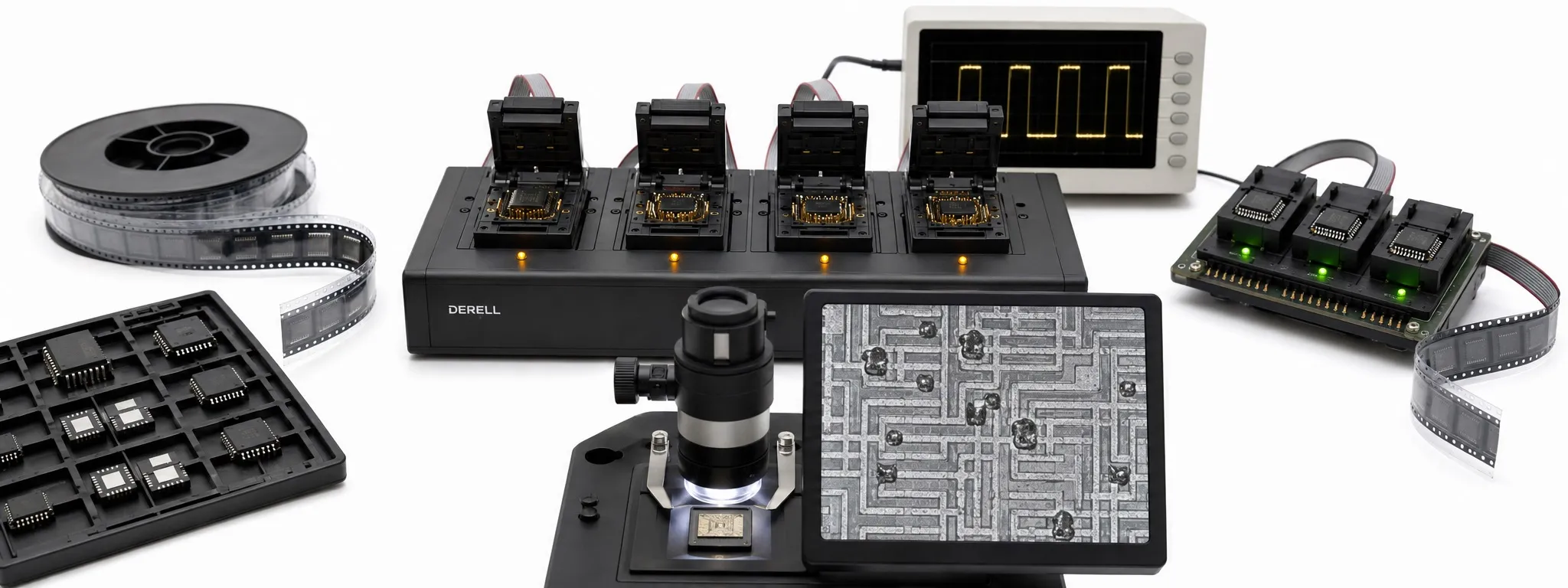
What Is OTP (One-Time Programmable) Memory?
OTP memory stands for One-Time Programmable memory. It is nonvolatile memory whose programmed contents cannot be erased and rewritten during normal use. It retains information when power is removed, but nonvolatile does not mean guaranteed error-free storage forever. It is related to the ROM family and serves a different purpose from RAM, which holds changing working data.
How does OTP memory work?
Fuse and eFuse implementations permanently change the electrical properties of a tiny link. An antifuse instead creates a conductive path through an initially insulating region. These structures are not the same components as replaceable glass fuses on a circuit board. The mapping to logical 0 and 1 depends on the technology; a universal programming direction should not be assumed.
OTP EPROM is another implementation. It uses EPROM cells in a package without a UV erase window, preventing normal UV erasure by the user. PROM is another relevant concept when studying one-time programmable devices. Mask ROM differs because its contents are defined during manufacture.
What is stored in industrial electronics?
OTP areas can hold calibration coefficients, device identification, fixed configuration and, in suitable architectures, secure boot information. For example, the Texas Instruments PGA308 stores sensor gain and offset calibration parameters in seven OTP banks. This is an example of a banked design, not evidence that every OTP device can be rewritten seven times.
Frequently changing recipes, event logs and updateable firmware call for consideration of rewritable storage such as Flash or EEPROM. Depending on the application, FRAM, MRAM and other NVRAM solutions may also be relevant. Retaining data without power is only one part of memory selection.
Does a write lock guarantee security?
No. A write lock restricts modification. Read protection, confidentiality and resistance to copying are separate properties. Storing a key in OTP does not, by itself, prove that the key cannot be extracted. Security depends on the chip's access controls and the design of the complete system.
What should be checked before programming?
Check the exact part number, OTP address, programming voltage, programming unit and any permanent locking sequence against the manufacturer's documentation. Verify the contents and apply locks in the sequence permitted by the manufacturer. Factory calibration and identification areas must not be mistaken for user memory. Incorrect programming may require replacement of the chip.
OTP can reduce area and cost in some designs, but it is not always the cheapest memory. Retention time and temperature limits are device-specific. See memory durability and reliability and causes of data loss for related considerations. The abbreviation here also differs from One-Time Password, the temporary code used for login authentication.
Technical references: Microchip memory technologies · STMicroelectronics OTP management and locks · TI PGA308 calibration memory