
Artificial Intelligence
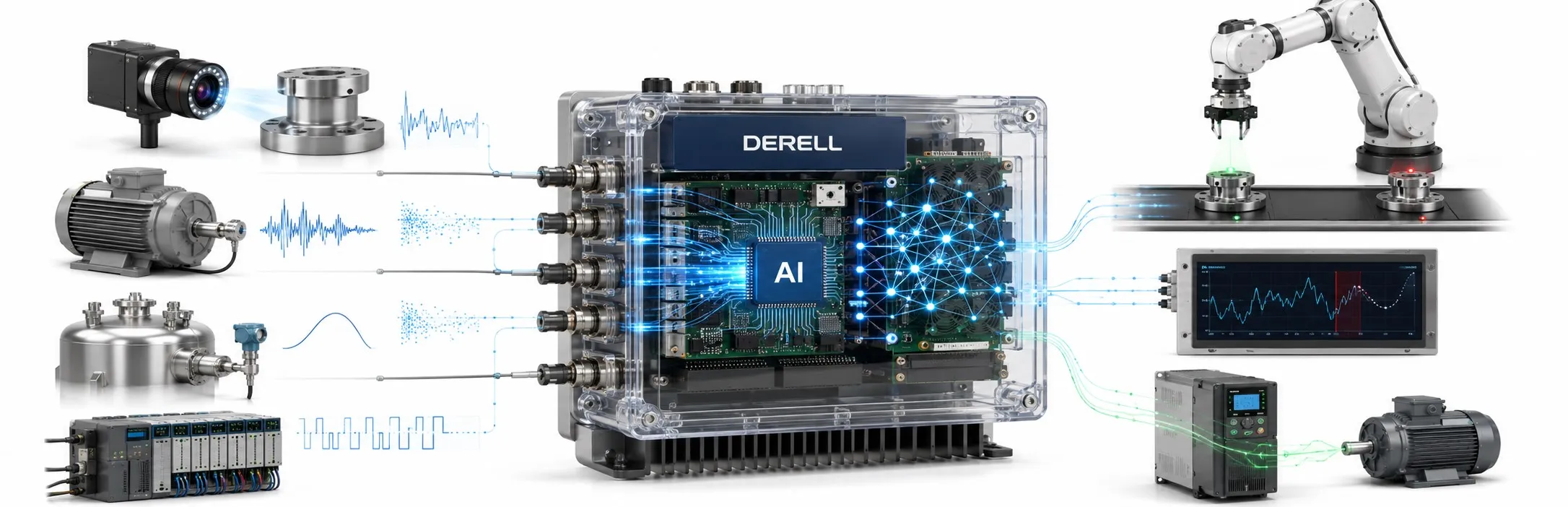
Understanding systems that turn inputs into useful outputs
Hello everyone, artificial intelligence (AI) covers methods and systems that enable computers and machines to produce predictions, recommendations, content or decisions for particular objectives. An input might be an image, a written question, an audio recording or measurements from a machine. The system processes that input using its model or knowledge representation and produces an output.
Describing AI only as “a machine that imitates people” misses much of its scope. A model that detects unusual bearing vibration does not need to speak or resemble a person. Automation and AI can work together, but automation does not automatically mean artificial intelligence.
Machine learning, deep learning and generative AI
Machine learning is an AI approach that models relationships in data using examples. Historical production records might, for instance, help estimate the likelihood of a defective product. The relationship between artificial intelligence and machine learning is that of a broader field and a family of methods within it.
Deep learning is a machine learning approach that uses multilayer artificial neural networks. It is used with complex data such as images, audio and language. However, not all AI systems use neural networks; knowledge-based and rule-based reasoning also belong to the field.
Natural language processing works with human language in text and speech. Computer vision extracts information such as objects, positions or defects from images. Generative AI focuses on producing new content, including text, images, audio or code. A quality inspection model that returns only “acceptable/defective” does not have to be generative AI.
Learning and using a model are different stages
During training, a model’s parameters are adjusted using examples. During inference, the available model produces a result from a new input. A system does not necessarily learn automatically every time it runs; some models remain fixed, while others are retrained on a planned schedule.
Data quality matters as much as quantity. In big data and data analytics, missing records, incorrect labels and unrepresentative examples can undermine results. Training, validation and test data should be separated appropriately. Using the same examples both to teach a model and to demonstrate its success can make performance look better than it really is.
Editor’s note: A simple threshold rule such as “start the fan when temperature exceeds 80 °C” does not, by itself, demonstrate AI. System control and artificial intelligence are different concepts. What matters is which inputs are used, how results are produced and how reliable those results are.
Where can AI help in manufacturing?
Visual quality inspection: Camera images can help identify surface defects, missing components or incorrect assembly. Performance can change when lighting or camera position changes. The objective is measurable improvement in production quality and efficiency, as well as faster inspection.
Predictive maintenance: Changes in vibration, current and temperature records can help assess maintenance needs. An anomaly alert, however, does not by itself establish the exact cause of a fault or when failure will occur.
Energy and process analysis: Examining consumption alongside production output can help investigate unusual operating conditions. Results can be evaluated within a digital twin supplied with suitable data. A digital twin does not necessarily use AI.
Planning and changing production requirements: Order, inventory and machine-status data can support scheduling decisions. In flexible manufacturing systems, value should be assessed through actual outcomes such as lead time, scrap or downtime, rather than the name of the model.
Are robotics and AI the same thing?
Robotics concerns physical movement and interaction with the environment. A robot can repeat programmed movements without AI. AI can add capabilities such as recognising a part, estimating its position or selecting a grasp point. Sensors and actuators provide the physical interfaces, while machine learning in robotics can support perception and decisions. Executing a movement and evaluating which movement to make are separate functions.
Does an AI system need an internet connection?
No. With suitable hardware, a model can run on a computer near the machine; this is an edge computing approach. Cloud computing provides centralised processing and storage. The choice depends on latency, connection availability, data privacy and maintenance requirements. Industrial IoT and automation infrastructure can simplify data collection, but an internet connection alone does not make a device intelligent.
Understanding errors and limitations
A fluent answer is not a guarantee of accuracy. Generative models can produce nonexistent references, incorrect technical explanations or faulty code. Product parameters and wiring information should be checked against the manufacturer’s documentation for the correct model and version.
Biased data can produce results that systematically misjudge particular products or conditions. New products, different lighting or changing process conditions can cause model performance to deteriorate over time. Data access and model connections also belong within industrial cybersecurity planning. A model’s ability to make recommendations does not establish that it performs robot safety functions.
A practical way to measure success
Start with one measurable problem, then compare the proposed system with the existing method. Suppose 990 out of 1,000 parts are acceptable. A system that labels every part acceptable achieves 99% accuracy, yet misses all 10 defective parts. Defect detection, false rejection, processing time and operating cost therefore need to be considered together.
AI can accelerate some tasks while changing the work involved in checking results, preparing data and maintaining systems. For the future of automation, the useful objective is a working arrangement with verified results, clear responsibility and measurable benefits.
Related topics: Machine learning, data analytics, digital twins, industrial cybersecurity.