
What is inverter?
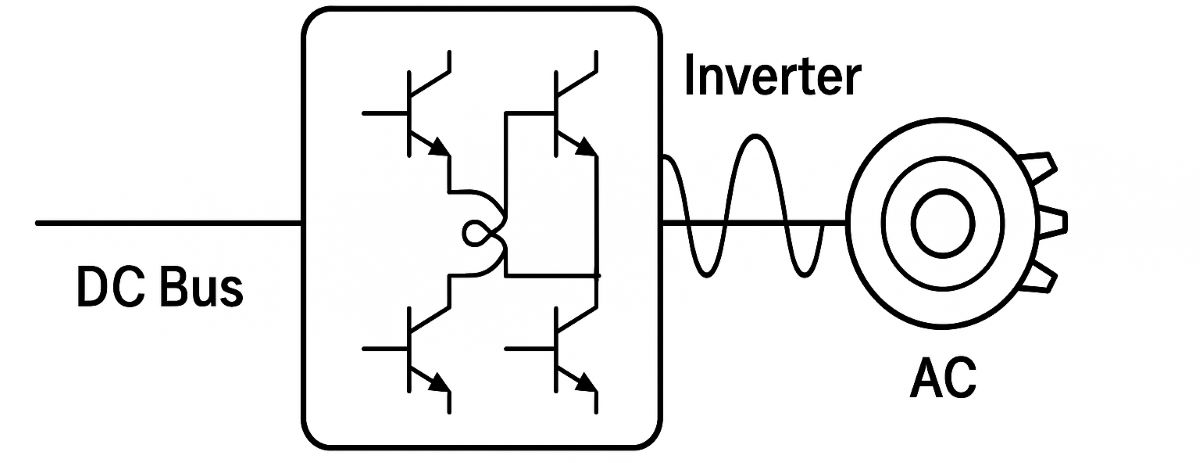
An inverter is an electrical circuit device that converts DC (Direct Current) voltage into AC (Alternating Current) voltage. Inverters are commonly used in homes, offices, and commercial buildings, often in conjunction with electricity-generating systems. For example, inverters are used with photovoltaic panel systems to convert solar energy into electrical energy. Additionally, inverters can be used with generators to make the electricity they produce usable in homes and offices.
Inverters can adjust the frequency and amplitude of the AC voltage, allowing the voltage to be tailored to specific needs. They also control the quality of the AC voltage, ensuring it meets the required standards.
Inverters vary depending on the source of the DC voltage used to generate AC voltage. For example, inverters used with photovoltaic panel systems are called "photovoltaic inverters", while those used with generators are referred to as "generator inverters".
DERELL — What is an Inverter? (Clean Indicator Simulation)
This panel shows how a DERELL inverter drives a motor when a speed reference is given, visualizing frequency, current, torque, and DC bus with clean gauges.
DERELL Inverter Control
State: Ready
What is a motor inverter?
A motor inverter is an electronic device used to control the speed and direction of electric motors. Motor inverters adjust the speed by changing the frequency of the electric motor, optimizing its performance. This technique, commonly used to control motor speed, allows for enhanced performance. Additionally, motor inverters can alter the direction of the motor, adjusting its operating direction.
Motor inverters can be used with various types of electric motors, with the most common types being induction motors, squirrel-cage motors, and DC motors. While they are widely used in industrial applications, motor inverters are also found in consumer products like household appliances and automobiles.
One of the key advantages of inverters is their ability to improve energy efficiency. By allowing motors and systems to operate only at the required speed, inverters minimize unnecessary energy consumption, resulting in significant cost savings, especially in large-scale facilities.
Modern inverters are also equipped with advanced protection features. They safeguard motors and connected systems against issues such as overcurrent, overvoltage, short circuits, and phase loss. This not only prevents damage but also reduces maintenance and downtime in industrial settings.
Another essential function is the soft start capability. Inverters gradually increase the motor speed during startup, preventing sudden inrush currents and mechanical stress. This feature prolongs motor life and enhances the reliability of the entire system.
In industrial environments, inverters are commonly used in pump and fan applications. By automatically adjusting motor speed according to demand, they ensure stable operation, optimal flow control, and longer equipment lifespan, all while reducing operating costs.
Looking ahead, inverters are set to play an even more crucial role in the integration of renewable energy systems. With the rise of solar and wind power, inverters provide the necessary interface to stabilize fluctuating inputs and deliver clean, reliable AC output to the grid.
Your shopping cart is empty!