
What is jog frequency?
What is the jog frequency for VFD?
The jog frequency for a Variable Frequency Drive (VFD) is the frequency at which the VFD will operate the motor when it is in jog mode. Jog mode is a special operating mode in which the VFD can be used to manually move the motor at a slow speed, typically for the purpose of positioning or aligning the load.
The jog frequency is usually set to a low value, such as 1 Hz or 2 Hz, to allow for precise control of the motor's speed and position. The specific jog frequency will depend on the specific VFD and the requirements of the application. It is important to ensure that the jog frequency is properly configured and calibrated to ensure reliable and accurate control of the VFD when it is in jog mode.
In the context of Variable Frequency Drives (VFDs), "jog frequency" refers to a preset frequency that is used for jogging (short bursts of operation) of the motor. Jogging is typically used for aligning the motor or the load it is driving, for short-distance travel, or for other operations that require brief or intermittent motion. The jog frequency is usually set at a lower value than the normal operating frequency, although it can be adjusted based on specific requirements.
VFDs are used to control the speed and torque of an AC motor by varying the frequency and voltage of the electrical supply to the motor. They offer various modes and preset functions, including jog mode, to facilitate different types of operations. When the VFD is set to jog mode, the motor will operate at the jog frequency for as long as the jog command is active.
The jog frequency can usually be set through the VFD's control interface, either via a physical control panel or through software if the VFD is connected to a control system. Once set, the jog frequency can be activated by a jog button or a specific command from a PLC (Programmable Logic Controller) or other control system.
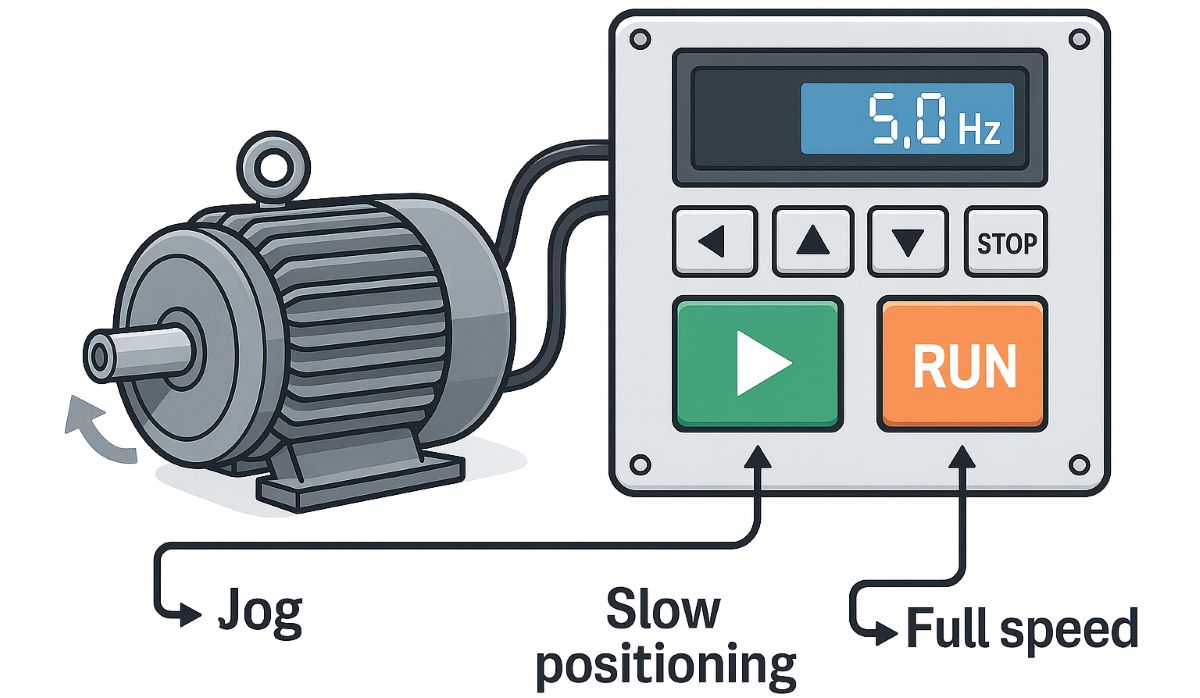
JOG runs the motor at a fixed 5.0 Hz (slow, safe for alignment).
In real-world applications, the jog frequency is more than just a setting—it's a troubleshooting tool:
Sometimes, an operator may need to nudge a conveyor or align a machine after maintenance. Using the jog mode allows for safe, controlled movement without risking full-speed operation or unplanned motion. Especially in heavy-duty environments, starting at too high a jog frequency can cause the motor to trip or the load to jerk, so always begin with the lowest safe value and adjust upward only if needed.
Never underestimate safety:
Whenever you experiment with jog functions, make sure all personnel are clear of moving parts and safety interlocks are engaged. More than once, I've seen someone press jog expecting a gentle move, but the motor jolted because the frequency was set too high for that specific load. Always double-check the actual set value before hitting jog—what's safe for a small blower may not be safe for a loaded conveyor.
Remember that every brand handles jog logic slightly differently:
Some VFDs disable other controls during jog mode, some allow on-the-fly frequency tweaks, and others lock you into a fixed preset. RTFM (“read the friendly manual”) is not just a saying—manufacturer quirks can save or ruin your day.
To sum up: Jog frequency is not just a number; it's a practical tool that makes setup, alignment, and troubleshooting faster and safer. Always use it with a clear purpose, know your hardware's behavior, and never trust a control panel you didn't set up yourself. It might sound basic, but in the field, the simple stuff saves time and headaches.
Your shopping cart is empty!