
What is Oc (Overcurrent) fault?
Hello dear friends,
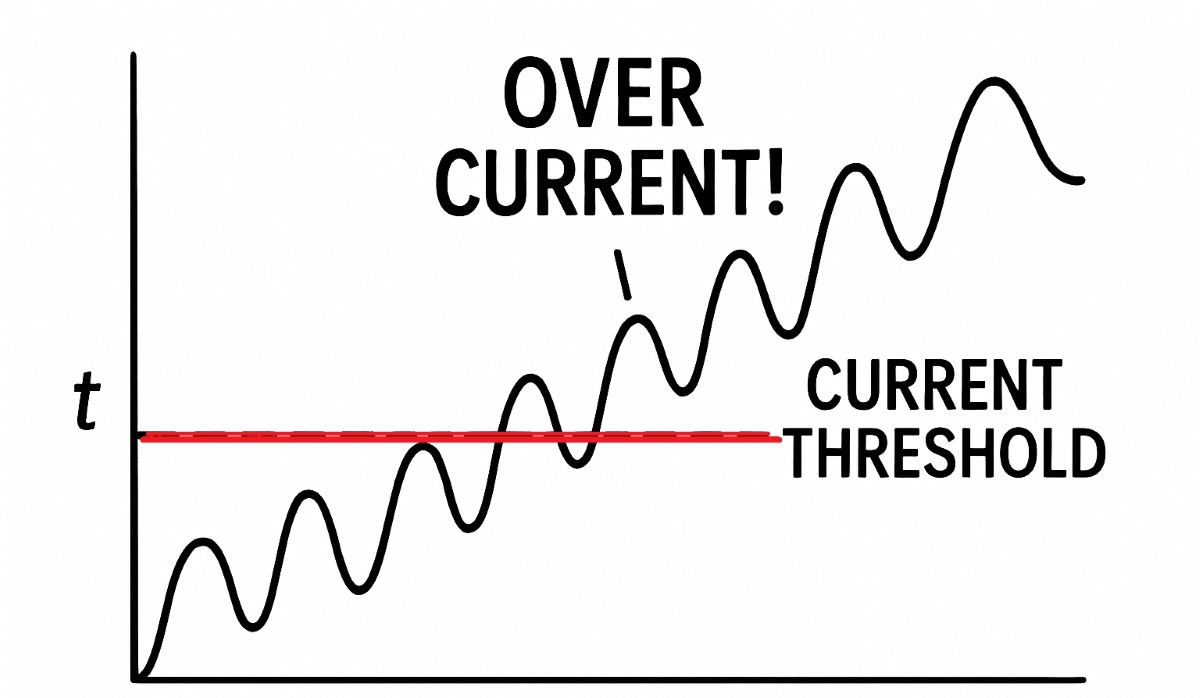
Today we’re diving deep into one of the most common and confusing error codes in the field: the “OC” or “Over Current” fault. We’ll break down what it means, why it happens, and exactly what you need to do when you see it.
What is an OC error?
When a drive (VFD) or motor suddenly draws more current than its rated value, the system protects itself by shutting down. It’s not random— the drive only trips when there’s a real risk. Ignore it, and you risk killing both motor and inverter.
Most common causes of OC errors:
• Sudden Load & Shock Torque: If the machine’s load spikes unexpectedly (e.g., a jammed conveyor or a crane lifting a heavy load), the motor draws a high surge current.
• Short Circuit: A fault in the motor windings, power cables, or terminal box insulation can instantly trigger overcurrent.
• Mechanical Seizure/Blockage: Bearing failure, axial load issues, poor lubrication, or external mechanical jams will force the motor into overcurrent.
• Incorrect Drive Parameters: Wrong motor data, acceleration time, or current limits in the VFD settings can cause overcurrent even under normal loads.
• Motor & Cable Wear: Aged windings, degraded insulation, loose connections, or an end‑of‑life motor set the stage for excess current draw.
• Supply Fluctuations: Missing phase or severe voltage imbalance in the power supply can sneakily trigger OC faults.
What to do when you see an OC error (step by step, from the pro):
+ Visually Inspect Motor & Cables: Look for burns, odors, deformation, loose connections, or insulation breakdown in the terminal box. Any sign of mechanical jamming?
+ Check Free Rotation: With power off and safe to do so, spin the motor shaft by hand. Resistance, binding, or rough spots mean a mechanical issue.
+ Review VFD Settings: Verify current limit, acceleration time, motor data, braking parameters—has anyone tweaked these?
+ Perform Insulation & Short‑Circuit Tests: Use a megohmmeter to check winding and cable insulation. Measure for low ohmic faults.
+ Verify Supply Voltage & Phases: Look for voltage dips, missing phase, or imbalance in the mains.
+ Clear & Restart System: After fixing any mechanical or electrical issues, reboot the drive. If it still trips, deeper analysis is needed.
+ Call the Specialist: If none of the above solves it, get a qualified technician. Random tinkering can make things worse.
Editor’s Tip:
If OC faults recur, don’t push the system harder. Often a “tiny loose contact” or “minor parameter glitch” is to blame. In dusty or damp environments, insulation resistance drops—always megger test before declaring the motor healthy. And don’t forget to check cable routing, phase sequence, and grounding.
What about OC1, OC2, OC3?
The numbers specify the condition that triggered the same basic overcurrent fault:
• OC1: Surge at startup or sudden load spike.
• OC2: Gradual overload or motor stuck at a point.
• OC3: Short circuit, inter‑winding fault, or special internal overcurrent.
(Warning: Definitions vary by manufacturer—always consult your drive’s manual!)
In summary:
An OC fault is your red‑alert telling you “short circuit? motor worn out? wrong settings? mechanical jam?” No skipping the checklist—only a methodical approach saves your equipment and your budget.
Got questions or your own OC horror stories from the field? Share them here and let’s sort it out together!
Your shopping cart is empty!