
OL Fault codes
Hi everybody,
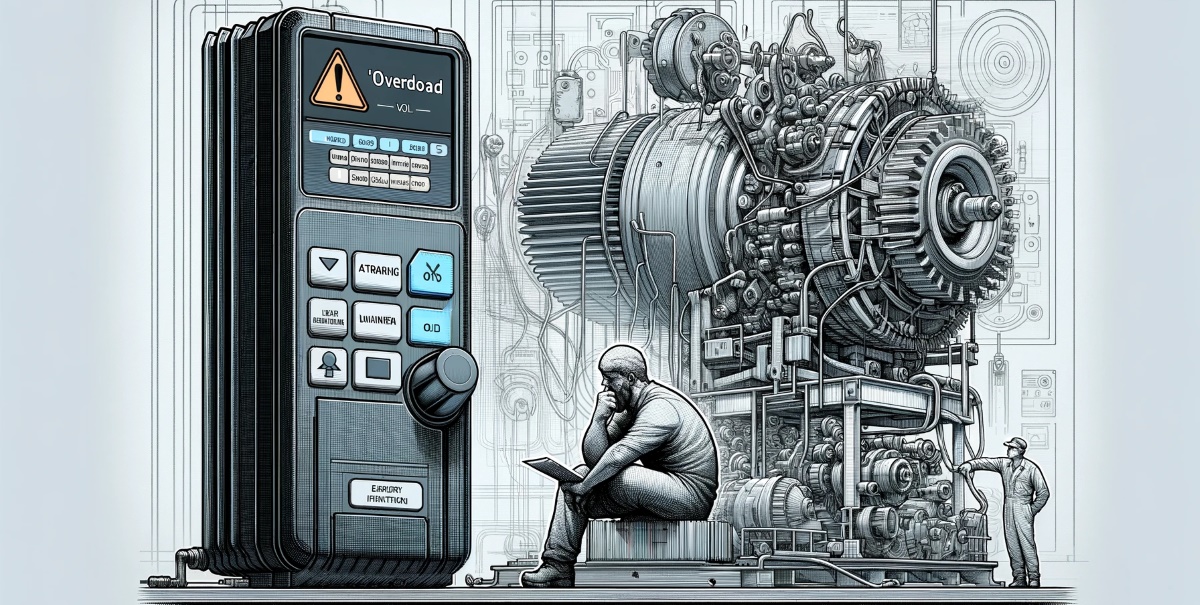
In the context of Variable Frequency Drives (VFDs), an "OL" fault typically refers to an "Over Load" condition. This means the motor or the drive is experiencing a load that exceeds its rated capacity for an extended period.
Here's a breakdown of the "OL" fault and potential causes:
Exceeding Motor Capacity: This is the most straightforward reason. If the motor is made to work beyond its rated capacity for longer than it's designed to handle, it can trigger an overload fault.
Mechanical Blockage or Jam: If something obstructs the motor's movement (like a jammed conveyor belt or a stuck pump), the motor will draw more current in its attempt to overcome the obstruction, leading to an overload condition.
Frequent Starts/Stops or Reversals: Starting and stopping or reversing the motor frequently within short intervals can also create overload conditions.
Incorrect Settings: If the VFD parameters are not set correctly, especially the overload settings and motor parameters, it can lead to false overload trips.
Ambient Conditions: Operating in environments with high temperatures or at high altitudes without proper derating can also lead to overload conditions.
Worn Out Motor or Equipment: As motors or the equipment they drive age and wear out, they can become less efficient and might draw more current, leading to potential overloads.
Inadequate Cooling: If the VFD or motor cooling systems (like fans or blowers) aren't functioning properly, it can result in overheating and thus an overload condition.
When an "OL" fault occurs, the VFD will usually shut down to protect the motor and itself. To resolve the fault, one should first identify and rectify the cause of the overload. It might involve checking the mechanical components, ensuring proper cooling, verifying the VFD settings, or even assessing the operational demands placed on the motor.
"OL1", "OL2", and "OL3" are more specific subcodes or classifications of a general "OL" (Over Load) fault in a Variable Frequency Drive (VFD). These specific codes can help pinpoint the nature or condition of the overload, making it easier to diagnose and address the issue. However, the precise meaning of these subcodes can vary depending on the VFD manufacturer and model.
In a generic sense:
OL1: Might indicate a specific type or level of overload, perhaps a rapid or immediate overload condition when the motor starts or during operation.
OL2: Could signify a different type or level of overload, possibly a more prolonged or sustained overload condition.
OL3: May represent yet another specific overload scenario, like a repeated or cyclical overload occurring within certain intervals.
It's crucial to refer to the user manual or manufacturer documentation of the specific VFD to understand the exact meaning and distinction between these overload subcodes. The documentation will provide detailed explanations of each subcode, the potential causes, and recommended troubleshooting steps.
Your shopping cart is empty!