
Current Limiting
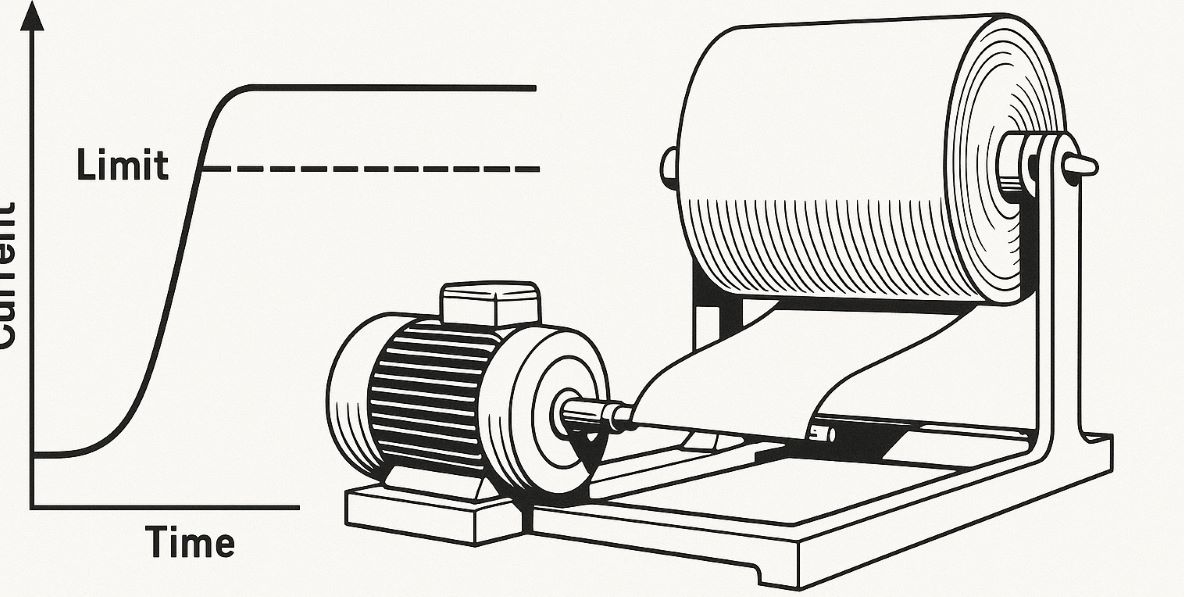
Current limiting in AC motor speed control devices (VFDs) is a protective feature designed to prevent damage to the motor and the drive. It restricts the maximum current that the motor can draw, safeguarding both the drive and the motor during overcurrent situations. Overcurrent may occur due to excessive load, a short circuit, or various fault conditions.
Motor drives such as VFDs use current limiting to balance the resistance encountered by the motor during operation and ensure effective performance. This function protects the system while allowing the motor to deliver the torque needed for the task.
Overcurrent Protection: Prevents the drive and connected components from being exposed to harmful current levels, ensuring both safety and longevity.
Rapid Acceleration and Deceleration: During speed changes, current limiting prevents the motor from drawing excessive current, thus reducing stress and possible failure.
Dynamic Load Changes: When the motor load increases or decreases suddenly, current limiting ensures stable and safe operation while suppressing sudden surges.
Energy Efficiency: Avoids unnecessary current consumption, helping to optimize power usage.
Hybrid Control Mechanisms: In modern VFDs, current limiting can be enforced in both software and hardware, providing more sophisticated control strategies.
In conclusion, current limiting is a critical feature for sustaining motor and drive performance, ensuring safety, and maximizing efficiency in industrial applications.
From my own field experience, many failures in industrial systems can be traced back to uncontrolled current surges. A well-set current limit often makes the difference between a drive surviving a sudden overload or ending up burned within seconds.
Current limiting should not be seen merely as a protective barrier. It is more like a control mechanism that balances strength and restraint. Just as reins prevent a horse from running out of control, current limiting keeps the motor powerful but safe.
For students, an easy analogy is a car with electronic throttle control. Even if you push the pedal all the way down, the system decides how much power can safely be delivered to the wheels. Similarly, current limiting ensures smooth yet protected motor operation.
In serious industrial environments, current limiting is never disabled. On the contrary, it is carefully tuned to act as the system’s invisible safety net, prolonging equipment life and reducing costly downtime.
Your shopping cart is empty!