
What is the difference between linear momentum and angular momentum?
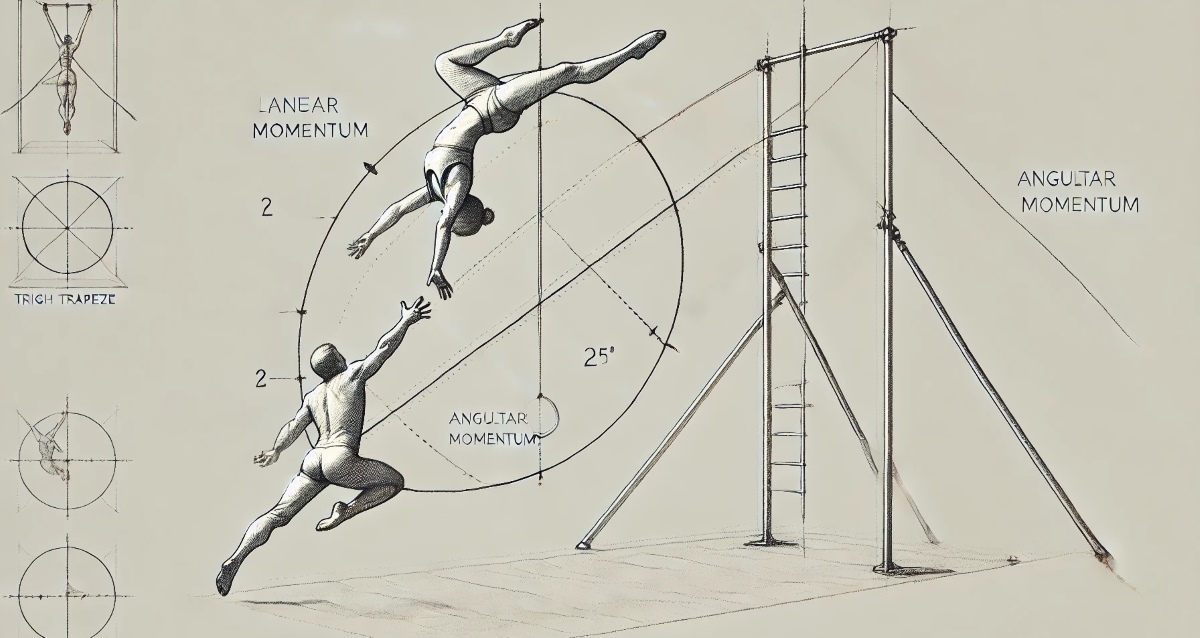
Linear momentum and angular momentum are two fundamental concepts in physics that describe different aspects of the motion of objects. While both are measures of motion, they apply to different types of motion and are governed by different principles. Here's a detailed comparison between the two:
Linear Momentum
Definition: Linear momentum ( p) is a vector quantity that represents the quantity of motion of an object moving in a straight line. It is defined as the product of an object's mass ( m) and its velocity ( v):
p = m × v
Units: The SI unit of linear momentum is kilogram meters per second (kg·m/s).
Conservation: Linear momentum is conserved in a closed system where no external forces are acting. This means that the total linear momentum of a system before an interaction (such as a collision) is equal to the total linear momentum after the interaction.
Application: Linear momentum is used to describe the motion of objects moving in a straight line, such as a car driving down a road or a ball rolling on a flat surface.
Angular Momentum
Definition: Angular momentum ( L) is a vector quantity that represents the quantity of rotational motion of an object. It is defined as the product of an object's moment of inertia ( I) and its angular velocity ( ω):
L = I × ω
Units: The SI unit of angular momentum is kilogram square meters per second (kg·m²/s).
Conservation: Angular momentum is conserved in a closed system where no external torques are acting. This means that the total angular momentum of a system before an interaction (such as a spinning object being disturbed) is equal to the total angular momentum after the interaction.
Application: Angular momentum is used to describe the rotational motion of objects, such as a spinning top, a planet orbiting the sun, or electrons orbiting an atomic nucleus.
Key Differences
Type of Motion: Linear momentum is associated with linear (straight-line) motion, while angular momentum is associated with rotational motion.
Dependence on Mass and Velocity: Linear momentum depends on the mass and linear velocity of an object, while angular momentum depends on the moment of inertia (which is related to the distribution of mass around an axis of rotation) and angular velocity.
Conservation Laws: The conservation of linear momentum is related to the absence of external forces, while the conservation of angular momentum is related to the absence of external torques.
Applications: Linear momentum is applied in analyzing the motion of objects moving in a straight line, such as in collisions and momentum transfer. Angular momentum is applied in analyzing the rotational motion of objects, such as in gyroscopic stability and planetary motion.
In summary, while both linear and angular momentum are measures of motion and are conserved in closed systems, they apply to different types of motion and have different dependencies and applications.
Your shopping cart is empty!