
What is PID Feedback?
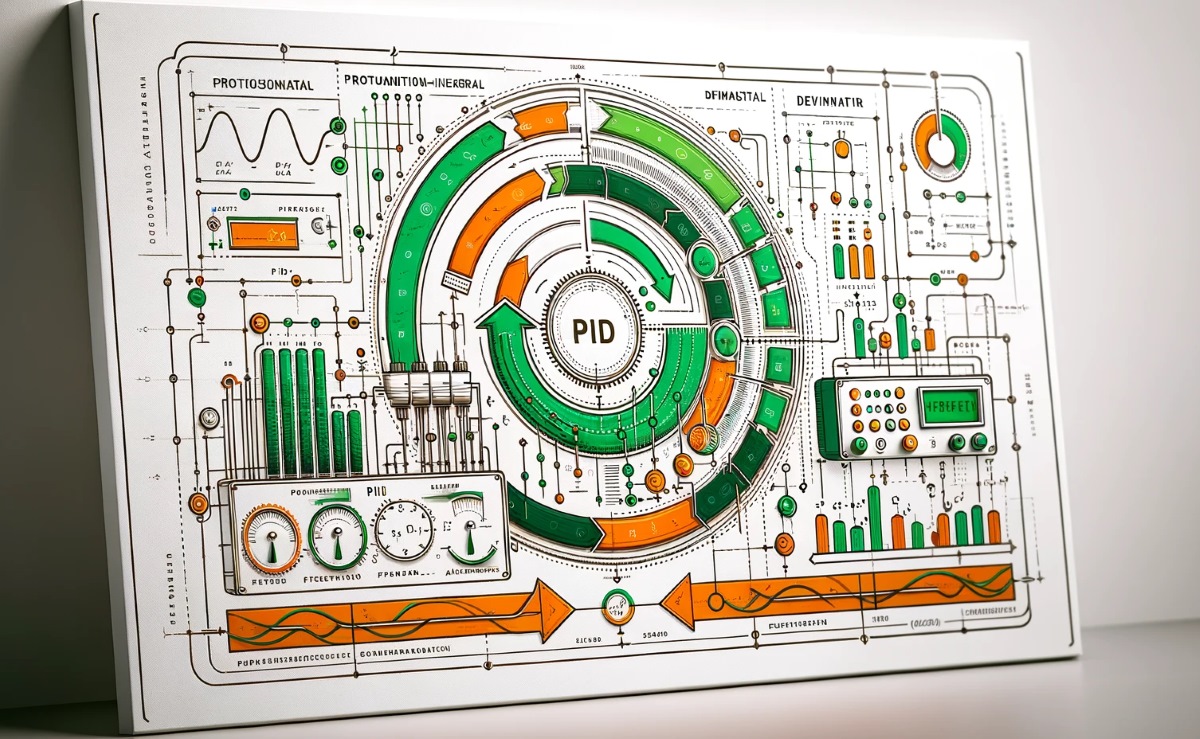
PID feedback, which stands for Proportional, Integral, and Derivative feedback, is a control mechanism used in control systems to adjust the system's output based on the difference between the measured value and the desired value (setpoint). PID feedback is the most common feedback algorithm in control systems and is typically used for controlling continuously changing process variables such as temperature, pressure, speed, and position.
The PID control algorithm consists of three basic components:
Proportional (P): A control action proportional to the difference (error) between the setpoint and the measured value is applied. This helps adjust the system output based on the magnitude of the errors. The larger the proportional gain (Kp), the faster the system responds, but it can cause overshooting and instability.
Integral (I): This component takes into account the accumulation of errors until the setpoint is reached, thereby eliminating the steady-state error in the system. The larger the integral gain (Ki), the faster the system responds, but it can cause excessive oscillations and instability.
Derivative (D): This component considers the rate of change of the error over time and helps reduce oscillations in the system. The larger the derivative gain (Kd), the faster and more stable the system responds, but it can slow down the system due to excessive damping and sensitivity.
By combining these three components, the necessary control action to reach the setpoint is calculated and applied. The PID control algorithm is often used in an auto-tunable and adaptive manner, allowing the system to adapt to different operating conditions and process variables. This increases energy efficiency, extends the lifespan, and reduces maintenance costs.
Your shopping cart is empty!