
Compressed air vs normal air?
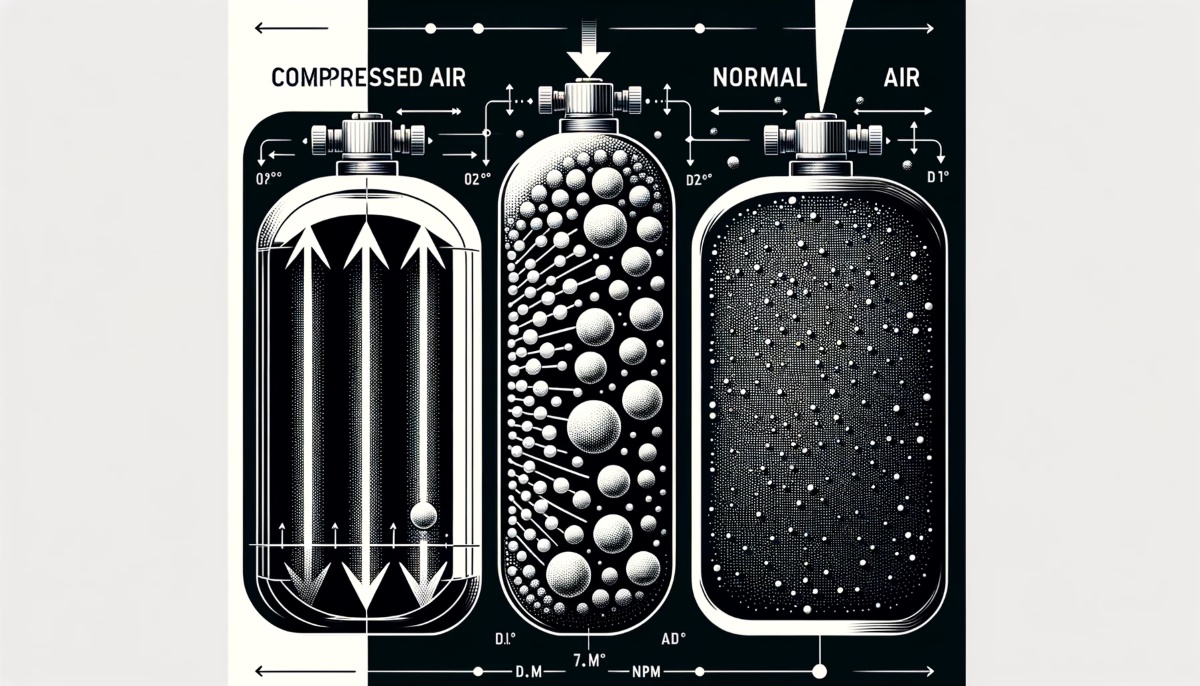
The primary difference between compressed air and normal air lies in their pressure, density, and the way they are stored or used. Here are the main distinctions between the two:
Pressure: Compressed air is air that has been pressurized to a level higher than atmospheric pressure, typically using an air compressor. Normal air exists at atmospheric pressure, which is the pressure exerted by the Earth's atmosphere at sea level.
Density: Due to the increased pressure, compressed air has a higher density compared to normal air. This means that a greater mass of air molecules is packed into a smaller volume in compressed air compared to normal air.
Storage and use: Compressed air is usually stored in tanks or cylinders, allowing it to be transported and used as a source of energy. Normal air is not stored or used in the same way, as it is freely available in the atmosphere.
Applications: Compressed air has numerous industrial and commercial applications, such as powering pneumatic tools, inflating tires, and operating air brake systems. Normal air, on the other hand, is used for breathing and natural processes like wind and weather patterns.
Energy potential: Compressed air contains potential energy due to the high pressure exerted on the air molecules. This energy can be converted into mechanical work or used to power various devices. Normal air does not possess the same level of energy potential.
In summary, compressed air is air that has been pressurized and has a higher density than normal air. It is typically stored in containers and has a wide range of applications, while normal air exists at atmospheric pressure and serves different purposes.
Your shopping cart is empty!