
What is Buchholz relay?
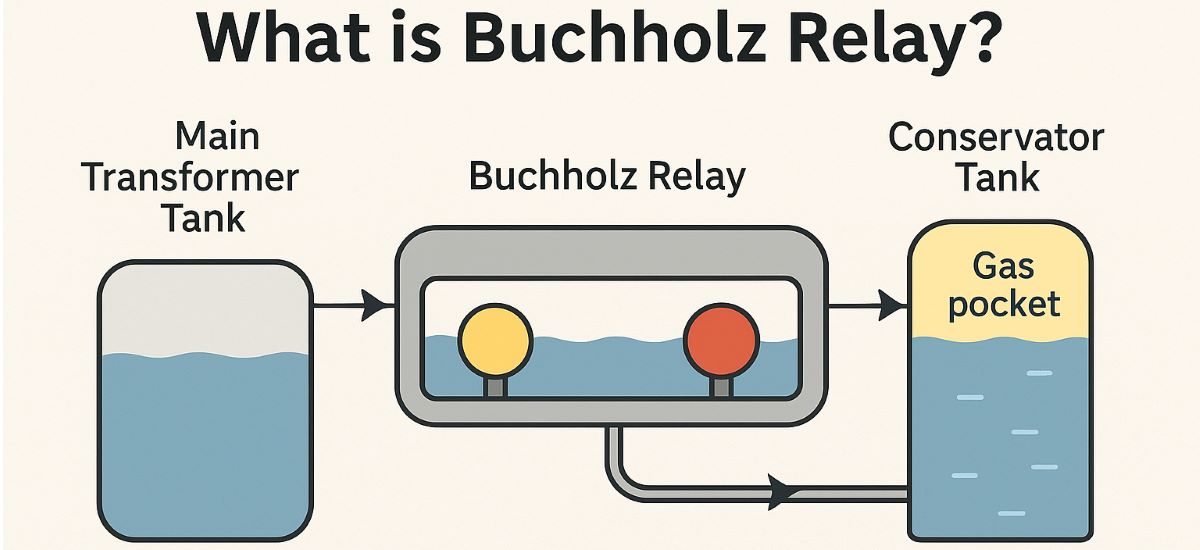
Buchholz relay is a protective device used for oil-filled transformers. It is a type of oil and gas actuated relay that is installed in the oil-filled transformer's oil conservator. The main function of Buchholz relay is to provide protection against faults that occur inside the transformer.
Buchholz Relay — Gas Accumulation & Oil Flow Animation
What Happens?
Normal: Oil flow balanced, floats in middle, alarm/trip inactive.
The Buchholz relay can also detect oil flow interruption, which can be caused by a fault in the transformer's winding or insulation. If the oil flow inside the transformer is interrupted, the oil level in the oil conservator will decrease. This decrease in oil level is detected by the Buchholz relay, which will then send a signal to the transformer's control system to shut down the transformer.
In summary, the Buchholz relay is an important protective device used in oil-filled transformers to detect faults that occur inside the transformer. It is designed to provide protection against gas accumulation and oil flow interruption and can help prevent damage to the transformer and ensure safe operation.
From my perspective, this relay acts like an early warning system. Before the transformer faces a catastrophic failure, the relay already gives a signal. This saves not only the transformer itself but also avoids long downtime in critical facilities.
It is also important to note that the Buchholz relay is only applicable to oil-immersed transformers with conservators. You will not see it in dry-type transformers. Students often confuse this, so keeping this distinction in mind is essential during field work.
Another key point is that the gas collected inside the relay can be chemically analyzed. By examining the type of gas (for example, hydrogen or methane), it is possible to identify the source of the fault. This makes the Buchholz relay not only a protective device but also a diagnostic tool.
In my own experience, when used properly, the Buchholz relay becomes a critical part of predictive maintenance. Instead of waiting for a fault to occur, engineers can plan interventions earlier. This practical approach improves both safety and cost efficiency in power systems.
Your shopping cart is empty!