
What is analog input in controller?

In the context of a controller, an analog input is a type of input signal that is continuous in nature and is used to provide a means of measuring or monitoring a physical quantity. An analog input might be used to measure a wide range of quantities, such as temperature, pressure, humidity, or sound.
An analog input is typically converted to a digital signal using an analog-to-digital converter (ADC) before being processed by the controller. This allows the controller to use digital algorithms and techniques to analyze and act on the input signal.
An analog control device is an electronic device used to monitor, regulate, and control physical variables (such as temperature, pressure, velocity, etc.). These devices are commonly used in industrial and commercial applications, automation systems, and process control. Here are some key features and functions of analog control devices:
Analog Signals
Definition: Analog signals represent continuously varying real-world physical states. Unlike digital signals, analog signals can take any value within a certain range.
Examples: Variables like temperature, speed, and pressure are represented using analog signals.
Main Functions
Measurement: Analog control devices measure physical variables using various sensors.
Conversion: These devices can convert measured analog signals into digital data (using Analog-to-Digital Converters - ADC) or perform the reverse operation (using Digital-to-Analog Converters - DAC).
Control: Based on the measured and processed signals, the device controls and adjusts outputs. This can involve regulating a heater, setting the speed of a motor, or controlling a valve.
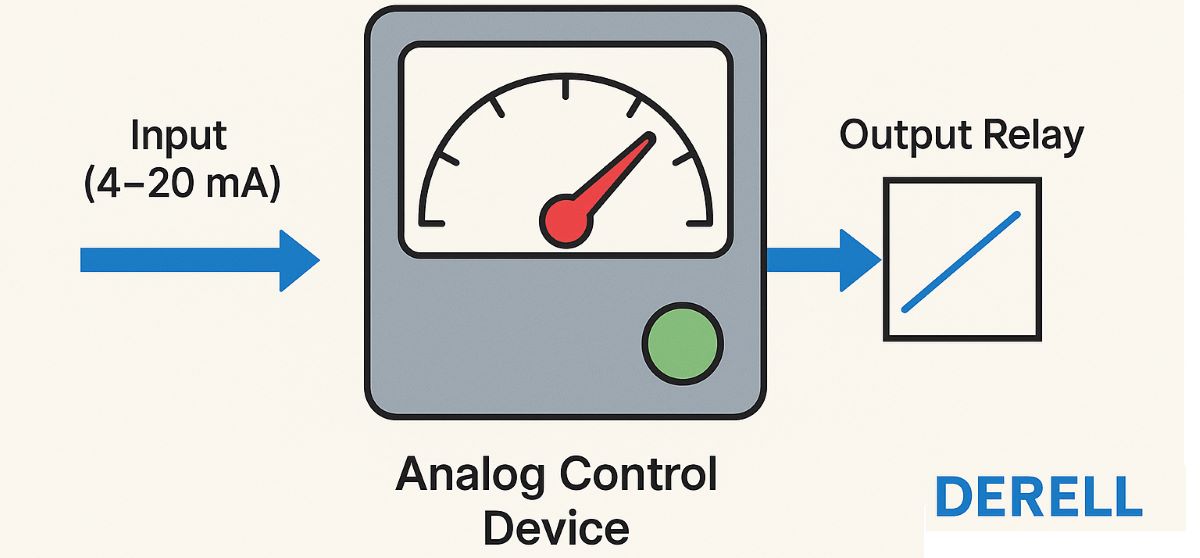
Usage Areas
Industrial Automation: Widely used in factory automation.
Building Management Systems: Used in controlling Heating, Ventilation, and Air Conditioning (HVAC) systems.
Process Control: Plays a crucial role in controlling processes in chemical, petroleum, food processing, etc.
Advantages and Disadvantages
Advantages: More natural and continuous signal processing, higher precision in some applications compared to digital systems.
Disadvantages: Susceptibility to noise, more complex calibration and adjustment requirements compared to digital systems.
Analog control devices hold a significant place in modern industry and technology, playing a critical role in controlling complex processes and physical variables. However, with the advancement of digital technologies, many applications have seen analog control devices integrated with or completely replaced by digital systems.
Your shopping cart is empty!