
What is Alkaline Batteries?
Choosing batteries for everyday devices and understanding their limits
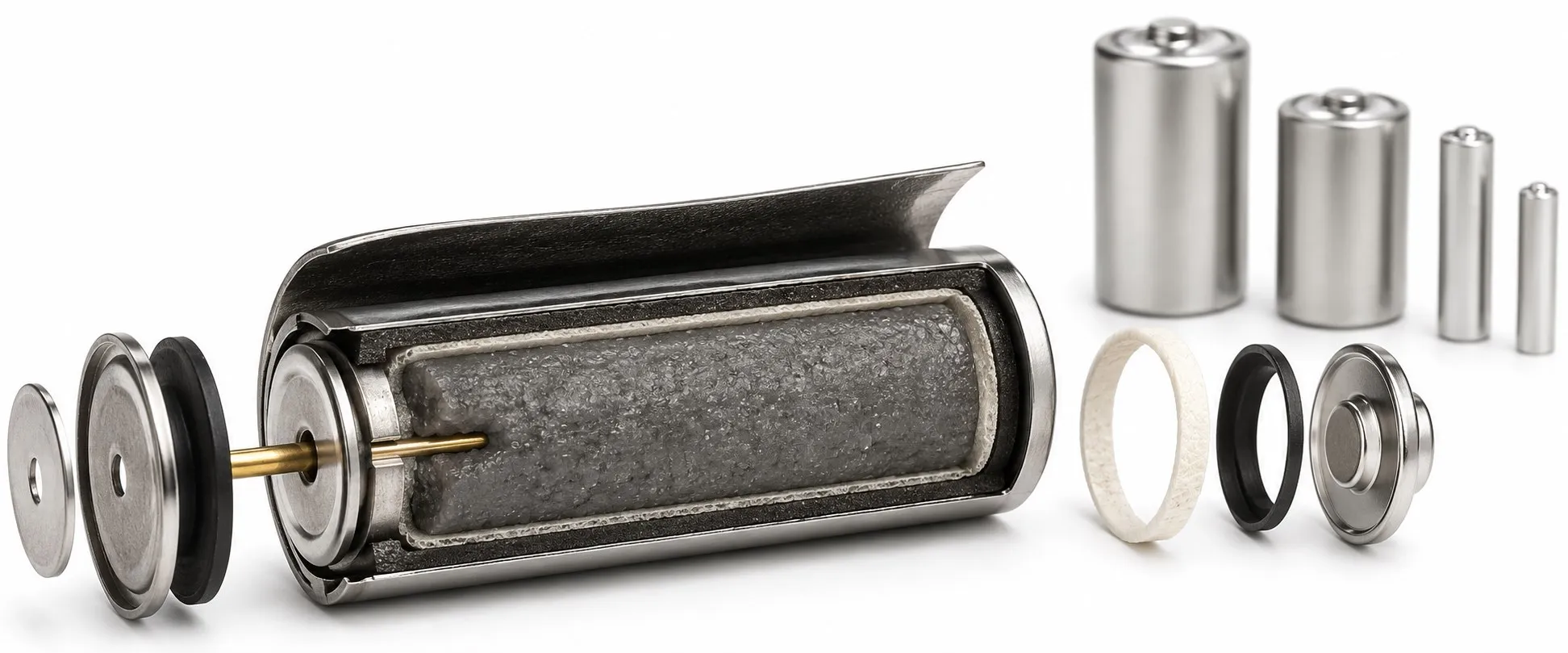
An alkaline battery usually means a non-rechargeable primary battery in everyday use. A common alkaline manganese cell contains a zinc anode, a manganese dioxide cathode and an electrolyte containing potassium hydroxide. The name refers to the alkaline electrolyte; it does not mean that every battery chemistry using an alkaline electrolyte is the same.
The cell converts stored chemical energy into electrical energy. Typical applications include remote controls, clocks, flashlights, toys and portable measuring instruments. Compared with zinc–carbon batteries, alkaline cells generally offer more usable energy and better performance under load, but operating time varies between devices.
Size, chemistry and voltage describe different properties
AA, AAA, C and D are common size designations. For alkaline cells, the corresponding IEC codes include LR6, LR03, LR14 and LR20, respectively. A single cell normally has a nominal voltage of 1.5 V. The familiar rectangular 9 V battery contains several cells rather than one 1.5 V cell; alkaline versions may carry a designation such as 6LR61.
The IEC 60086 family addresses primary battery dimensions, performance testing and safety. Physical fit is insufficient: check chemistry, voltage, polarity and the battery types permitted by the device manufacturer together.
Understanding capacity and high-current performance
A single mAh figure cannot describe alkaline battery performance under every operating condition. Usable capacity depends on discharge current, temperature, continuous or intermittent operation and the device's cut-off voltage. Always read the test conditions alongside capacity or operating-time data.
An alkaline cell generally has lower internal resistance than a zinc–carbon cell, but this does not guarantee stable voltage under every current pulse. Internal losses and voltage drop become more significant as the load increases. Performance can deteriorate as the cell discharges and at low temperatures. Understanding electrical resistance helps explain this behaviour.
Two 1.5 V cells connected in series provide approximately 3 V nominal; the connection does not double their mAh capacity. In battery packs, matching cell type and condition matters alongside total voltage.
Editor's note: Open-circuit voltage alone does not reveal remaining capacity. Voltage may fall considerably under load and recover when the load is removed. This recovery does not mean that the battery has recharged itself. Assess it through measurement under an appropriate load and the operating limits of the device.
Can rechargeable batteries replace alkaline cells?
Standard disposable alkaline batteries must not be placed in a charger. Attempted recharging can cause overheating, leakage or damage to the casing. Unless a product is explicitly identified as rechargeable, its shape alone must not be used to decide that it can be charged.
Ni-MH cells normally have a nominal voltage of 1.2 V. They can be advantageous in compatible devices that draw higher current or are used frequently, but the device must support that chemistry. A voltage-based battery indicator may behave differently. The IEC 61951 family, which includes standards for rechargeable nickel systems, should not be confused with the standards for primary alkaline cells.
Lithium-ion cells are not direct alkaline equivalents. A higher-voltage Li-ion cell resembling an AA battery must not be inserted into a device requiring a 1.5 V cell. Rechargeable products with a regulated 1.5 V output are a separate category; check their compatibility and charging method in their instructions. The same size does not imply the same electrical characteristics.
Storage, leakage and safe use
Store batteries in a dry place at normal room temperature, preferably in their original packaging. Shelf life depends on the product and storage conditions. The date on the package is not a promise of equivalent operating time inside a device. Do not refrigerate batteries or heat them in an attempt to restore performance.
Do not mix old and new cells, different chemistries or different brands in one set. A weak cell in a series group can be driven into excessive discharge or polarity reversal. Remove depleted batteries. For long-term equipment storage, follow the manufacturer's removal instructions, particularly where alarms or backup functions are involved.
Prevent battery terminals from shorting against metal objects, especially the closely spaced terminals of a 9 V battery. Do not use leaking, corroded or damaged cells. Avoid bare-skin contact with leakage and follow the battery and equipment manufacturers' cleaning and collection instructions.
When is alkaline a suitable choice?
Alkaline batteries can be convenient for low- or moderate-drain devices, occasional use and applications where charging management is undesirable. For frequent high-current use, compare the overall cost and operating performance of compatible rechargeable alternatives. For cold environments, prolonged storage or safety-critical equipment, use approved products and technical data rather than a general recommendation.
In industrial equipment, do not replace a clock or memory-backup battery with an alkaline cell based on appearance. Preserve the chemistry, voltage and part designation specified by the manufacturer.
Handling used batteries
“No added mercury” does not mean that a battery has no environmental impact. Keep used alkaline batteries separate from household waste and deliver them to an appropriate collection point. In Türkiye, TAP's collection network and local collection services are available. Ask the collection organisation how to hand over damaged or leaking batteries.
Related battery topics
Start with what a battery is. To compare alternative chemistries, explore Ni-MH batteries, lithium-ion batteries and lithium batteries. Review battery accessories when selecting holders, enclosures and connections, and battery and accumulator standards when comparing technical requirements.
Measurement and electrical fundamentals
Battery checks draw on multimeter use, voltage, electric current, the current unit ampere, and Ohm's law for understanding voltage drop under load. Connecting a multimeter's current input directly across a battery is not a capacity test; it can create a short circuit.
Battery Types Main Page, Batteries and Battery Chargers, Power Supplies
Technical note: Follow the product datasheet and the equipment manufacturer's battery instructions. Share field experience in accordance with the Otomasyon AVM community rules, or contact us with corrections and contributions.
References
Energizer: Alkaline manganese dioxide handbook and application manual
Energizer E91: AA/LR6 datasheet and discharge conditions
Panasonic Energy: Battery codes, capacity and use
Panasonic Energy: Ni-MH voltage and equipment compatibility
Duracell: Battery use, storage and safety
TAP: Used battery collection in Türkiye