
What is a closed loop vector drive
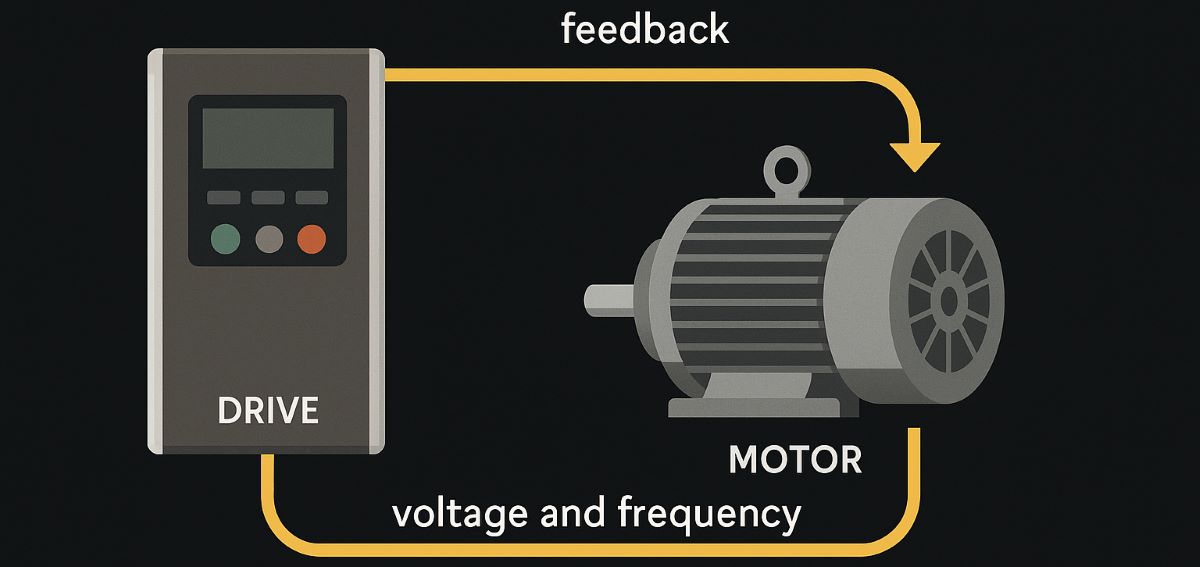
A closed loop vector drive is an electronic control system that is used to control the speed, torque, and direction of an electric motor. It consists of a closed loop control system that uses sensors to continuously monitor the speed and torque of the motor, and compares this to the desired speed and torque setpoint. The closed loop control system then adjusts the voltage and frequency of the power applied to the motor to maintain the desired speed and torque.
The vector control aspect of a closed loop vector drive refers to the ability to control the motor's torque and speed independently, rather than just controlling the speed as in a traditional closed loop control system. This allows for more precise and efficient control of the motor, and makes it possible to operate the motor at high speeds without experiencing torque ripple.
Closed loop vector drives are commonly used in a variety of applications, including industrial automation, material handling, and transportation systems. They offer a number of benefits, including improved performance, increased efficiency, and reduced maintenance requirements.
VVC+ control?
VVC+ (Variable Voltage and Frequency Control) is a control system used in electric motors and drives to control the speed and torque of the motor. It uses a closed loop control system to continuously monitor the speed and torque of the motor, and adjusts the voltage and frequency of the power applied to the motor to maintain the desired speed and torque.
The VVC+ control system is based on vector control technology, which allows for precise and efficient control of the motor. It is commonly used in a variety of applications, including industrial automation, material handling, and transportation systems. The benefits of using a VVC+ control system include improved performance, increased efficiency, and reduced maintenance requirements.
In summary, VVC+ is a control system used to control the speed, torque, and direction of an electric motor using vector control technology. It continuously adjusts the voltage and frequency of the power applied to the motor to maintain the desired speed and torque, resulting in improved performance and efficiency.
The key element of a closed loop vector drive is the feedback. Without actual signals from the motor, the controller only estimates what is happening. But when the drive continuously receives speed and torque data from an encoder, the system reacts instantly to changes in load, keeping the motor stable and reliable.
In real-world use, this means that even if the load suddenly increases — for example, in a conveyor carrying heavy material — the closed loop vector drive will quickly add current to maintain the set speed. This responsiveness is what makes it essential in precision applications such as CNC machinery or robotic arms.
VVC+ control, on the other hand, focuses more on energy efficiency. Since it doesn’t rely on feedback sensors, the system is simpler and cheaper to implement. It adjusts motor voltage and frequency dynamically, which works well for fans, pumps, or other equipment where small speed variations do not affect the process.
From an engineering perspective, the choice is clear: use closed loop vector control when accuracy and stability are critical, and use VVC+ when cost and simplicity matter more than precision. Both methods have their place, depending on the demands of the application.
In conclusion, closed loop vector control means trust in feedback, while VVC+ represents practical efficiency. The correct decision depends on whether your priority is high precision or low cost, but understanding the strengths of each system helps ensure long-term reliability and performance.
Your shopping cart is empty!