
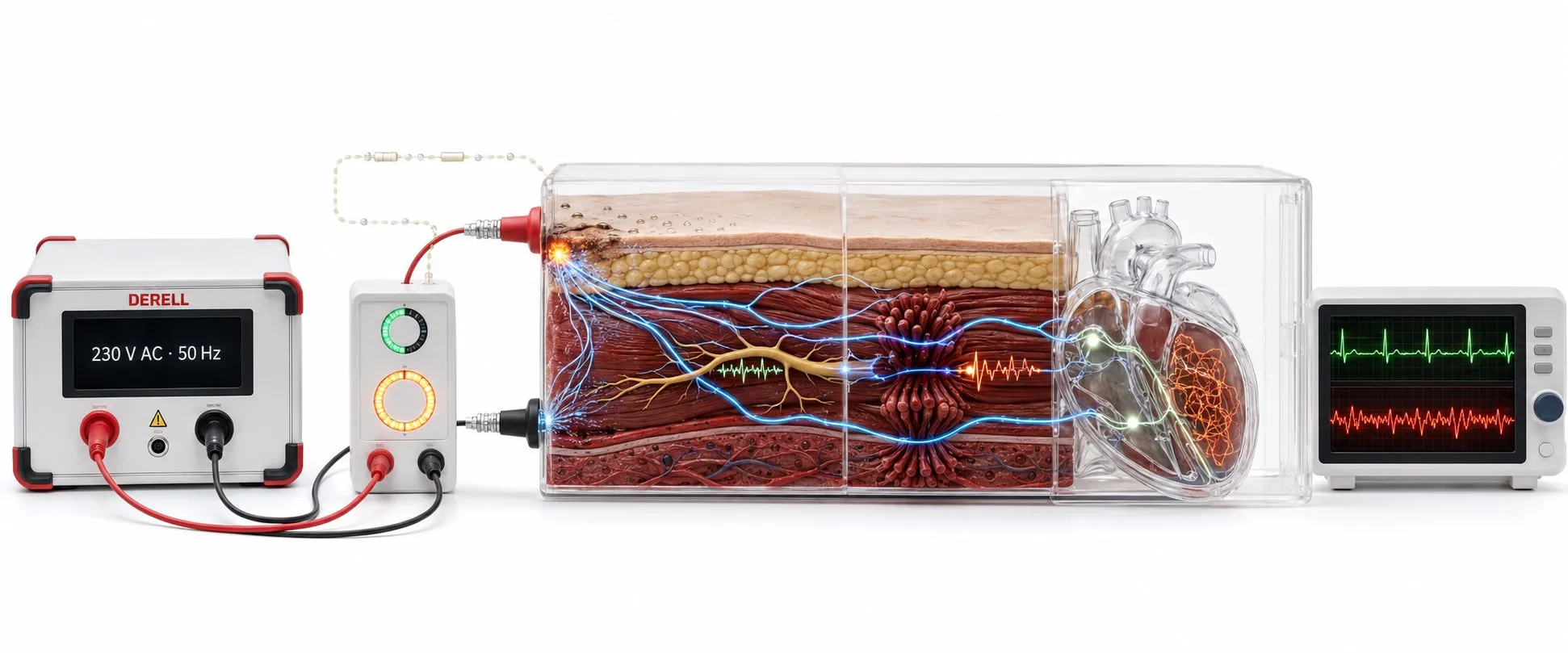
How does electrical voltage affect the human body?
A household mains supply can cause a fatal electric shock. In electrical engineering, “low voltage” is a classification, not a promise of minor injury. Voltage can drive current through the body when a conductive path exists. Understanding the difference between voltage and current helps explain why the number printed on a device cannot predict the outcome of accidental contact.
Follow the current path
The amount of current, exposure time, route through the body and type of supply all matter. Wet or damaged skin can offer less resistance. A path from hand to hand or hand to foot may cross the chest. The location of a visible mark does not describe the whole injury. Our guide to electric shock explains the underlying contact hazard.
When considering low-voltage risks, avoid assuming there is one harmless contact voltage for every person and environment. High voltage brings additional severe injury and arcing hazards. Standardised voltage levels describe electrical systems; they do not define what a human body can safely withstand.
Injury can extend beyond a skin burn
Electrical exposure can disturb heart rhythm and breathing and cause involuntary muscle contraction. With mains-frequency alternating current, a person may be unable to release a conductor. Direct current is also hazardous. Neither supply type should be treated as safe on the strength of its name.
Heating from current can damage tissue, including structures beneath the skin. A small external burn does not exclude deeper injury. Loss of muscle control can also lead to a fall or collision. An electrical arc can cause thermal injury without current passing through the body.
Make isolation the starting point
Plan maintenance around de-energised work. Identify and isolate supplies, prevent unexpected reconnection and verify absence of voltage using the appropriate procedure. A dark display or a stationary motor is not sufficient evidence. Capacitors may retain energy after disconnection, so follow the manufacturer's discharge time and verification instructions.
Protective earthing and a residual-current protective device perform different functions within a properly designed system. An RCD does not prevent every electric shock. Never bypass a device that trips; investigate the fault. Testing with an RCD tester also provides checks beyond operating the built-in test button.
A measurement is part of the work, not a shortcut around it
Electrical testing requires suitable equipment and competence. Choosing and using a multimeter safely includes checking its voltage and measurement category ratings. Suitable test probes and leads matter just as much. When measuring voltage, the wrong input terminal or function can introduce another hazard. A non-indicating screwdriver tester alone does not prove that a circuit is dead.
If someone receives an electric shock
Do not touch someone who is still in contact with electricity. Disconnect the supply only if you can do so safely. Stay away from high-voltage equipment or fallen power lines and wait for emergency responders. Call your local emergency number for collapse, abnormal breathing, chest pain, palpitations, serious burns or high-voltage exposure. In Türkiye, call 112.
Once the scene is safe, if the person is unresponsive and not breathing normally, begin CPR with dispatcher guidance and follow an AED's spoken instructions if available. Seek medical assessment after mains exposure, particularly with persistent symptoms, burns or pregnancy. No visible burn does not mean no injury.