
UU (Lu) under voltage
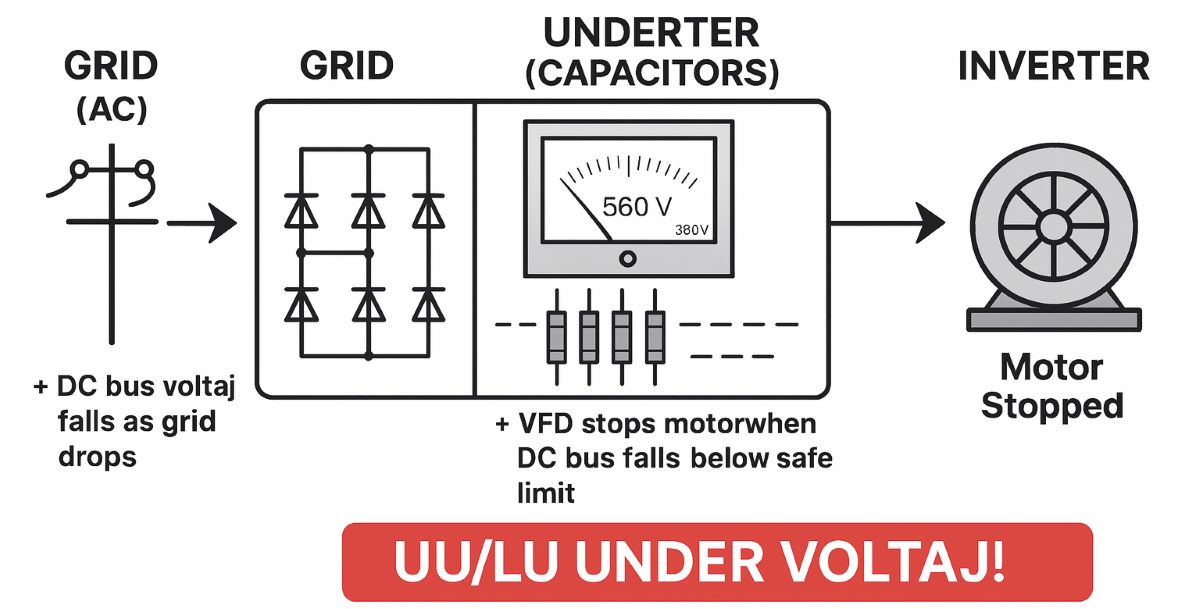
"UU" or "Lu" typically represents an Under Voltage fault in Variable Frequency Drives (VFD). This fault occurs when the voltage on the VFD's DC link (or DC bus) drops below a permissible minimum value.
Common causes for an under voltage fault include:
Low Input Voltage:
If the supply voltage to the VFD is too low, this fault can occur.
This could be due to a drop or interruption in the grid supply.
Capacitor Issues:
The DC link capacitors inside the VFD might be aged, weakened, or faulty.
If these capacitors cannot store energy properly, the DC link voltage may drop.
+ Tip: Always check main voltage and capacitor health if this alarm appears.
Incorrect Parameter Settings: If the parameters of the VFD are set incorrectly, it can also lead to an under voltage fault.
Power Interruption: A sudden power outage or surge can also lead to this type of fault.
When an under voltage fault is detected, the VFD typically stops automatically to protect the motor. To prevent and address such faults, it's essential to ensure regular maintenance of the VFD, replace capacitors if necessary, ensure the parameter settings are correctly configured, and ensure the supply voltage is accurate and stable.
+ Quick Tip: Under voltage faults are often warning signs of overlooked infrastructure or maintenance problems. Always check main power connections for looseness, undersized cables, and weak points in your grid supply — even a minor connection issue can cause voltage drops that trip your VFDs.
+ Practical Insight: Frequent under voltage alarms? Monitor your facility's voltage with a power analyzer — sudden drops may be triggered by large machines starting up, transformer issues, or temporary grid instability. *Never* trust just the VFD's display for real voltage analysis.
+ Maintenance Advice: Never ignore old or swollen DC link capacitors. Replace them at regular intervals, especially in dusty or high-heat environments. A single faulty capacitor can drop the entire bus voltage and shut down your process unexpectedly.
+ Pro Editor's Note: If you see both overvoltage and undervoltage errors on the same machine at different times, take a step back and check your whole electrical system for grounding, surges, or harmonics. Chasing the fault code alone often leads to wasted time and cost — root cause analysis wins every time!
Your shopping cart is empty!