
What is the disadvantage of UPS?
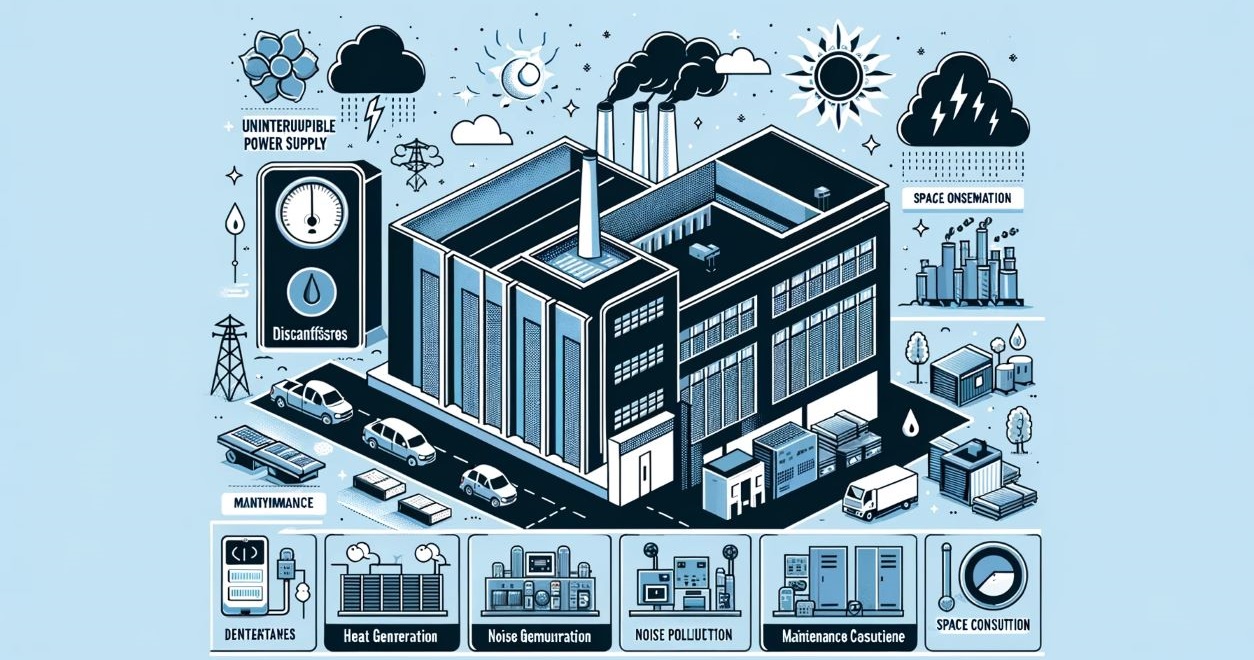
While UPS (Uninterruptible Power Supply) systems offer great benefits in terms of power protection and continuity, there are some important disadvantages you should consider as well:
Limited runtime: UPS systems typically provide backup power for only a short duration, usually ranging from a few minutes to about an hour depending on the capacity and power draw of connected devices. This means that during extended power outages, the UPS alone will not be sufficient.
Cost: UPS units, especially high-capacity or online (double-conversion) types, can be quite expensive. Over time, you’ll also need to account for battery maintenance and replacement costs, which add up and increase the total investment.
Size and weight: Larger UPS systems that provide longer runtimes are often bulky and heavy due to their internal batteries. This can make them difficult to move or install, especially in limited spaces.
Battery degradation: UPS batteries naturally wear out over time. As they degrade, the backup time and performance drop significantly. Regular battery checks and timely replacements are essential but can be both time-consuming and costly.
Noise: Some UPS models, particularly those with active cooling systems, can produce noticeable noise while running. This can be a problem in quiet office or home environments.
Efficiency: A UPS isn’t perfectly efficient — especially online (double-conversion) types that constantly convert between AC and DC. This causes some energy loss during operation, reducing overall efficiency.
Heat generation: During continuous use or under heavy load, a UPS can produce significant heat. Proper ventilation and cooling are necessary to prevent overheating and maintain stable performance.
Despite these downsides, a UPS remains a crucial device for anyone using sensitive or critical equipment. By understanding its limitations and selecting a model that matches your actual needs, you can balance the drawbacks while gaining reliable power protection.
Can a UPS work without a battery?
Technically, some UPS systems can operate without a battery, but their role changes. In such cases, the UPS works only as a surge protector and power conditioner while main power is available. It will still pass power through to connected devices, but it won’t provide any backup power if an outage occurs.
However, not all UPS units are designed to run battery-free. Using a UPS this way may cause malfunctions or even damage to internal components. Always check the manufacturer’s manual and specifications before trying to operate a UPS without a battery.
In general, running a UPS without a battery is not recommended. It defeats the device’s main purpose — providing temporary power continuity when electricity cuts out. To ensure reliability, keep your UPS batteries healthy, perform regular maintenance, and replace them when needed.
Ultimately, a UPS is only as good as its battery. When maintained properly, it’s a small investment that can prevent big losses — both in time and hardware.
Your shopping cart is empty!