
What is the operating temperature and humidity range?
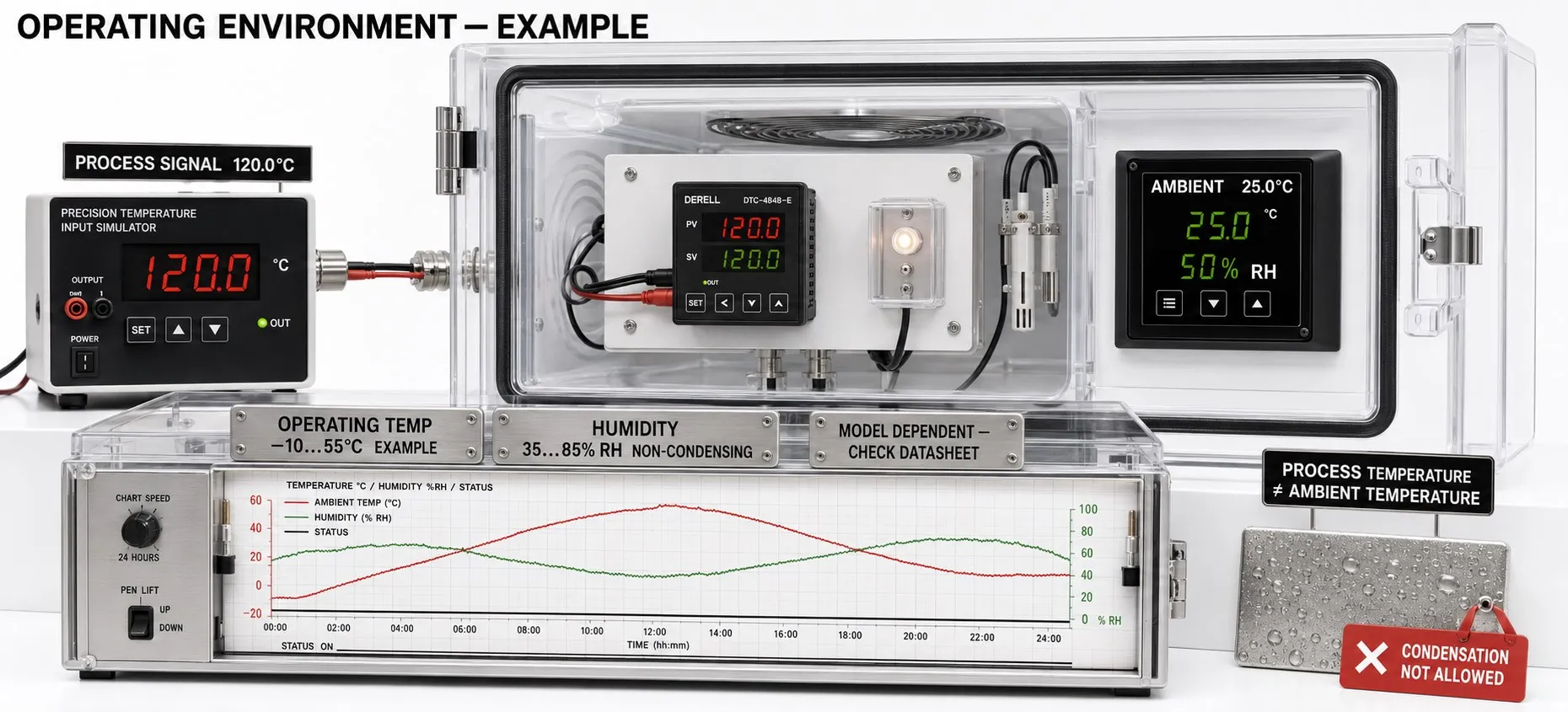
Reliable measurement starts with the controller's surroundings
Hello, a temperature controller's ambient operating temperature and humidity range specifies the environmental conditions in which its electronic housing can operate. These limits come from the documentation for the particular model. There is no single range that applies to every controller. A high process measurement range does not mean the controller's housing can withstand that same temperature.
Process temperature and ambient temperature are different
A furnace may operate at 800 °C while its controller works in a cabinet at 35 °C. These are separate conditions. The maximum measurement temperature, adjustable temperature range and compatible sensor types concern the process measurement. The permitted ambient temperature concerns the air surrounding the controller. The limits of the sensor, its cable and its connection components must also be checked separately.
Editor's note: The displayed value usually represents the process temperature measured by the sensor, rather than the temperature inside the cabinet. Use a separate measurement near the controller to assess its actual ambient conditions.
How to read the temperature and humidity specifications
Operating temperature specifies the limits for powered operation. Storage temperature describes conditions for unpowered storage; a wider storage range does not extend the operating range. Relative humidity, usually written as %RH, depends on temperature. Read the humidity limits together with the measurement temperature and the requirement for non-condensing operation.
For a specific example, OMRON's E5CC family specifications state an operating temperature of −10 to +55 °C and 25–85% RH, without condensation or icing. The same page specifies a +50 °C upper limit for its three-year warranty conditions with standard mounting. These are conditions for that product family, rather than universal limits for temperature controllers.
A comfortable workshop can still contain an overheated cabinet
The workshop may be at 30 °C while the air around the controller inside a closed cabinet reaches 58 °C. In this example, a controller rated for a maximum ambient temperature of 55 °C is outside its operating conditions. Take measurements with the cabinet closed and the machine under its normal load. Allow for summer conditions, sunlight on the cabinet and blocked filters.
During installation and mounting, follow the manufacturer's spacing and layout requirements. Power supplies, drives, transformers and SSR heat sinks can create local hot spots. The controller's own power consumption also contributes to the heat load. Adding a fan will not solve every overheating problem; if the outside air is already too hot, a suitable cabinet cooling system may be needed.
Why does the specification say non-condensing?
Condensation occurs when a surface in contact with moist air becomes cold enough for water droplets to form. The relevant threshold is the dew point. A cold controller brought into a warm, humid production area can collect condensation even when room humidity is below 100%. Allow it to acclimatise and meet the manufacturer's conditions before applying power.
For cabinets that cool overnight or experience frequent temperature changes, a suitable enclosure heater and humidity control can reduce condensation risk. Heater sizing needs care because excessive heating can also exceed operating limits. Cooling and condensation prevention may both be necessary in the same cabinet.
IP protection, humidity limits and accuracy describe different things
An IP protection rating describes resistance to dust and water ingress for the specified part of a product. A front panel rated IP65 or IP66 does not automatically give the rear housing and terminals the same protection. A high IP rating also does not authorise operation with condensation. Assess the gasket, installation and cabinet protection together.
The reference conditions for measurement accuracy must also be distinguished from the permitted operating range. An accuracy specification stated at an ambient temperature of 23 °C does not establish the same error limit at every operating temperature. The documentation may specify temperature influence separately. If readings drift as the cabinet heats up, investigate before changing the calibration offset.
What should you check on site?
Start with the complete model code and the current manual. Then assess the lowest and highest ambient temperatures, relative humidity and possibility of condensation around the controller. Check additional restrictions for dust, corrosive gases, vibration and altitude. During maintenance, inspect fans, filters, seals and signs of moisture. For recurring faults or unstable readings, investigate ambient conditions alongside the sensor and wiring connections.
When selecting a controller, consider more than its measurement range and price. Choose a model suited to the actual cabinet conditions and leave an application-appropriate operating margin, rather than designing normal operation around the upper temperature limit. There is no fixed temperature margin that suits every controller and installation.
Temperature controllers | Temperature controller FAQ | Temperature controller prices