
what is kw (Watt)?
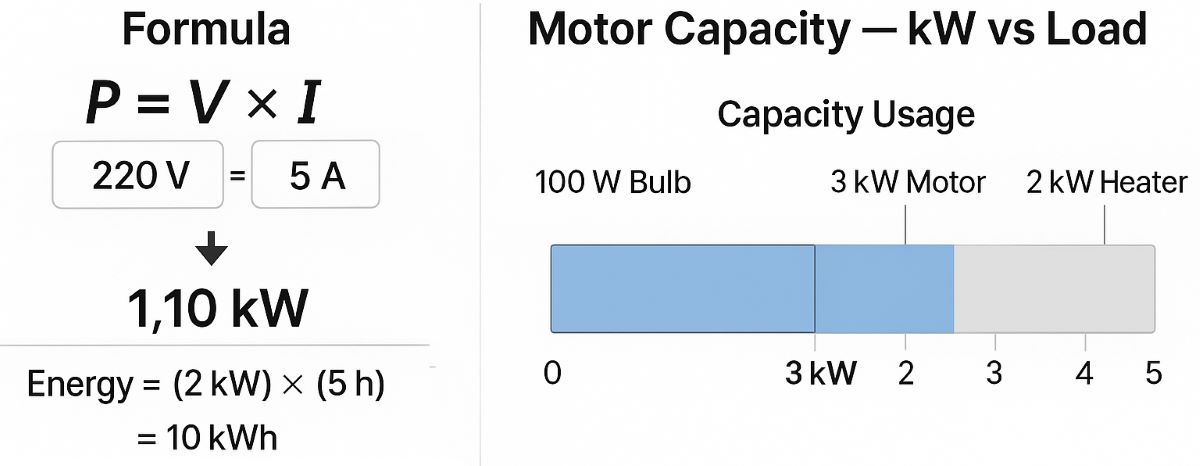
kW (kilowatt) is a unit of electrical power. It is used to measure the usable power of an electric motor or other electrical equipment. Electrical power is defined as the rate at which energy is consumed, and depends on factors such as voltage, current, and resistance. kW is equal to 1,000 W (watts) and is one of the most common measures for electrical systems.
For example, if a motor produces 3 kW of power, it means the motor can provide 3,000 W of energy per unit of time. This shows the motor’s ability to operate specific loads safely.
How much power is 1 kW?
1 kW is defined as 1,000 watts. It represents the amount of power consumed or produced per unit of time. The basic formula is: Power (W) = Voltage (V) × Current (A). For instance, with 220 V and 5 A, the result is 1,100 W, which is 1.1 kW.
Formula: 1 kW = 220 V × 5 A = 1,100 W
This means the device consumes or produces 1,100 W of electricity per unit of time. Different voltage and current values will directly change the kW output.
What does kW mean in energy?
In terms of energy, kW represents the rate of energy consumption or production. For example, a motor rated at 3 kW can consume or produce 3,000 watts of energy every second it operates. This measure is very useful to compare efficiency and performance between devices.
What do you mean by 1 kW?
1 kW (kilowatt) simply equals 1,000 watts. It is commonly used for electric motors, generators, and other industrial devices. If a motor has 1 kW output, it means the motor can produce or consume 1,000 watts of electricity per unit time. This helps engineers understand its energy needs and load capacity.
What do you mean by electric motor kW?
The kW rating of an electric motor defines its power output. A higher kW motor can handle heavier loads and deliver stronger performance. For example, a 5 kW motor can deliver 5,000 W continuously, making it suitable for larger machines or demanding applications.
Additional Explanations
In modern industry, most machines, pumps, and compressors are classified according to their kW rating. This allows technicians to select the right equipment for their system without causing overload or energy waste.
Beyond motors, kW is also important in heating systems, cooling systems, and power generators. It directly shows both the performance capacity and the energy demand of the equipment.
In daily life, the total kW rating of home appliances defines electricity bills. For example, a 2 kW heater running for 5 hours consumes 10 kWh of energy. That’s why understanding kW is not just technical but also practical in everyday use.
Finally, correct interpretation of kW helps improve energy efficiency and avoid unnecessary costs. A device with a higher kW rating is more powerful, but it also consumes more energy. Finding the right balance between power and efficiency is always the key.
Your shopping cart is empty!