
IEC 60086
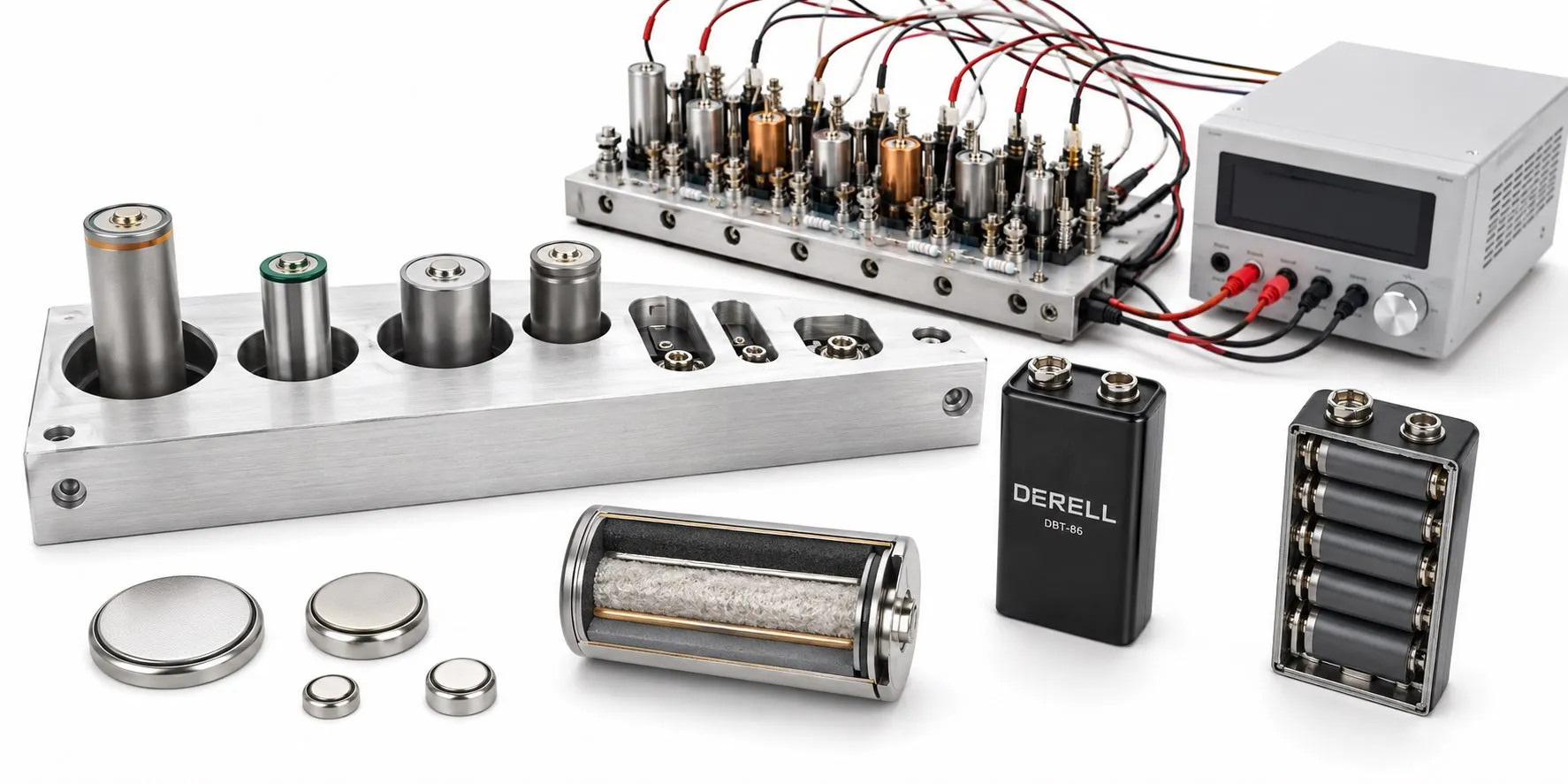
Choosing primary batteries: fit, performance and safety
IEC 60086 is a family of standards for primary cells and batteries—products designed to deliver energy without being recharged. Familiar examples include alkaline batteries, zinc-carbon cells and primary lithium batteries. The series addresses dimensions, designation, terminal layout, marking, discharge performance and safety. When comparing battery types, establish the primary or rechargeable category before considering capacity.
What each part covers
IEC 60086-1:2026 sets the general framework for battery designation, dimensions, terminals, marking and test methods. It supports interchangeability between manufacturers through standard form, fit and function. Our battery fundamentals guide explains the cell and battery terminology behind these specifications.
The physical and electrical specifications changed structure in 2026. IEC 60086-2:2021 was replaced by two parts: IEC 60086-2-1:2026 for primary batteries with aqueous electrolytes, and IEC 60086-2-2:2026 for primary lithium batteries with non-aqueous electrolytes. They specify dimensions, discharge test conditions and performance requirements for the relevant battery types. A useful companion is our comparison of alkaline, zinc-carbon and rechargeable batteries: a common size does not imply common electrical behaviour.
IEC 60086-3:2021 covers watch battery dimensions, designation and test methods. Safety is addressed separately: IEC 60086-4:2025 concerns primary lithium batteries, while IEC 60086-5:2021 concerns aqueous-electrolyte primary batteries, including alkaline types. These safety parts consider both intended use and reasonably foreseeable misuse. The 2025 edition of Part 4 also updates marking and child-resistant packaging requirements.
IEC 60086-6:2020 provides guidance on environmental performance, collection and recycling symbols and life-cycle assessment. Published on 5 October 2026, IEC TR 60086-7:2026 is a technical report describing a saline soak test that simulates ingestion of coin/lithium button cells. Its purpose is to assess potential internal injury indirectly; it does not establish that swallowing a battery is safe.
Keep primary lithium and lithium-ion separate
A primary lithium battery is not a rechargeable lithium-ion battery. Fitting inside a battery charger does not make a primary cell rechargeable. For rechargeable NiMH and NiCd products, look at IEC 61951; for portable rechargeable battery safety, consult IEC 62133. UL 1642 is another lithium battery safety standard. These references address different scopes and should not be treated as interchangeable labels.
Read the test conditions before comparing runtime
A capacity figure needs context. The available capacity and service life of an alkaline cell depend on current demand, temperature, cut-off voltage and continuous or intermittent operation. A remote control drawing occasional pulses and a device drawing sustained high current will not obtain the same service life from the same cell. Match the manufacturer's discharge curves and test conditions to the application. An IEC 60086 reference does not promise one universal runtime.
When assembling or replacing battery groups, do not mix old and new cells or different battery types. Check polarity, prevent short circuits and follow the manufacturer's storage instructions. Confirm that battery holders and connection accessories suit the product. Attempting to charge a primary battery can cause leakage or rupture.
For automation equipment, start with the specified battery code, voltage, connection arrangement and replacement procedure. In some devices, a battery preserves RAM contents or keeps a clock running. Do not assume every memory technology needs battery backup, or that data will survive a replacement: use the equipment manual to establish what is retained and how.
Editor's note: A battery that fits the holder may still be the wrong replacement. Check chemistry, voltage, polarity and load requirements together. If a supplier states only “IEC 60086 compliant”, ask for the part number, edition and exact product model covered by the assessment. Our battery standards guide helps connect each battery category with the appropriate reference.
Related reading
Alkaline, zinc-carbon and rechargeable batteries · Primary lithium · Lithium-ion · IEC 61951 · IEC 62133 · UL 1642 · Battery standards
Sources: IEC 60086-1:2026 · IEC 60086-2-1:2026 · IEC 60086-2-2:2026 · IEC 60086-3:2021 · IEC 60086-4:2025 · IEC 60086-5:2021 · IEC 60086-6:2020 · IEC TR 60086-7:2026 · Energizer alkaline battery handbook · Energizer capacity and battery glossary