
Single phase vs three phase VFD
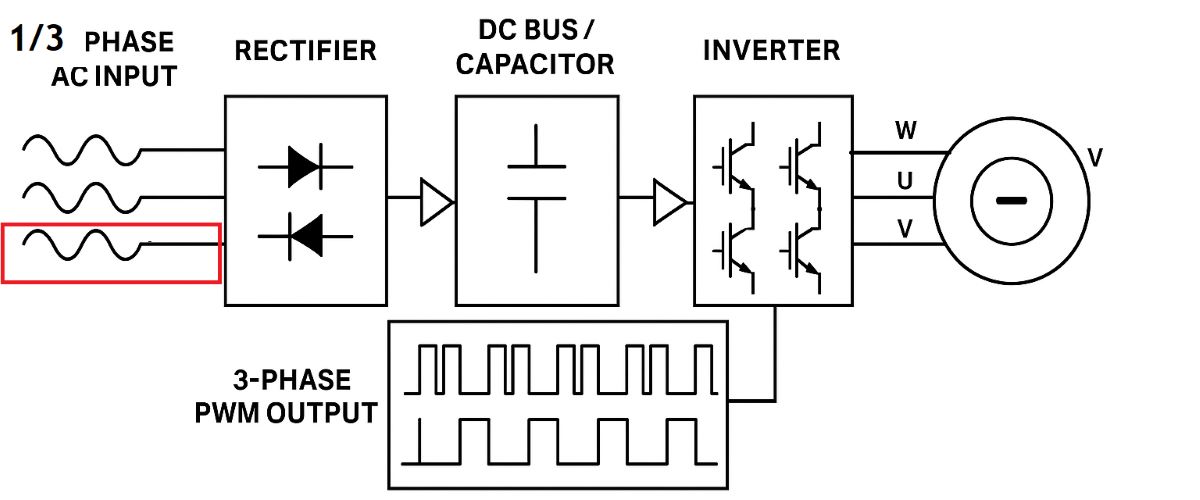
Single-phase to 3 Phase VFD vs Three-phase to 3 Phase VFD
A single-phase to three-phase variable frequency drive (VFD) is an electronic device that converts a single-phase AC input voltage into a three-phase AC output voltage with adjustable frequency and magnitude. It is used to control the speed and torque of a three-phase induction motor.
A three-phase to three-phase VFD converts a three-phase AC input voltage into a three-phase AC output voltage with adjustable frequency and magnitude. It is also used for speed and torque control of three-phase induction motors.
The main difference between them is the input voltage. A single-phase to three-phase VFD takes single-phase AC and generates three-phase AC, while a three-phase to three-phase VFD takes three-phase AC input and regulates the output accordingly.
Both types use pulse width modulation (PWM) to regulate frequency and voltage, ensuring smooth and accurate motor control, even at low speeds. Selecting the correct VFD rating for the motor and load is critical for efficiency and reliability.
When choosing between these two, it is not only about the input supply but also about protection functions. Overvoltage, undervoltage, short-circuit, and thermal protections extend the drive’s life and secure the motor in demanding conditions.
Another key factor is the application type. For example, pumps and fans often require variable torque control and benefit from simple V/f mode. But for precision machines like CNC or hoists, vector control or sensor-based feedback is required for accurate torque response.
A common misconception is that a VFD only changes motor speed. In reality, it also improves energy efficiency. In pump or HVAC systems, using a VFD can lead to significant power savings, sometimes reducing energy costs by 20–30%.
One must also consider harmonic distortion. Low-quality drives may inject high harmonics into the grid, affecting other equipment. Industrial-grade VFDs with proper filtering ensure compliance with standards and protect the electrical network.
Motor cabling is another critical factor. Long cable distances may cause voltage reflections that damage motor insulation. Using manufacturer-recommended cable types and adding output filters when necessary ensures safe operation.
Cooling is often overlooked. VFDs generate heat, and in enclosed panels they must be supported with proper ventilation or fans. Otherwise, overheating can trigger faults or reduce the lifespan of the drive.
During commissioning, correct parameter setup is essential. Entering the motor’s rated values (voltage, current, frequency, poles) accurately ensures smooth and efficient operation. Wrong settings may cause unstable control or damage.
Finally, planning for future expansion is wise. Selecting a slightly higher-rated drive than the current requirement can cover future motor upgrades and prevent the need for a complete replacement later.
Your shopping cart is empty!