
In which types of industries and applications are hydraulic systems used?
Hello dear colleagues,
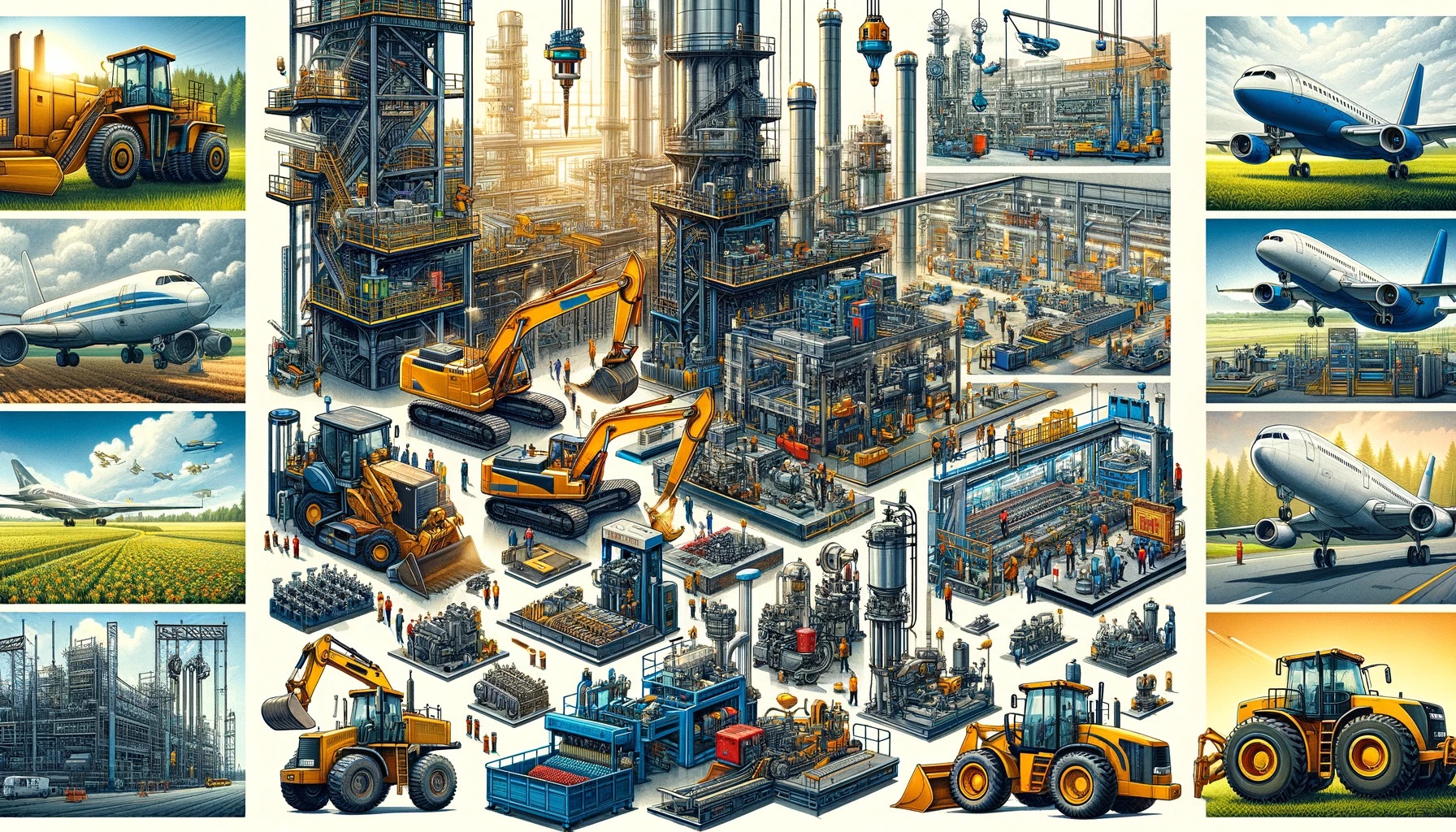
Hydraulic systems are used in many industries and applications due to their ability to generate high forces and precise control of movement. Here are a few examples:
Construction: Hydraulic systems are crucial in construction equipment such as excavators, bulldozers, cranes, and loaders. They provide the heavy lifting and precise control needed in construction operations.
Automotive: Hydraulic systems are used in car brakes, power steering systems, and automatic transmissions. They are also used in large vehicles like trucks and buses.
Aerospace: Aircraft and spacecraft use hydraulic systems to control and actuate landing gear, flaps, brakes, and doors.
Manufacturing and Industrial: Hydraulic systems are used in factories for controlling machinery, such as in assembly lines, conveyors, injection molding machines, presses, and robotic arms. They are also used in heavy machinery for tasks like cutting, bending, and forming metal.
Marine: Ships and submarines use hydraulic systems to control steering, stabilize the vessel, and operate doors and hatches.
Agriculture: Farm equipment like tractors and harvesters use hydraulic systems for various tasks like lifting, digging, and pushing.
Mining and Drilling: Hydraulic systems are used in drilling rigs, excavators, and shovels in the mining industry for extraction and exploration activities.
Entertainment: Hydraulic systems are used in theme park rides, movie sets, and theatrical stages to create motion and special effects.
Energy: Hydraulic systems are used in dams for the control of water flow, in wind turbines for adjusting blade angles, and in the oil and gas industry for operating valves and heavy machinery.
This list is not exhaustive, and there are many more applications and industries where hydraulic systems are used. It's their versatility, ability to generate high forces, and precise control that make them so widely used across a range of applications.
Below, you can find the items where we try to answer the most frequently asked questions from our users. Hydraulic control technologies are advancing every day, and factors such as efficiency, environmental compatibility, and carbon footprint are becoming prominent.
- What is a hydraulic system and how does it work?
- What are the differences between hydraulic and pneumatic systems?
- In which types of industries and applications are hydraulic systems used?
- What are the main advantages and disadvantages of hydraulic systems?
- What kind of maintenance do hydraulic systems require?
- What types of fluids are used in hydraulic systems and why?
- How energy efficient are hydraulic systems?
- What are the environmental impacts of hydraulic systems?
- What is a hydraulic pump and how does it work?
- Are hydraulic systems safe? What safety measures should be taken?
- How is pressure set and controlled in hydraulic systems?
- What is a hydraulic cylinder and what is its function?
- What technological advancements could be expected in hydraulic systems in the future?
- What is a hydraulic brake system and how does it work?
- What is the potential for energy savings with hydraulic systems?
- What materials are hydraulic systems made of, and how does the choice of materials become important?
- How is fault detection done in hydraulic systems?
- How can pressure loss be prevented or minimized in hydraulic systems?
- How can hydraulic systems be made more efficient?
- What is the cost of hydraulic systems and what are the long-term costs of using them?
These questions generally cover many questions that might come to mind about Hydraulic control systems and sensors. Each user or student will have their own specific questions depending on a particular situation or application. The answers are not binding or definitive. "There is no problem in sharing our article above as a source. 03/2020"
Your shopping cart is empty!