
Pressure and
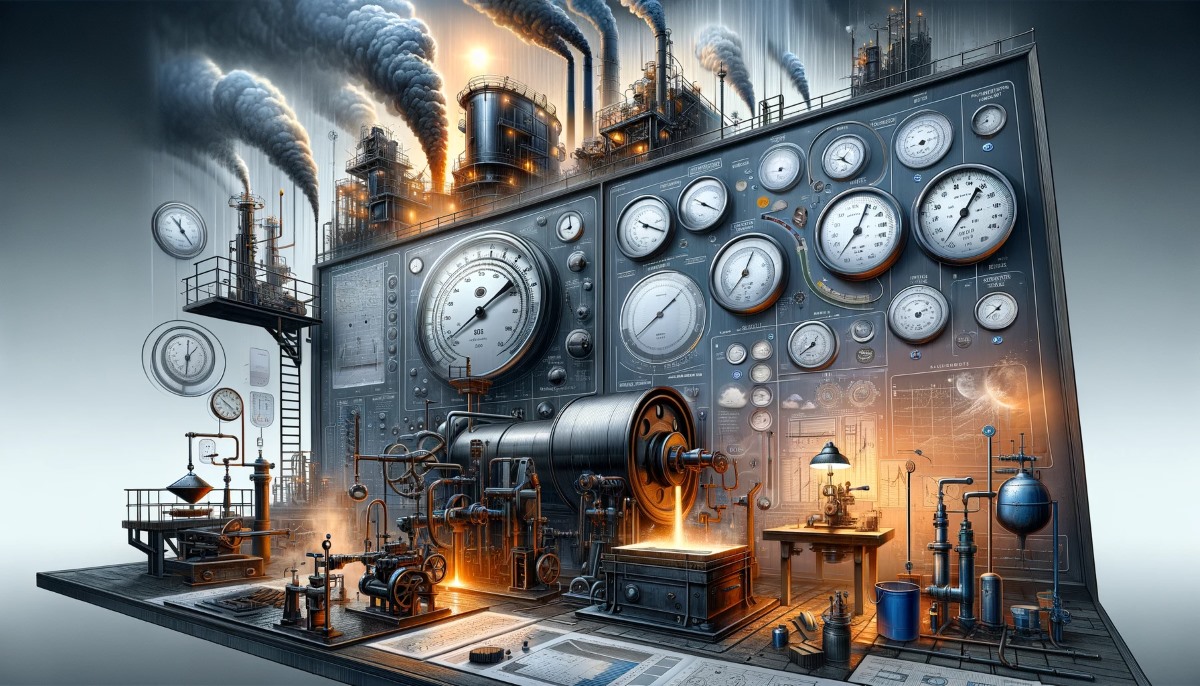
Hi everybody,
Pressure is a fundamental concept in physics, engineering, and many other fields. It is defined as the force per unit area, and is often denoted by the symbol P or p. Pressure can be expressed in a variety of units, including the SI unit of pascals (Pa), as well as pounds per square inch (psi), atmospheres (atm), and others.
In general, pressure is important in any situation where there is a force acting on a surface. This includes applications in fluid mechanics, where pressure is used to describe the behavior of fluids in pipes, pumps, and other systems. Pressure is also important in materials science, where it is used to describe the behavior of solids under stress, as well as in the design of buildings, bridges, and other structures.
In addition, pressure plays a crucial role in many everyday activities. For example, blood pressure is an important health metric that can be used to assess the functioning of the circulatory system, while air pressure is important for weather forecasting and aviation. Overall, pressure is a key concept in many areas of science and engineering, and has a wide range of practical applications.
Pressure is a physical quantity that measures the amount of force per unit area applied to a material. In other words, it is the force acting perpendicular to the surface of an object per unit area over which that force is distributed. Pressure is a scalar quantity, meaning it has only a magnitude and no direction.
Pressure is an important concept in many fields of science and engineering, including physics, chemistry, fluid dynamics, and materials science. It plays a crucial role in understanding how fluids (liquids and gases) behave, how they flow through pipes and other channels, and how they exert forces on objects. In engineering, pressure is used to design and analyze machines, structures, and systems that operate under various types of stresses and loads.
In everyday life, we encounter pressure in a variety of contexts, such as measuring tire pressure, checking blood pressure, and monitoring the pressure in various industrial processes. Understanding the principles of pressure is essential for many practical applications, including the design of buildings, airplanes, and medical equipment.