
Color sensors
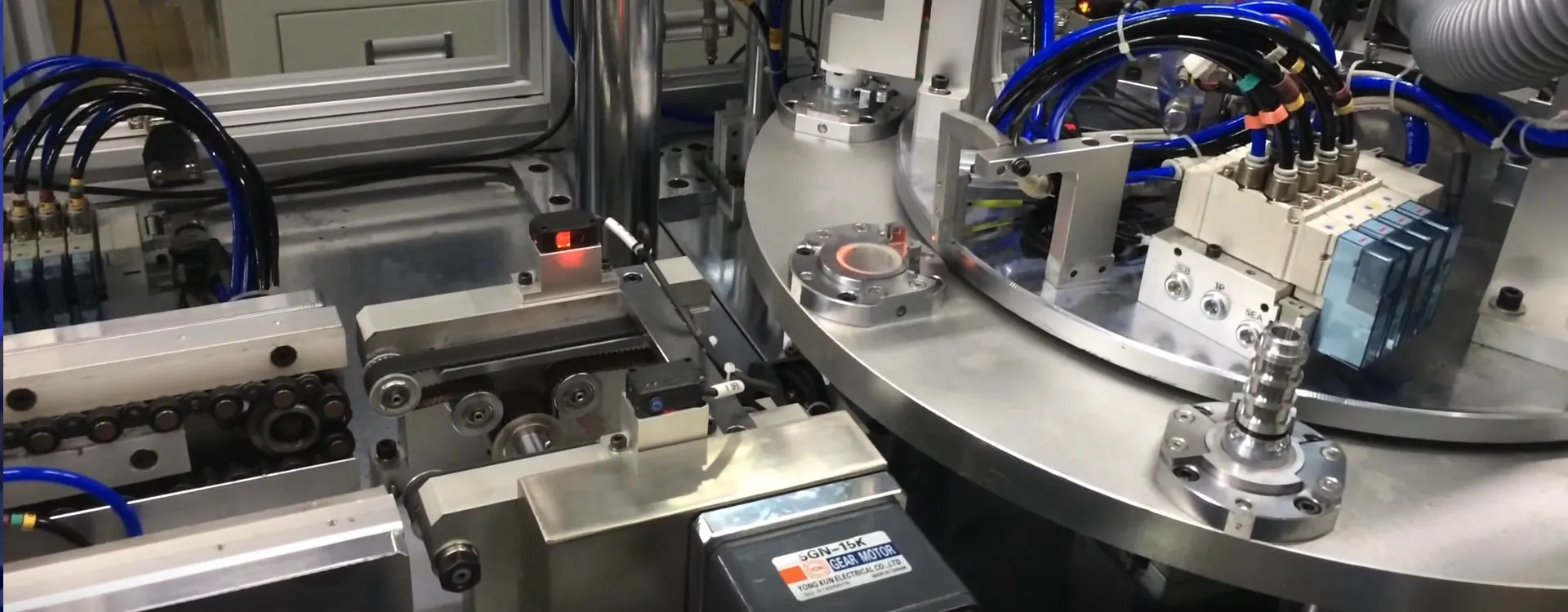
Color matching and sorting on the production line
Color sensors evaluate light from a product surface to check whether it matches a taught reference color. Typical tasks include sorting caps, identifying an incorrect label and distinguishing plastic components. Unlike sensors that simply detect the presence of an object, these devices base their decision on color information.
Compare products in this category by working distance, light spot size, the number of colors required and output options. Not every photoelectric sensor can distinguish colors. Choosing the appropriate sensor type is more useful than relying on a general claim of high speed or precision.
Color recognition and contrast detection
A photoelectric sensor can evaluate light returned from an illuminated object. Color sensors compare information such as RGB channel signals with a reference. The illumination source and evaluation method depend on the model.
A contrast sensor may be sufficient to distinguish a registration mark from its background. Sorting cap colors or closely related shades requires suitable color evaluation capabilities. Some contrast sensors also offer a color mode, so check the supported operating modes rather than judging by the product name alone.
Distance, gloss and small targets
Check sensing distance together with color discrimination stability. Changes in object height, angle, gloss or texture can change the returned light. Glossy film and metallic surfaces may require suitable measurement geometry, glare suppression or application-specific optics. Do not assume that every model requires the same mounting angle.
If the light spot is larger than the colored target, the background can influence the reading. Suitable fiber optic sensor heads or fiber optic photoelectric systems may help in confined spaces. However, not every fiber optic system detects color: the head and controller must support the intended color recognition task together.
Line speed and PLC integration
Response time must suit the time the target spends at the sensing point. For example, a colored area 5 mm long in the direction of travel passes a point in about 5 ms at 1 m/s. Light spot size and edge transitions can reduce the usable measurement time. Consider sensor response, the PLC input filter and the time needed for the program to capture the signal.
If the color decision triggers a downstream reject station, track the product position as well. An encoder can help on a variable-speed conveyor; a color decision alone does not indicate when the item reaches the rejection point.
Check PNP/NPN compatibility, NO/NC output logic and the supply voltage range. Some models provide parameter and diagnostic access through IO-Link. The number of stored colors may differ from the number of physical outputs. Select the cable or connector and pin assignment according to the product wiring diagram.
Teaching and tolerance settings
Teach-in records the acceptable reference sample. Perform it with clean optics, at the actual working distance and under production lighting conditions. Test acceptable boundary samples and colors that must be rejected, rather than relying on one perfect sample. Increasing tolerance accepts more variation, but can also increase the chance of accepting the wrong product.
Editor’s note: Recognizing a taught color is different from calibrated color measurement. Do not treat sensor RGB readings as equivalent to on-screen sRGB codes. If numerical color differences or results comparable with laboratory measurements are required, verify the measurement principle and accuracy specifications separately.
Product selection and price comparison
When comparing sensor prices, look beyond housing size. Discrimination between similar shades, distance tolerance, glossy-surface capability, color memory, outputs and communications can affect cost. Include mounting brackets, connection cables and required photoelectric sensor accessories in the overall comparison.
Assess sample colors, surface gloss, target size, working distance, line speed and required output type together. Where practical, base the final selection on an application trial using actual production samples.
Related categories: Sensors / Photoelectric sensors / Sensor accessories