
OH (Heatsink OvrTmp)
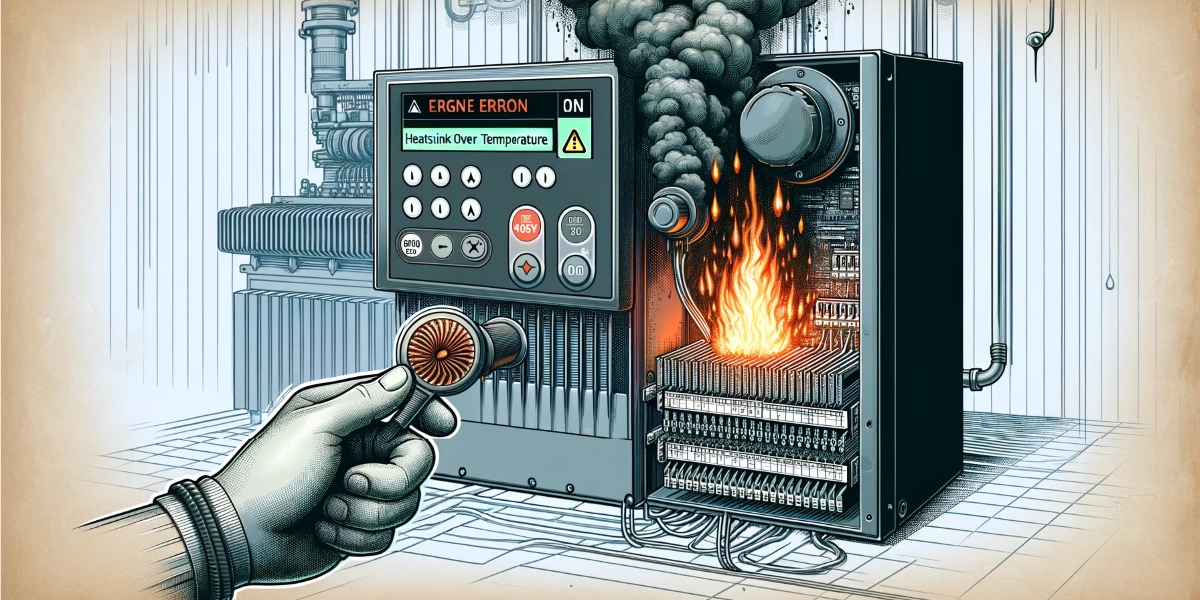
The "OH" or "Heatsink OvrTmp" fault in Variable Frequency Drives (VFD) indicates an over-temperature condition in the heatsink or the drive itself. This is a critical fault as excessive temperature can damage the VFD components, leading to premature failure.
Common causes for a heatsink over-temperature fault include:
Inadequate Ventilation: If the VFD is placed in a location with poor air circulation or if the ambient temperature is too high, the VFD might overheat. Dust and debris can also clog the VFD's cooling fans or vents, reducing cooling efficiency.
Cooling Fan Failure: Many VFDs have built-in cooling fans. If this fan fails or operates inefficiently, it can lead to overheating.
Excessive Load: Operating the motor at loads higher than what the VFD is rated for can cause the VFD to work harder and generate more heat.
Internal Component Failure: A failing component within the VFD can generate excessive heat. For example, a short in an IGBT (Insulated Gate Bipolar Transistor) or a malfunctioning diode can raise temperatures.
Incorrect Parameter Settings: Improper settings can sometimes cause the VFD to work outside its optimal range, leading to overheating.
When an "OH" or "Heatsink OvrTmp" fault is detected, the VFD typically stops operating to protect itself and prevent any potential damage. To address and prevent such faults:
- Ensure the VFD has adequate ventilation and is not exposed to high ambient temperatures.
- Regularly clean the VFD and its environment to prevent dust and debris buildup.
- Check and, if necessary, replace cooling fans.
- Ensure the motor and VFD are correctly sized for the application.
- Periodically check the VFD's internal components and settings.
Addressing the root cause of the overheating is essential to ensure the longevity and efficient operation of the VFD.
Your shopping cart is empty!