
Is real-time data monitoring possible with a datalogger?
Hi dear friends,
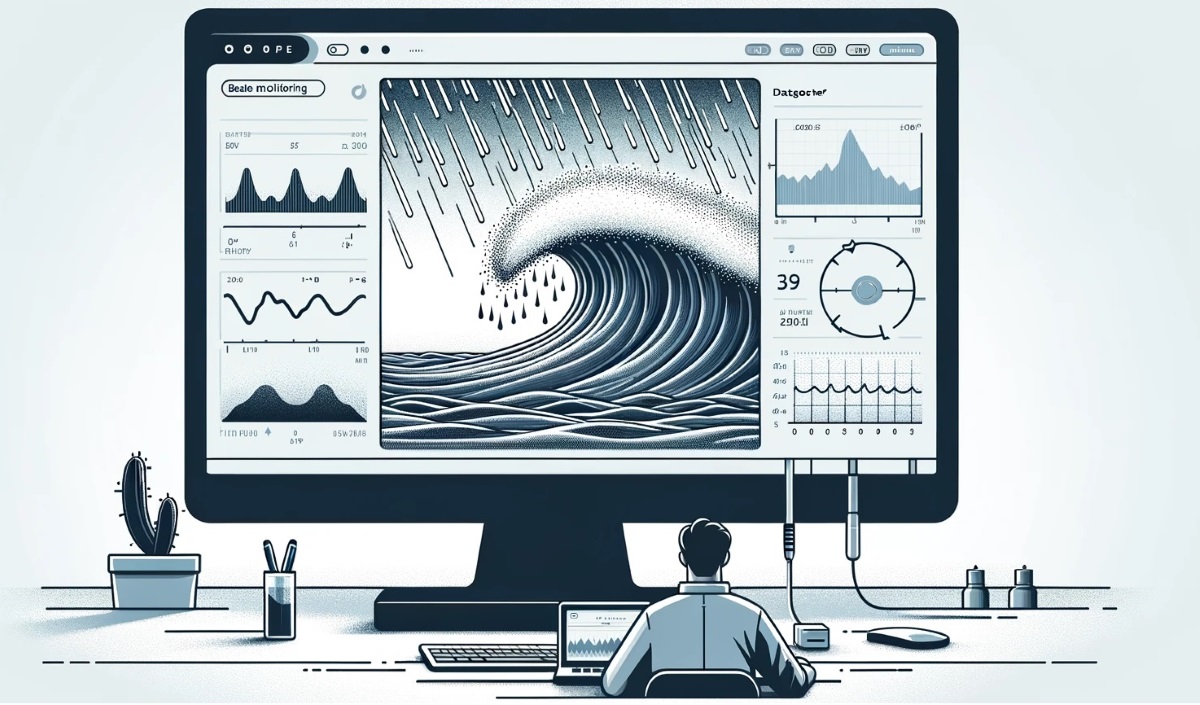
Real-time data monitoring is a crucial aspect of various applications ranging from industrial process control to environmental monitoring. A datalogger, traditionally used for recording data over time, can also play a significant role in real-time data monitoring, depending on its design and capabilities. This detailed discussion explores the potential of dataloggers for real-time data monitoring, the required features, and the integration challenges.
Real-time Data Monitoring with Dataloggers
Real-time data monitoring involves the continuous observation of data as it is generated, allowing for immediate analysis and decision-making. Dataloggers can be used for real-time monitoring if they possess the following features:
High Sampling Rate: The datalogger must be capable of sampling data at a frequency sufficient to capture the dynamics of the monitored process. This ensures that changes are detected promptly.
Real-time Communication: The device should have the capability to transmit data in real-time to a monitoring system or interface. This can be achieved through wired connections (e.g., Ethernet, USB) or wireless technologies (e.g., Wi-Fi, Bluetooth, cellular networks).
Data Processing: Some dataloggers are equipped with onboard processing capabilities, allowing them to perform basic data analysis in real-time. This can include filtering, scaling, and applying algorithms to the raw data.
Integration with Control Systems: In applications such as industrial automation, real-time dataloggers can be integrated with control systems (e.g., PLCs, SCADA systems) to enable automatic adjustments based on the monitored data.
Challenges and Considerations
While dataloggers can be adapted for real-time monitoring, there are several challenges and considerations:
Latency: Minimizing the delay between data acquisition and availability for analysis is critical in real-time monitoring. The latency should be within acceptable limits for the specific application.
Data Volume: High sampling rates and continuous monitoring can generate large volumes of data. Efficient data management strategies are necessary to handle this effectively.
Power Consumption: For battery-powered dataloggers, real-time communication and processing can significantly increase power consumption. Power management techniques and low-power designs are essential for long-term deployment.
Reliability: Real-time monitoring systems must be highly reliable, as any downtime can result in missed critical data. Redundancy and fault tolerance are important considerations.
Security: Real-time transmission of data, especially over wireless networks, raises security concerns. Encryption and secure communication protocols are necessary to protect the data from unauthorized access.
Applications
Real-time data monitoring with dataloggers is applicable in various fields:
Environmental Monitoring: Real-time tracking of air quality, water levels, and weather conditions for early warning systems.
Industrial Process Control: Monitoring temperature, pressure, and flow rates to optimize production processes and ensure safety.
Structural Health Monitoring: Continuous observation of vibrations and stresses in structures to detect potential failures.
Healthcare: Real-time monitoring of patient vitals in critical care units or for remote patient monitoring.
Real-time data monitoring with dataloggers is possible and increasingly important in various applications. The key lies in selecting or designing dataloggers with appropriate features such as high sampling rates, real-time communication, and data processing capabilities. Overcoming challenges related to latency, data volume, power consumption, reliability, and security is crucial for effective real-time monitoring. As technology advances, the integration of dataloggers into real-time monitoring systems is expected to become more seamless, providing valuable insights and enabling timely decision-making.
Dataloggers are used professionally in various fields, from industrial automation and manufacturing sectors to medicine and maritime. In fact, without data logger devices, our observation and analysis capabilities would not have developed to this extent. Below, we have tried to gather the questions from you, our valuable visitors, related to the topic under main headings and sought answers from our experts.
- How does a datalogger work?
- What are the main applications of dataloggers?
- Is real-time data monitoring possible with a datalogger?
- What types of sensors are used in dataloggers?
- What is the storage capacity of dataloggers?
- How are datalogger data analyzed?
- How are datalogger devices programmed?
- Are there wireless datalogger devices?
- What are the power sources for datalogger devices?
- What is the cost of datalogger devices?
- In which industries are dataloggers used?
- How is the maintenance of datalogger devices performed?
- Can datalogger data be accessed remotely?
- What is the durability of datalogger devices?
- How is the accuracy of datalogger devices ensured?
* These questions generally include the ones that may come to mind for many people regarding the " Data logger" topic. Each user or student will have their specific questions depending on a particular situation or application. The answers are not binding and do not express absolute certainty. "There is no objection to sharing our article above, citing it as a source". Automation Foundation 03.2022
 -
-Your shopping cart is empty!