
What is BACnet ?
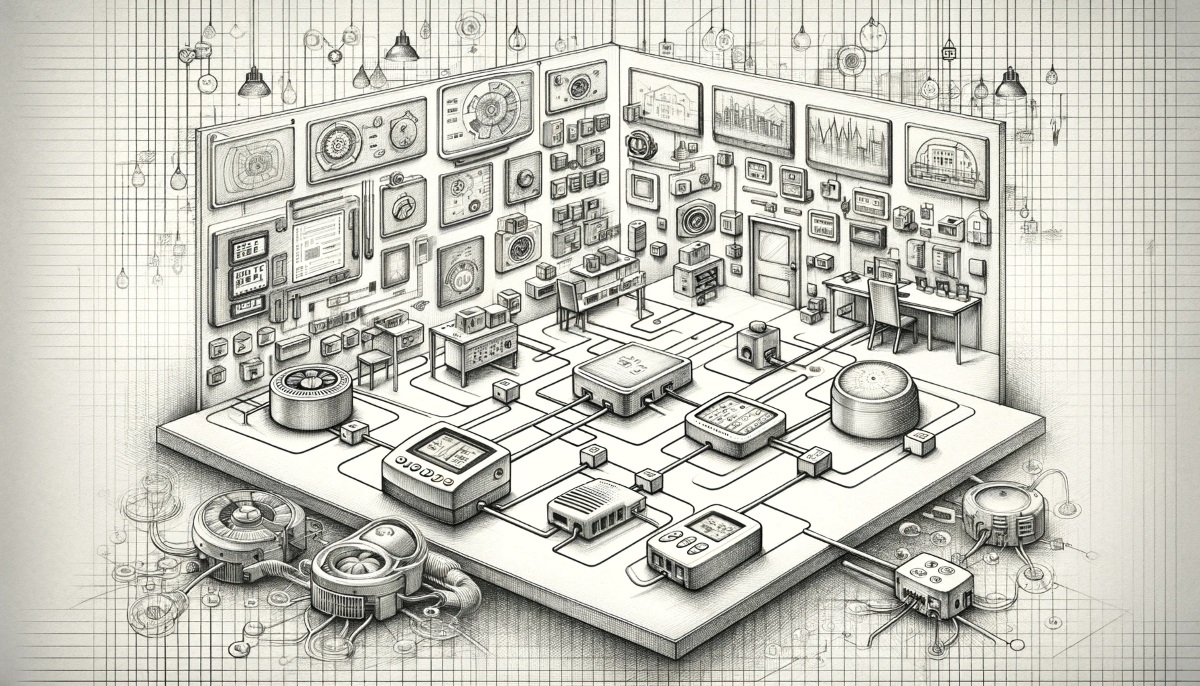
BACnet is a communication protocol. This protocol enables communication and data sharing among a variety of different types of industrial devices. BACnet is commonly used in building automation systems and allows for more efficient collaboration among different types of devices. BACnet originated in the United States and is used in many other countries.
What is BACnet and how does it work?
BACnet is a communication protocol that enables communication and data sharing among a variety of different types of industrial devices. This protocol uses a set of rules and standards to determine how devices can communicate with each other, collect data, and process it. BACnet is commonly used in building automation systems to allow for more efficient collaboration among different types of devices.
To use BACnet, devices must be equipped with BACnet-compatible communication interfaces. These interfaces allow the devices to send and receive data using the BACnet protocol. The devices can then communicate with each other and share data as needed. This allows for more efficient operation and coordination among the devices.
What does BACnet mean in HVAC?
In the context of HVAC (heating, ventilation, and air conditioning), BACnet refers to the use of the BACnet communication protocol to enable communication and data sharing among different HVAC devices. BACnet allows these devices to communicate with each other and share data, allowing for more efficient operation and coordination. This can help to optimize the performance of the HVAC system and improve the comfort and energy efficiency of a building. BACnet-compatible HVAC devices include thermostats, temperature sensors, air handling units, and other devices that are used in HVAC systems.
What is BACnet and Modbus?
BACnet and Modbus are both communication protocols that are used to enable communication and data sharing among industrial devices. Both protocols use a set of rules and standards to determine how devices can communicate with each other, collect data, and process it.
BACnet is commonly used in building automation systems, while Modbus is more commonly used in industrial automation systems. Both protocols are widely used and are supported by a large number of devices.
The main difference between BACnet and Modbus is the type of devices and applications they are used for. BACnet is more commonly used in building automation, while Modbus is more commonly used in industrial automation. However, both protocols can be used in a wide range of applications and are not limited to specific types of devices or industries.
What does a BACnet controller do?
A BACnet controller is a device that manages and coordinates the operation of other BACnet-compatible devices. The controller uses the BACnet communication protocol to communicate with the other devices and to collect and process data. The controller can then use this data to control the operation of the devices and to optimize their performance.
BACnet controllers are commonly used in building automation systems to manage the operation of HVAC (heating, ventilation, and air conditioning) systems, lighting systems, and other building systems. The controller can collect data from sensors and other devices, process it, and use it to control the operation of the devices. This can help to optimize the performance of the system and improve the comfort and energy efficiency of a building.
Is BACnet IP TCP or UDP?
BACnet can use either the TCP or UDP protocol for communication over IP (Internet Protocol) networks. TCP (Transmission Control Protocol) and UDP (User Datagram Protocol) are both protocols that are used to transmit data over IP networks. TCP provides a reliable, ordered, and error-checked delivery of data, while UDP provides a faster, but less reliable, delivery of data.
BACnet devices can use either TCP or UDP to communicate over IP networks. The choice of protocol depends on the specific requirements of the application and the type of data being transmitted. For example, if reliability is more important than speed, TCP may be a better choice. On the other hand, if speed is more important than reliability, UDP may be a better choice.
What OSI layer is BACnet?
BACnet uses the application layer of the OSI (Open Systems Interconnection) model for communication. The OSI model is a framework that is used to understand how different communication protocols work together to enable data transmission. It divides communication into seven layers, each of which performs a specific function. The application layer is the top layer of the OSI model and is responsible for providing services that are specific to the needs of the application.
BACnet uses the application layer to provide services that are specific to the needs of building automation systems. These services include services for device discovery, data sharing, and device management. BACnet devices use the application layer to communicate with each other and to share data. This allows for more efficient operation and coordination among the devices.
Is BACnet an Ethernet?
BACnet is not an Ethernet. Ethernet is a type of physical network technology that is used to connect devices in a local area network (LAN). It uses a set of standardized protocols to transmit data over a network. BACnet is a communication protocol that is used to enable communication and data sharing among a variety of different types of industrial devices.
BACnet can be used over Ethernet networks, as well as over other types of networks such as token-ring networks, wireless networks, and serial networks. BACnet devices can use Ethernet to communicate with each other and to share data. This allows for more efficient operation and coordination among the devices. However, BACnet is not limited to Ethernet networks and can be used over other types of networks as well.
What port does BACnet use?
BACnet uses port 47808 for communication over TCP and UDP. Port numbers are used to identify different applications and services on a network. Each application or service uses a specific port number to communicate with other devices on the network.
BACnet uses port 47808 for communication over both TCP and UDP. This port number is assigned to BACnet by the Internet Assigned Numbers Authority (IANA) and is used by BACnet devices to communicate with each other. BACnet devices can use this port number to establish connections with other BACnet devices and to exchange data. This allows for more efficient operation and coordination among the devices.
Does BACnet use IP addresses?
Yes, BACnet devices use IP addresses to communicate with each other over IP networks. An IP address is a numerical label that is assigned to each device on a network. It is used to identify the device and to route data to and from the device.
BACnet devices use IP addresses to communicate with each other over IP networks. Each BACnet device has a unique IP address that is used to identify the device on the network. When a BACnet device wants to send data to another BACnet device, it uses the IP address of the destination device to route the data. This allows for efficient communication and data sharing among BACnet devices.
BACnet devices can use either static or dynamic IP addresses. Static IP addresses are manually assigned to the devices and do not change. Dynamic IP addresses are assigned to the devices by a DHCP (Dynamic Host Configuration Protocol) server and can change over time. BACnet devices can use either type of IP address, depending on the specific requirements of the application.
Can you convert Modbus to BACnet?
Yes, it is possible to convert Modbus to BACnet. Modbus and BACnet are both communication protocols that are used to enable communication and data sharing among industrial devices. While they use different communication protocols and have different characteristics, it is possible to convert data between the two protocols.
To convert Modbus to BACnet, a gateway or converter device can be used. This device translates the data from the Modbus protocol into the BACnet protocol and vice versa. The gateway or converter device can be configured to translate specific data points between the two protocols, allowing the Modbus and BACnet devices to communicate and share data.
Converting Modbus to BACnet can be useful in applications where Modbus and BACnet devices need to communicate with each other. For example, if a building automation system uses BACnet and an industrial automation system uses Modbus, a converter device can be used to allow the two systems to communicate and share data. This can improve the efficiency and coordination of the systems.
Is BACnet Wired or wireless?
BACnet can be used over both wired and wireless networks. BACnet is a communication protocol that is used to enable communication and data sharing among a variety of different types of industrial devices. It can be used over different types of networks, including wired networks, wireless networks, and serial networks.
BACnet devices can use either wired or wireless connections to communicate with each other. Wired connections use physical cables to connect the devices, while wireless connections use radio frequency (RF) signals to transmit data. BACnet devices can use either type of connection, depending on the specific requirements of the application and the environment in which the devices are located.
BACnet devices can also use multiple types of connections concurrently. For example, a BACnet device may use a wired connection to communicate with other devices in the same building, and a wireless connection to communicate with devices that are located in other buildings or remote locations. This allows for more flexibility and adaptability in the design of BACnet systems.
Why is BACnet important?
BACnet is important because it enables communication and data sharing among a variety of different types of industrial devices. This allows for more efficient operation and coordination among the devices, which can improve the performance of building automation systems and other applications.
BACnet is a widely used and well-established protocol that is supported by a large number of devices. This makes it easy to integrate BACnet-compatible devices into existing systems and to expand systems as needed. BACnet also uses open standards, which allows for interoperability among different vendors' devices and for easy integration with other systems.
Additionally, BACnet provides a range of services and features that are specific to the needs of building automation and other applications. These services and features include device discovery, data sharing, and device management, among others. This allows BACnet systems to be more flexible and adaptable, and to provide a high level of functionality and performance.
What will replace BACnet?
There is no specific technology or protocol that is currently planned to replace BACnet. BACnet is a widely used and well-established protocol that has been in use for many years. It is supported by a large number of vendors and devices, and is widely recognized as a standard for building automation and other applications.
While there may be newer technologies or protocols that are developed in the future, there is no current plan to replace BACnet. Instead, BACnet is likely to continue to evolve and be updated to meet the changing needs of building automation and other applications. New technologies and protocols may be developed that complement or enhance BACnet, but BACnet itself is not likely to be replaced in the near future.
How to use BACnet protocol?
To use the BACnet protocol, devices must be equipped with BACnet-compatible communication interfaces. These interfaces allow the devices to send and receive data using the BACnet protocol. The devices can then communicate with each other and share data as needed.
To use BACnet, the devices must be connected to each other over a network. BACnet can be used over a variety of different types of networks, including Ethernet, wireless, and serial networks. The devices must be configured with the appropriate network settings and addresses to allow them to communicate with each other.
Once the devices are connected and configured, they can use the BACnet protocol to communicate with each other. BACnet provides a range of services and features that allow the devices to discover each other, share data, and be managed and controlled. The devices can use these services and features to optimize their operation and to coordinate their actions.
Is BACnet open source?
No, BACnet is not an open-source protocol. BACnet is a proprietary protocol that is developed and maintained by the American Society of Heating, Refrigerating, and Air-Conditioning Engineers (ASHRAE). ASHRAE holds the copyright to the BACnet standard and licenses it to vendors and users.
BACnet uses open standards, which means that it is based on standards that are publicly available and can be used by anyone. However, the BACnet protocol itself is not open source. This means that the source code for the protocol is not publicly available and can only be accessed by licensed users.
Despite this, BACnet is widely used and supported by a large number of vendors and devices. This makes it easy to integrate BACnet-compatible devices into existing systems and to expand systems as needed. BACnet also allows for interoperability among different vendors' devices and for easy integration with other systems.
Your shopping cart is empty!