
IEC 62133
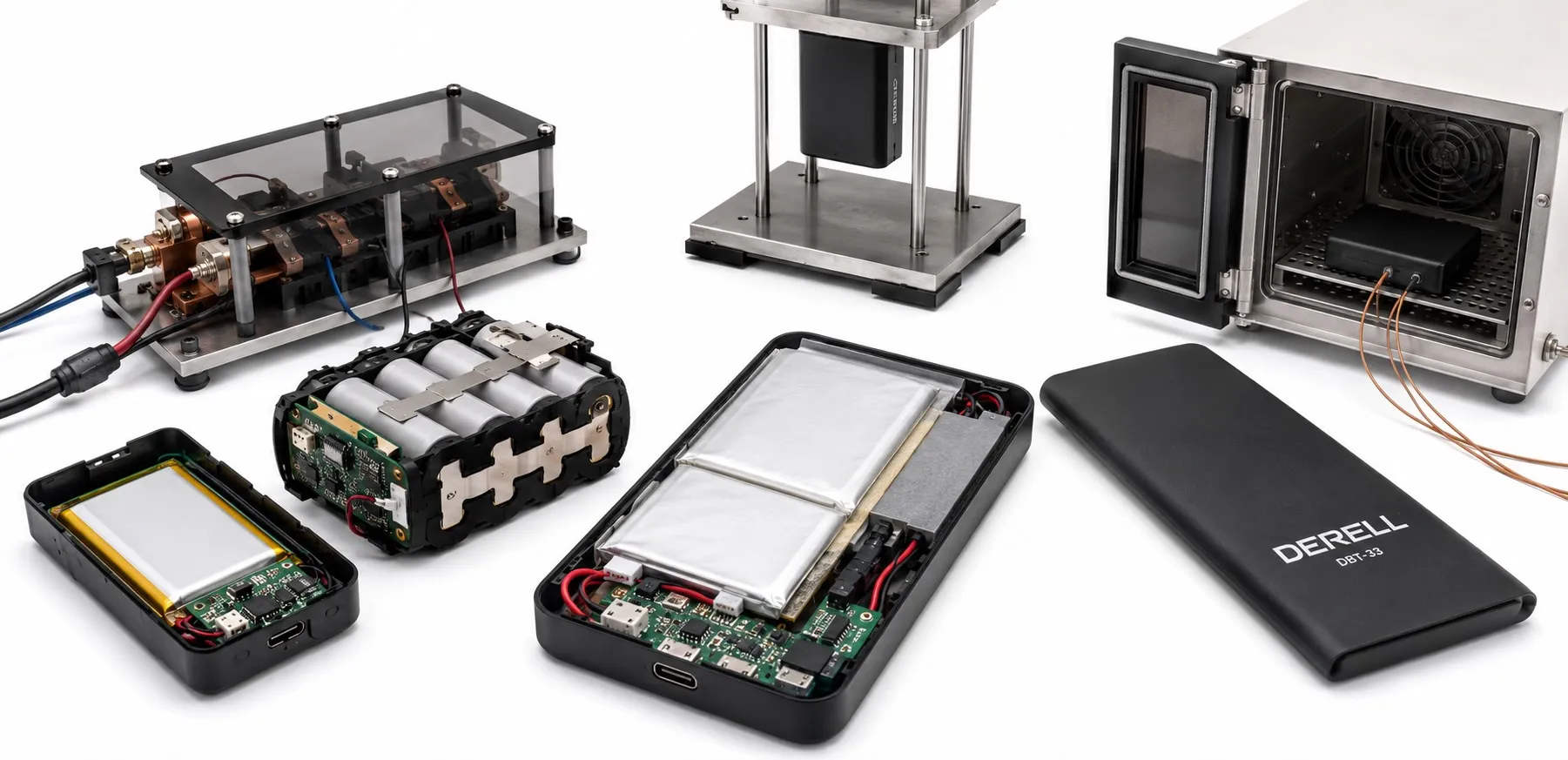
What a portable battery safety report actually covers
A reference to IEC 62133 is most useful when it identifies the battery chemistry, the applicable part and the product tested. The series addresses the safety of sealed rechargeable cells and batteries for portable applications under intended use and reasonably foreseeable misuse. Start with the battery basics and our battery standards guide if you need to distinguish a cell, a pack and the equipment that uses them.
Choose the part before comparing the paperwork
Part 1 covers nickel systems. That includes familiar chemistries such as NiMH and NiCd. IEC 62133-1:2026, published on 6 March 2026, replaces the 2017 edition. A report citing an earlier edition should be read against the requirements of the intended evaluation; the edition number is meaningful information, not a formatting detail.
Part 2 covers lithium systems, including lithium-ion batteries. Its published consolidated reference is IEC 62133-2:2017+A1:2021. Check applicable amendments and corrigenda alongside the base edition. The rechargeable scope does not extend to every chemistry in a battery range or to disposable cells simply because they are portable.
The tested cell and the finished pack are different products
A cell can have a satisfactory test report while the finished battery pack still needs its own assessment. Series and parallel connections, the protection circuit, interconnections and enclosure affect the assembled product. Changing the cell supplier or protection board can therefore raise questions that the original cell report never answered.
A practical design review checks voltage, current and temperature limits against the cell manufacturer's operating region. An NTC temperature sensor can support temperature monitoring; a fuse can interrupt certain overcurrent conditions. Their presence alone does not establish that the complete protection system works. The battery charger must also suit the chemistry and pack configuration.
Read the test schedule, not just the pass statement
The lithium part includes evaluations involving external short circuit, overcharging, forced discharge, free fall and thermal abuse. Crush, vibration and mechanical shock requirements apply at different cell or battery levels under the relevant clauses. It is misleading to present every test as an identical requirement for every product.
Fault behaviour matters as well as normal operation. Applicable assessments may examine single fault conditions in protection circuitry. Look for the sample identity, construction details and actual clauses evaluated. A safety result does not, by itself, promise a particular runtime, capacity or cycle life.
Make the report traceable to the item you buy
Ask the supplier to connect the report to the exact model, cell type, pack arrangement and protection board. If the enclosure or circuitry has changed, establish whether the assessment covers that version. This is useful when selecting replacement packs and their battery accessories, not just when commissioning a new design.
The CB Scheme helps participating certification bodies recognise test reports and certificates. National differences and the requirements of the target product still need attention. A reference to an IEC standard should not be read as a complete approval for every market and application.
Keep the neighbouring standards in perspective
UL 1642 and UL 2054 address different battery safety scopes. They are not interchangeable labels for an IEC report. UN 38.3 concerns transport testing of lithium cells and batteries, while the IEC 62660 series addresses lithium-ion cells for electric vehicle propulsion. The application determines which questions need answering.
The host equipment also has its own safety assessment. For audio, video and information technology equipment, IEC 62368 may be relevant. Review the charging equipment and the wider battery system together: a cell certificate cannot describe every interaction in the finished device.
Editor's note
When a listing says “IEC 62133 certified,” ask for the part, the edition and the tested model. In a report, N/A means “not applicable”; read why the clause was excluded. A higher-capacity pack assembled from tested cells does not automatically inherit an assessment of its complete construction.
Continue exploring
UL 1642: lithium cell safety · UL 2054: household and commercial batteries · IEEE 1725 · IEEE 1625 · IEC 61951 · IEC 62660 · Battery standards directory
Sources: IEC 62133-1:2026 · IEC 62133-2:2017+A1:2021 · IEC 62133-2 — COR1:2021 · Intertek — CB Scheme · UL — Battery safety testing · IECEE CB test report · UL — Battery design changes · UL — IEC 62368-1 Q&A