
Which devices and sensors can be integrated with EtherCAT?
Hi everyone,
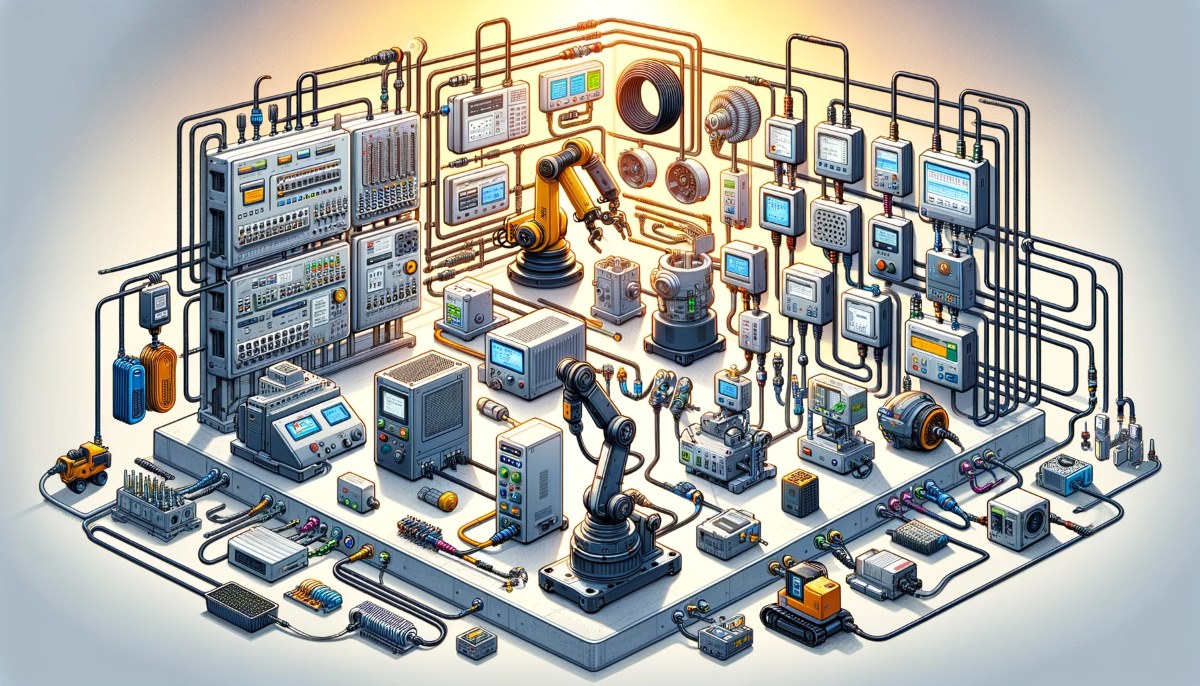
EtherCAT (Ethernet for Control Automation Technology) is designed to be a highly versatile communication protocol for industrial automation. As a result, a wide range of devices and sensors can be integrated into an EtherCAT network. Here are some examples:
Motion Controllers: These are devices that control the movement of machines, robots, or parts of machines. They can be integrated with EtherCAT to achieve precise, synchronized motion control.
Servo Drives and Motors: EtherCAT provides real-time control over servo drives, allowing for precise positioning and speed control of motors.
I/O Modules: Input/Output modules can be connected to read data from sensors and send commands to actuators. This includes digital I/O (for on/off signals) and analog I/O (for continuous signals like temperature or pressure).
Encoders: Devices that convert position or motion into an electronic signal. They are often used in motion control systems to provide feedback on the position of a motor or other moving part.
Safety Devices: This includes emergency stops, safety relays, and light curtains. The Safety over EtherCAT (FSoE) protocol ensures safe communication for these devices.
Industrial Robots: Robots used in manufacturing and other industrial applications can be controlled and monitored using EtherCAT.
Temperature Sensors: These can be integrated to monitor temperatures in various parts of a manufacturing process.
Pressure Sensors: Used to monitor and control pressure in processes like hydraulic systems.
Vision Systems: Cameras and vision systems used for quality control, inspection, or guidance can be integrated into an EtherCAT network.
Human-Machine Interfaces (HMIs): Devices that allow operators to interact with machines, like touchscreens and control panels.
Frequency Converters: Devices that control the speed of motors by varying the frequency of the power supplied to them.
End-effectors and Grippers: Used in robotics to interact with objects, these can be controlled via EtherCAT for precise operations.
Measurement Devices: Instruments that measure parameters like flow, humidity, or vibration can be integrated to provide real-time data to the control system.
Gateways: Devices that translate between EtherCAT and other communication protocols, allowing for integration with devices that don't natively support EtherCAT.
PLCs (Programmable Logic Controllers): Controllers used for automation in industries, which can be integrated into EtherCAT networks for real-time control and monitoring.
Manufacturers across the globe produce EtherCAT-compatible devices, so the ecosystem is vast and continually growing. The protocol's openness, real-time capabilities, and flexibility make it a popular choice for integrating a wide variety of industrial devices and sensors.
"Platforms established on an EthernetCAT foundation have become increasingly popular in many sectors of industry. This technology, which is both practical and offers time/place savings, has evolved and branched out over time and has been embedded in third-party platforms as well. Below, we have tried to answer some of the main questions we received from our valued visitors about EtherCAT."
- What is EtherCAT?
- What are the primary advantages of EtherCAT?
- How does EtherCAT work?
- Why is EtherCAT used in the field of industrial automation?
- What are the differences between EtherCAT and traditional Ethernet?
- How does EtherCAT handle real-time performance?
- What is the topology of EtherCAT?
- Which devices and sensors can be integrated with EtherCAT?
- How do EtherCAT Master and Slave devices communicate with each other?
- How is security ensured in EtherCAT?
- What are the differences between EtherCAT and other industrial Ethernet protocols (e.g., PROFINET, Ethernet/IP)?
- What are the technical specifications of EtherCAT?
- Which programming languages and tools can be used with EtherCAT?
- What is the latency time of EtherCAT?
- What are the future trends and evolution of EtherCAT?
- What is the licensing and cost structure of EtherCAT?
- What versions of EtherCAT are available?
- How can you detect and resolve an error in an EtherCAT network?
- How does EtherCAT comply with industry standards?
- What are the limits and constraints of EtherCAT?
+ Back to Automation main page
"Please note, these questions may only satisfy general curiosities about the EtherCAT protocol. Everyone or every student may have different questions specific to their context or application. Our answers are not definitive judgments, but merely serve as a guide. You are free to share our article by citing it as a source. If you have any questions, please fill out the form below." 08.2019
Your shopping cart is empty!