
What is (DBU) dynamic brake unit?
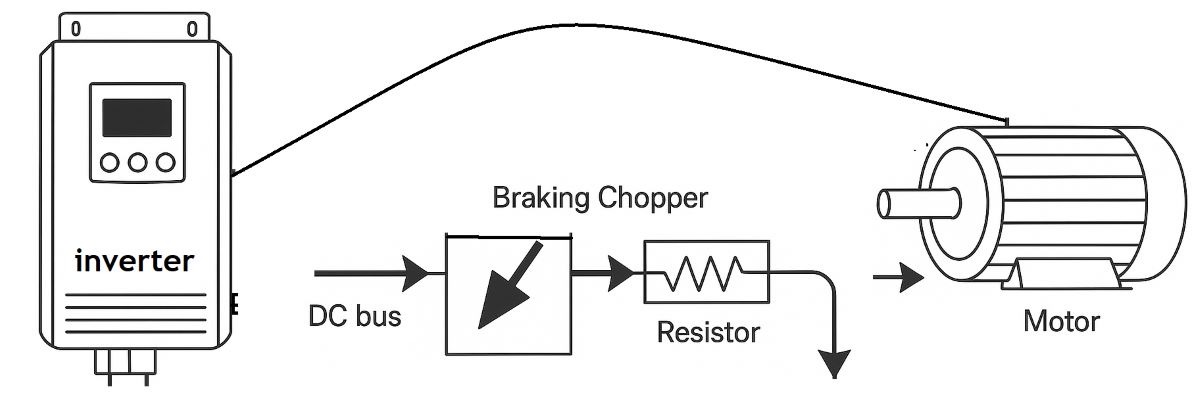
VFD + Braking Unit (DBU) + Resistor Working Principle (Live Animation)
Braking unit (DBU) is a device connected to a VFD (inverter) to stop an electric motor quickly and safely. The principle is simple: the kinetic energy stored in the motor or the load is released and dissipated through a resistor or another circuit element.
How does it work?
• The motor normally runs with the VFD, and energy flows directly to the motor.
• During braking (for example, when an elevator goes down or a crane lowers a load), the motor works like a generator and produces extra electrical energy.
• This extra energy is first absorbed by the DBU (braking unit), then quickly converted to heat through the resistor and released safely.
• This way, the motor stops quickly and safely and the system is protected.
Green arrow: Normal operation.
Red arrow: DBU active, braking energy flow.
Yellow arrow: Resistor heating up, energy being released.
• The motor normally runs with the VFD, and energy flows directly to the motor.
• During braking (for example, when an elevator goes down or a crane lowers a load), the motor works like a generator and produces extra electrical energy.
• This extra energy is first absorbed by the DBU (braking unit), then quickly converted to heat through the resistor and released safely.
• This way, the motor stops quickly and safely and the system is protected.
Green arrow: Normal operation.
Red arrow: DBU active, braking energy flow.
Yellow arrow: Resistor heating up, energy being released.
You’ll see this setup most often in applications like elevators, cranes, or conveyors—basically anywhere you need a motor to stop in a short time. For example, when an elevator goes down, the load drives the motor and the motor starts to generate electricity (acting like a generator). If you don’t get rid of this excess energy, your equipment can get damaged. This is where the braking unit comes in: it quickly converts the extra electrical energy to heat and allows safe braking.
There are three main types of braking units: Resistor-based (directly turns the energy into heat), Chopper type (uses a fast-acting switch, for example an IGBT, to cut the circuit), and regenerative (feeds the excess energy back into the mains).
Installation is simple and compatible with most motors and VFDs on the market. Bottom line: If you want to stop a motor instantly and reliably, you need a braking unit. It’s an essential device for any application where quick stopping and safety are important.
Your shopping cart is empty!