
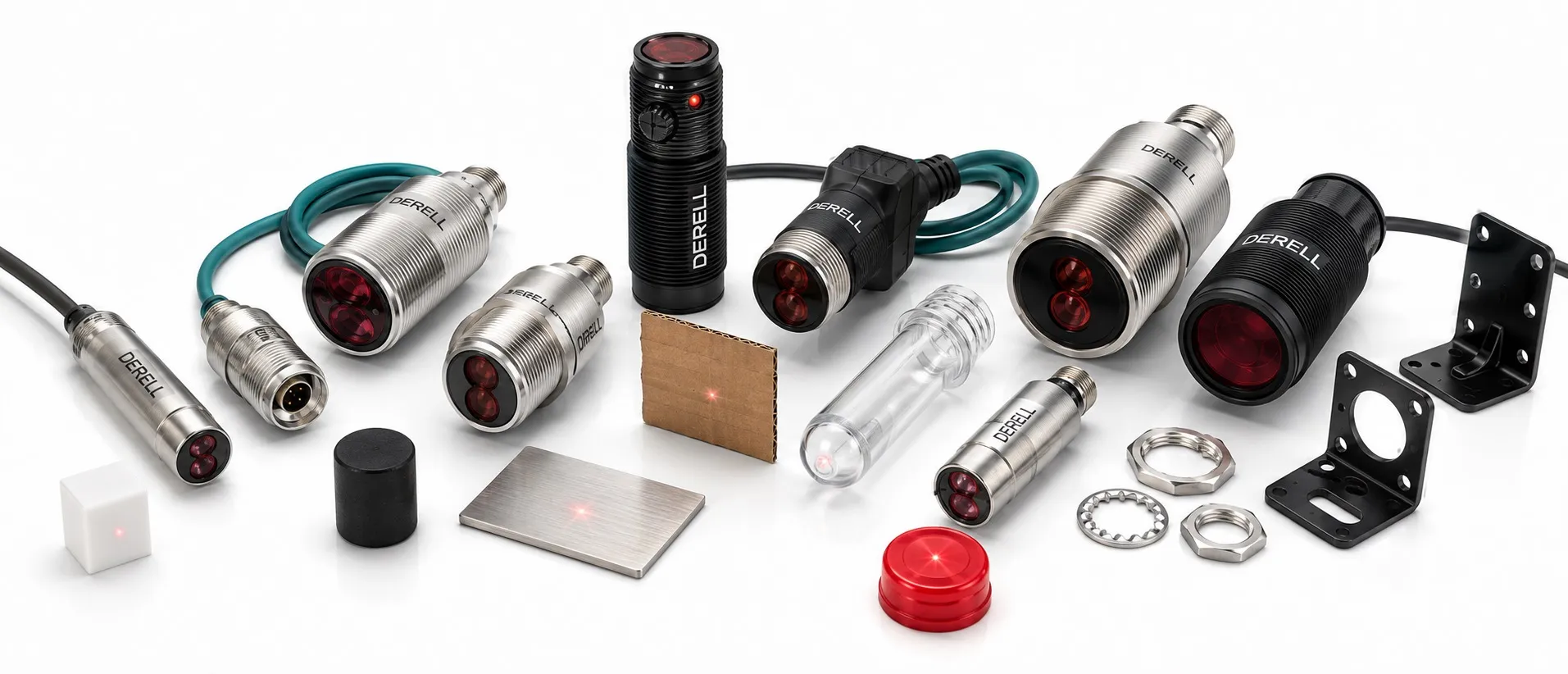
Cylinder diffuse photoelectric sensor
Hello friends,
A reflective object sensor is a device that operates with light reflected from an object and is usually used for detecting obstacles or objects. Cylinder-shaped photoelectric sensors, on the other hand, have a cylindrical design that makes them easy to install in narrow spaces.
To ensure that these types of photoelectric sensor systems operate correctly, it is important to pay attention to the following factors:
Detection distance: The detection distance must be suitable for the characteristics of the photoelectric sensor for it to work correctly. The detection distance depends on the characteristics of the photoelectric sensor, output signal, operating voltage, photocells prices, and the reflective properties of the object.
Correct alignment: To ensure the photoelectric sensor operates correctly, the object you want to detect must be aligned correctly. Proper alignment of the photoelectric sensor can increase detection accuracy and distance.
Environmental conditions: It is important to protect the photoelectric sensor from environmental conditions. Factors such as external light, humidity, temperature changes, dust, pollution, and vibration can affect the correct operation of the photoelectric sensor.
Suitable selection: When choosing a cylinder-shaped photoelectric sensor, it is important to consider the correct size, detection distance, operating voltage, output signal type, and other requirements.
Proper installation: Proper installation of the cylinder-shaped photoelectric sensor is also important. Correct installation can increase detection accuracy and protect the photoelectric sensor.
Electrical factors also play an important role in the selection and installation of photoelectric sensors. Paying attention to the following factors can ensure correct operation of the photoelectric sensor:
Operating voltage: The photoelectric sensor system must be connected to a power supply suitable for the operating voltage specified by the manufacturer. Incorrect voltage can cause the photoelectric sensor to malfunction or be damaged.
Output signal: The output signal of the photoelectric sensor system must be suitable for the control circuit to be used. Some photoelectric sensors provide analog output signals, while others provide digital output signals. Therefore, selecting the correct output signal type affects the system's performance.
Cable length: The cable length at the photoelectric sensor installation site is also important. Using a long cable can cause voltage drops and weaken the photoelectric sensor signal. Therefore, the cable length must be calculated correctly, and necessary precautions must be taken.
Power supply: The photoelectric sensor system can be affected by electrical noise from the power supply. Therefore, selecting a suitable power supply and using a filter if necessary can improve system performance.
Electromagnetic interference: The photoelectric sensor system can be affected by electromagnetic interference. Therefore, measures to reduce electromagnetic interference must be taken during system design. For example, the distance between the cable installation and photoelectric sensor system can be increased, or filters can be used.
Electrical factors are important factors to consider when selecting and installing a photoelectric sensor system. Paying attention to these factors ensures the correct operation of the photoelectric sensor system.
By paying attention to these factors, you can ensure that reflective object sensors and cylinder-shaped photoelectric sensors operate correctly.
+ Photoelectric Sensors Homepage
+ Sensors Homepage
+ Sensor Control Devices
+ PLC Systems for Photoelectric Sensors
+ Used Photoelectric Sensors -