
Can voltage affect our thoughts?
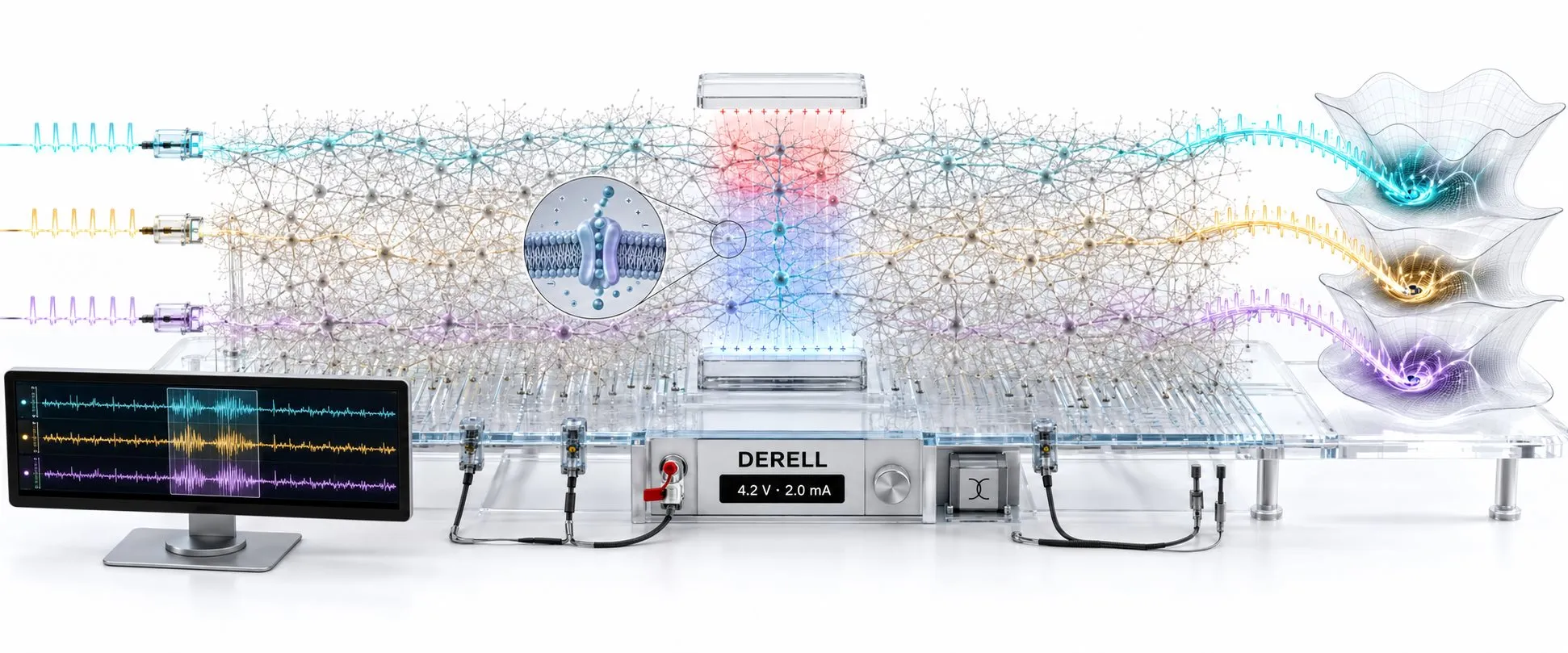
Can voltage influence our thoughts?
Electrical activity is part of how the brain works, but an applied voltage is not a remote control for someone’s thoughts. Carefully designed stimulation can affect neural circuits. Understanding that statement requires separating the brain’s own signals, the recording of those signals and stimulation delivered from outside the body.
The brain’s signals are electrochemical
A neuron does not transmit information in exactly the same way as a copper wire. Ions moving through channels in the cell membrane change the electrical potential difference between the inside and outside of the cell. The definition of voltage still applies: it compares electrical potentials. Rapid membrane-voltage changes underpin the signals called action potentials.
At many synapses, communication continues through chemical messengers called neurotransmitters; electrical synapses also exist. Remembering an event or making a decision involves networks of cells. Reducing a whole thought to one voltage reading leaves out that network activity and its chemistry. The distinction between voltage and current matters here too: potential difference and the rate of charge flow are different quantities.
Recording brain activity is not unrestricted mind reading
Electroencephalography (EEG) records potential differences associated with brain activity using electrodes on the scalp. The signal includes contributions from many cells and is affected by recording conditions. An EEG trace does not directly reveal the sentence a person is thinking. Extracting limited information in a particular research setting is a much narrower achievement than reading arbitrary thoughts.
The basic comparison between recording points connects with voltage measurement, but EEG requires an appropriate medical recording system. An ordinary multimeter or a workbench oscilloscope is not a substitute for equipment designed for patient-connected EEG. Sensitivity to small signals does not establish suitability for connection to a person.
Three approaches with different purposes
Transcranial magnetic stimulation (TMS) uses a rapidly changing magnetic field to induce an electric field in the brain. It is used in some depression treatments. The target and stimulation pattern matter; one voltage value cannot describe the intervention.
Transcranial direct current stimulation (tDCS) delivers controlled current through scalp electrodes and can alter neuronal excitability. Its cognitive effects are being studied. A change on an experimental task is not a guarantee of lasting improvements in memory or intelligence. Outcomes depend on the participants, task and stimulation conditions.
Electroconvulsive therapy (ECT) induces a controlled seizure under anesthesia and is used for particular conditions, including severe depression. Memory problems and temporary confusion can occur. Treatment decisions and monitoring belong with a specialist clinical team.
Voltage alone does not define the effect
Current, duration, waveform, location and tissue properties all contribute to an electrical intervention. Resistance and contact conditions affect current distribution. Ordinary circuit voltage distribution offers a starting comparison, but living tissue cannot adequately be represented by a few fixed resistors.
The relationship between voltage and power and the concept of frequency each describe only part of a signal. A given output voltage need not produce the same biological effect under different contact and application conditions. There is no physical rule saying that higher voltage produces better thinking.
Clinical stimulation is not an electric shock experiment
The effects of voltage on human health cannot be judged from a voltage label alone. An electric shock is not equivalent to controlled stimulation using appropriate medical equipment. A low-voltage supply does not make experimentation on the body safe, and high-voltage hazards have no place in attempts to improve cognition.
Meeting a device’s operating-voltage requirements or reducing supply fluctuations does not qualify that device for connection to the human body. Do not attempt brain stimulation with an adapter, battery, laboratory power supply or homemade electrodes. Medical use requires suitable equipment, individual assessment and qualified clinical oversight.
What the evidence supports
Electrical and magnetic stimulation can affect brain function under specific conditions. That does not establish a general ability to select someone’s thoughts, reliably increase intelligence or control their mind. The useful scientific question is which intervention changes which outcome, for whom and under what conditions.