500W braking resistors
Hello,
You are currently on the page for our 500 watt braking resistor.
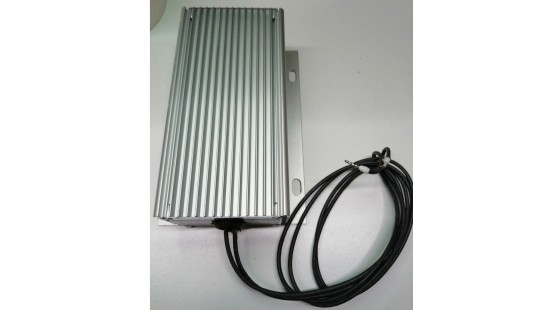
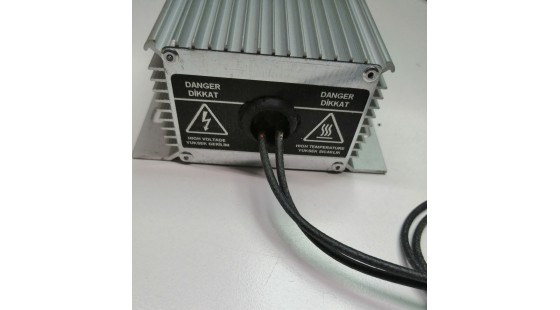
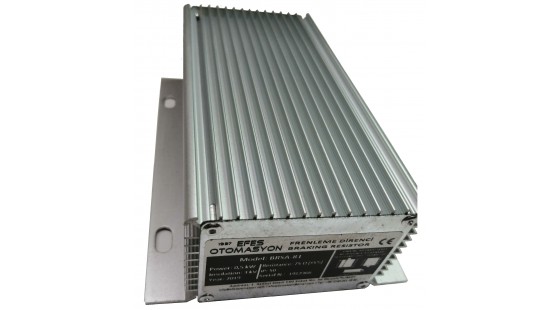
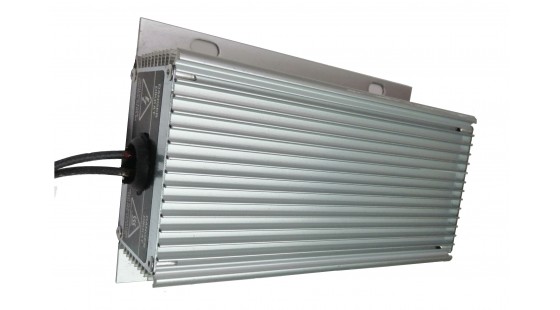
This aluminum-cased braking resistor is designed for use with VFDs (variable frequency drives) and has a power rating of 500 watts. It is commonly used to dissipate the energy generated during braking and prevent damage to the drive or motor. The resistor features a compact and sturdy aluminum housing that provides excellent heat dissipation and durability. It is also easy to install and compatible with a wide range of VFD models. With its high-quality construction and reliable performance, this braking resistor is a cost-effective solution for maintaining the safety and efficiency of your drive system.
As with other products, braking resistors are classified into different models based on variables such as voltage, ohms, watts, and dimensions, and not every product may be suitable for every application.
Furthermore, the value of braking resistance is specific to each brand. For example, the braking resistor for a 7.5 kW X brand drive may differ from that of a Y brand drive of the same capacity. These values are provided in the user manuals for each drive, and the ohm values are determined within a specific range.
Important: Dear customers, the resistance and power range values listed in the user manuals for inverters may vary depending on the application. For example:
Drive = 7.5 kW - 380 volts
Resistance value = 50 ohms
In this case, the watt calculation for the braking resistance with a value of 50 ohms will depend on the load of the motor to which it is connected. If the same motor is driving a conveyor belt, a 500 watt braking resistor will suffice. However, if it is connected to a carpet squeezing machine or a hook motor for cranes, a 2500 watt braking resistor will be required. This is because horizontal movements require less friction, whereas vertical or oscillating loads that are constantly in motion require a higher power braking resistor, while maintaining the same ohm value. For applications that require higher power braking resistors, a separate section has been created. For more detailed information, you can read our "What is a braking resistor?" article.
Please note: As you may know, according to Kirchhoff's Ohm's Law principles, if resistors are connected in series, the ohm values will double and the watt values will also double. If they are connected in parallel, the ohm values will be halved and the watt values will double (assuming both resistor values are the same). For example, if two 500 watt 100 ohm resistors are connected in parallel, they are equivalent to one 50 ohm 1 kW resistor. If they are connected in series, they are equivalent to one 200 ohm 1 kW resistor. If the desired product value is not available in stock, you can use a formula like this to make your selection.