
ATV 71 Fault index
Hi everyone,
Variable frequency drives (VFDs) and motor controllers continuously monitor internal operations, electrical parameters, and mechanical feedback to protect both the drive hardware and the connected motor. When an instability, hardware mismatch, or communication error is detected, the drive automatically triggers a protection mode and displays a specific fault code to prevent system damage.
The list below covers the essential drive fault codes, their corresponding technical definitions, and the underlying conditions that trigger them. To minimize system downtime and ensure a safe, successful reset, it is highly recommended to click the "Details >>" link next to each code to review detailed root-cause analyses and recommended troubleshooting steps.
- AI2F (AI2 input): Non-conforming signal on analog input AI2. Details >>
- AnF (Load slipping): The encoder speed feedback does not match the reference. Details >>
- bOF (DBR overload): The braking resistor is under excessive stress. Details >>
- brF (Brake feedback): The brake feedback contact does not match the brake logic control. Details >>
- bUF (DB unit sh. Circuit): Short-circuit output from braking unit. Details >>
- CrF1 (Precharge): Charging relay control fault or charging resistor damaged. Details >>
- CrF2 (Thyr. soft charge): DC bus charging fault (thyristors). Details >>
- dCF (Differential current Fault): Current difference between power block A and B. Details >>
- ECF (Encoder coupling): Break in encoder's mechanical coupling. Details >>
- EEF1 (Control Eeprom): Internal memory fault, control card. Details >>
- EEF2 (Power Eeprom): Internal memory fault, power card. Details >>
- EnF (Encoder): Encoder feedback fault. Details >>
- FCF1 (Out. contact. stuck): The output contactor remains closed. Details >>
- HdF (IGBT desaturation): Short-circuit or grounding at the drive output. Details >>
- ILF (internal com. link): Communication fault between option card and drive. Details >>
- InF1 (Rating error): The power card is different from the card stored. Details >>
- InF2 (Incompatible PB): The power card is incompatible with the control card. Details >>
- InF3 (Internal serial link): Communication fault between the internal cards. Details >>
- InF4 (Internal-mftg zone): Internal data inconsistent. Details >>
- InF6 (Internal - fault option): The option installed in the drive is not recognized. Details >>
- InF7 (Internal-hard init.): Initialization of the drive is incomplete. Details >>
- InF8 (Internal-ctrl supply): The control power supply is incorrect. Details >>
- InF9 (Internal- I measure): The current measurements are incorrect. Details >>
- InFA (Internal-mains circuit): The input stage is not operating correctly. Details >>
- InFb (Internal- th. sensor): The drive temperature sensor is not operating correctly. Details >>
- InFC (Internal-time meas.): Fault on the electronic time measurement component. Details >>
- InFE (internal- CPU): Internal microprocessor fault. Details >>
- OCF (Overcurrent): Parameters in the [SETTINGS] and [1.4 MOTOR CONTROL] menus are not correct. Details >>
- PrF (Power removal): Fault with the drive's "Power removal" safety function. Details >>
- SCF1 (Motor short circuit): Short-circuit or grounding at the drive output. Details >>
- SCF2 (Impedant sh. circuit): Impedance short circuit. Details >>
- SCF3 (Ground short circuit): Ground short circuit. Details >>
- SOF (Overspeed): Instability or driving load too high. Details >>
- SPF (Speed fdback loss): Encoder feedback signal missing. Details >>
- tnF (Auto-tuning): Special motor or motor whose power is not suitable for the drive. Details >>
- APF (Application fault): Controller Inside card fault. Details >>
- bLF (Brake control): Brake release current not reached. Details >>
- CnF (Com. network): Communication fault on communication card. Details >>
- COF (CANopen com.): Interruption in communication on the CANopen bus. Details >>
- EPF1 (External flt-LI/Bit): Fault triggered by an external device. Details >>
- EPF2 (External fault com.): Fault triggered by a communication network. Details >>
- FCF2 (Out. contact. open.): The output contactor remains open. Details >>
- LCF (input contactor): The drive is not turned on. Details >>
- LFF2 (AI2 4-20mA loss): Loss of the 4-20 mA reference on analog input AI2. Details >>
- LFF3 (AI3 4-20mA loss): Loss of the 4-20 mA reference on analog input AI3. Details >>
- LFF4 (AI4 4-20mA loss): Loss of the 4-20 mA reference on analog input AI4. Details >>
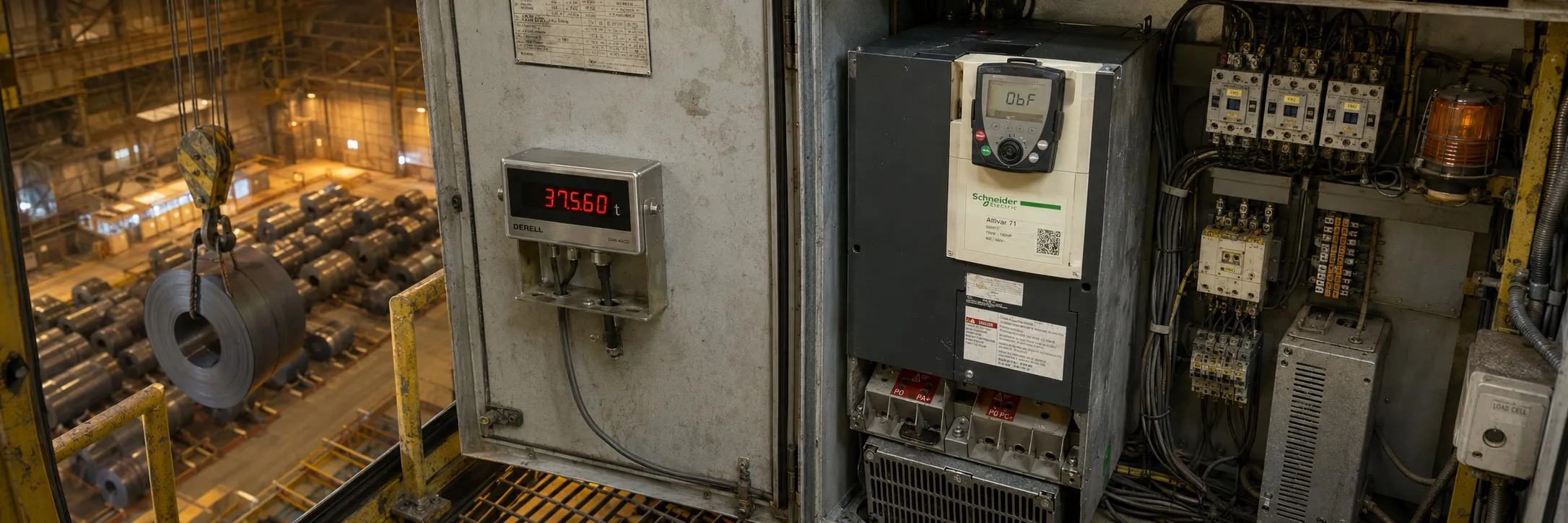
- ObF (Overbraking): Braking too sudden or driving load. Details >>
- OHF (Drive overheat): Power board -PCB over temperature. Details >>
- OLF (Motor overload): Triggered by excessive motor current. Details >>
- OPF1 (1 output phase loss): Loss of one phase at drive output. Details >>
- OPF2 (3 motor phase loss): Motor not connected or motor power too low. Details >>
- OSF (Mains overvoltage): Line voltage too high. Details >>
- OtF1 (PTC1 overheat): Overheating of the PTC1 probes detected. Details >>
- OtF2 (PTC2 overheat): Overheating of the PTC2 probes detected. Details >>
- OtFL (LI6=PTC overheat): Overheating of PTC probes detected on input LI6. Details >>
- PtF1 (PTC1 probe): PTC1 probes open or short-circuited. Details >>
- PtF2 (PTC2 probe): PTC2 probes open or short-circuited. Details >>
- PtFL (LI6=PTC probe): PTC probes on input LI6 open or short-circuited. Details >>
- SCF4 (IGBT short circuit): Power component fault. Details >>
- SCF5 (Motor short circuit): Short-circuit at drive output. Details >>
- SLF1 (Modbus com.): Interruption in communication on the Modbus bus. Details >>
- SLF2 (PC com.): Fault communicating with PC-Software. Details >>
- SLF3 (HMI com.): Fault communicating with the graphic display terminal. Details >>
- SrF (TORQUE TIME OUT FLT): The time-out of the torque control function is attained. Details >>
- SSF (Torque/current lim): Switch to torque limitation. Details >>
- tJF (IGBT overheat): Drive overheated. Details >>
- CFF (Incorrect config.): Option card changed or removed. Details >>
- CFI (Invalid config.): Invalid configuration. Details >>
- dLF (Dynamic load fault): Abnormal load variation. Details >>
- HCF (Cards pairing): The [CARDS PAIRING] function has been configured, and a drive card has been changed. Details >>
- PHF (Input phase loss): Drive incorrectly supplied or a fuse blown. Details >>
- USF (Undervoltage): Line supply too low. Details >>