
Are sufficient measures being taken for security and privacy issues in Industry 4.0?
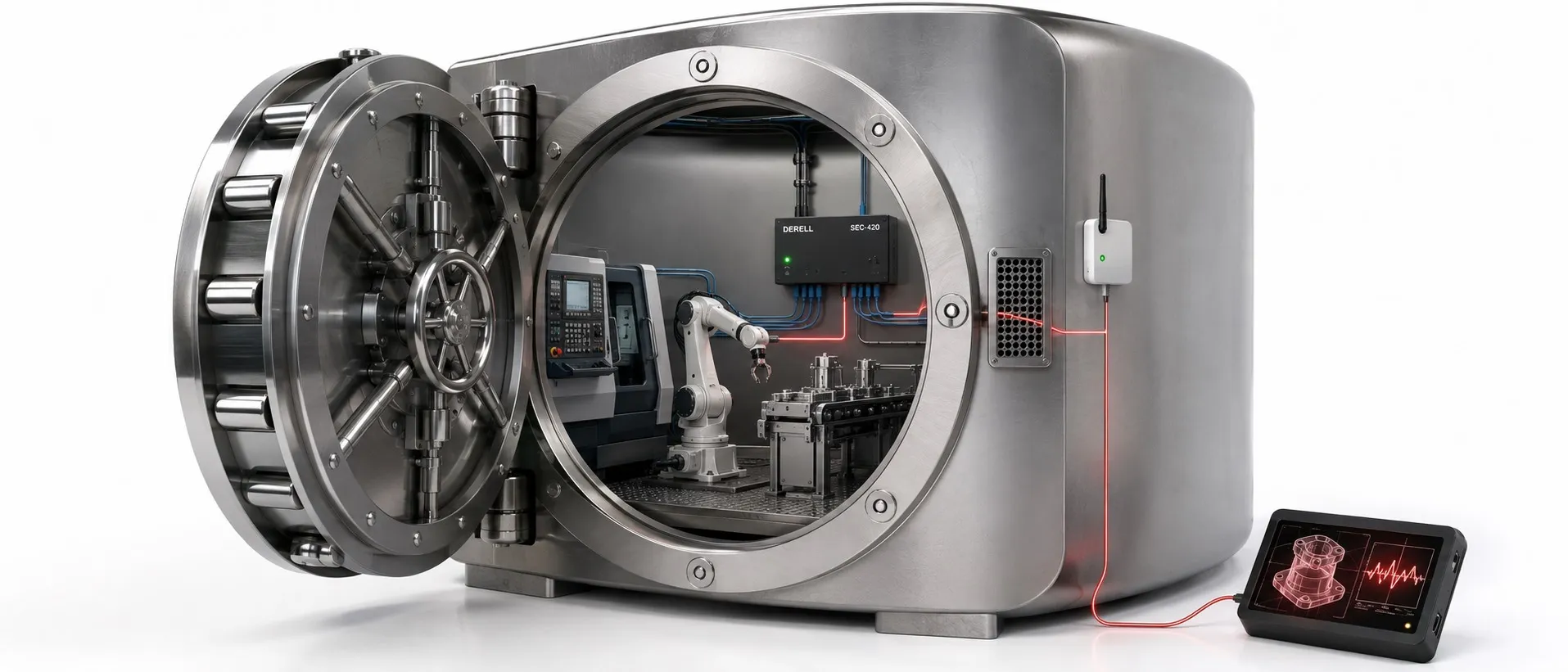
A security promise needs evidence before it can be accepted
There is no single answer to whether Industry 4.0 projects take sufficient security precautions. Declaring a plant secure or insecure without examining its network, permissions, and maintenance records would be unsupported. However, presenting an “Industry 4.0 ready” label as security evidence deserves scrutiny. A marketing claim differs substantially from protection that has actually been delivered: one is a statement; the other must be demonstrated for a specific installation.
When reviewing standards and conformity claims, establish which document applies and what it covers. Industrial security standards exist. For example, IEC 62443-2-1:2024 addresses policies and procedures for an asset owner's security program for industrial control systems in operation. That is different from a general “4.0” marking on a product. Naming a standard does not demonstrate conformity with it.
Identify what needs protection and who can access it
An industrial cybersecurity assessment needs more than a count of internet-connected devices. PLC programs, SCADA servers, and industrial computers must be considered together. If a device's purpose, software version, access path, and authorized users are unknown, the boundary of the system being protected is unclear. An incomplete inventory cannot support a claim of complete protection.
For example, can an account intended to read production reports also change recipes? Has a former employee's account been disabled? Does the service provider retain access after maintenance ends? These are practical business questions that actual account and permission records can answer, rather than abstract questions about digital transformation.
The network drawing must reflect enforced access rules
Placing an Ethernet-connected machine in the same access zone as the office network is a design choice that needs assessment. Devices on an RS-485 bus having no direct internet connection is not sufficient evidence either: a gateway attached to that bus can provide another access path. Protection must be examined across the entire connection chain.
Which read and write operations does a gateway expose when connecting a Modbus RTU device to a cloud service? If the requirement is measurement transfer only, why permit remote configuration through Modbus communication? Adequacy is assessed by demonstrating in a controlled environment that unnecessary commands are blocked, rather than displaying a padlock graphic in a presentation.
Remote service access must be traceable and revocable
In IoT and industrial IoT projects, convenient servicing should not become unrestricted access. Separate accounts, permissions limited to the task, suitable multifactor authentication, and defined access periods should be assessed together. “We have a VPN” is not a sufficient answer; what a person can do after connecting also matters.
A practical acceptance example for IoT device security is that a maintenance account can perform an approved operation, cannot perform an unauthorized operation, and cannot reconnect after its access is revoked. Plan the trial so that it does not affect production. If revocation fails, access control exists only on paper.
An update promise and a backup file are not enough
For maintenance and updates, establish the support period, notification method, and responsible party. If an older device lacks a necessary security capability, explain which additional measure limits the risk. IEC 62443-2-1:2024 also recognizes legacy system limitations and compensating security measures. “Replace it with a 4.0 model” does not, by itself, fulfil that assessment.
A backup's existence does not demonstrate successful recovery. For example, if the service computer becomes unavailable, can programs and settings be restored with the required versions? Can operation resume within an acceptable downtime period? A controlled restoration trial provides more meaningful evidence than a screen reporting that automatic backup is enabled.
Production records and security records serve different purposes
A datalogger may record temperature or production volume without showing who changed a setting. During data analysis, the account responsible for a configuration change may matter alongside a measurement's timestamp and source. Process history does not replace an audit trail of user actions.
Increasing storage capacity does not automatically make records accurate or protected. Investigation becomes harder if records from an incident are missing, have incorrect timestamps, or can be deleted by the user involved. Determine which events to record, who may view the records, and how long to retain them according to their purpose.
Privacy protection requires more than preventing a leak
For IoT and personal privacy, the reason for collecting information also deserves examination. Does investigating machine downtime really require continuous employee location tracking or a personal behavioral profile? Encryption does not justify unnecessary data collection. Where production measurements can be separated from identifying information, consider that option. Saying “our data is secure” answers only part of the question when purpose, access, and retention arrangements remain unclear.
Supplier promises should become delivery requirements
Device compatibility should cover more than exchanging data: the versions and security settings in use must remain effective when the devices work together. Product documentation, installation configuration, and acceptance trial results provide complementary evidence. None of them replaces the others.
The end of support, responsibility for disabling service accounts, and management of recovery after an incident also belong in the cost and risk assessment. Leaving these obligations outside the quotation can transfer hidden work to the buyer. Adequacy requires clear responsibility, effective controls, and recorded results. A “4.0 security” promise that provides none of these is packaging rather than a technical explanation.
Editor's note: “A precaution exists” and “the precaution is sufficient” are different conclusions. Buying a firewall, creating accounts, or configuring backups can be a starting point; adequacy depends on whether those measures actually limit the identified risk. Skepticism is not a conspiracy theory; asking for evidence is normal engineering practice. Equally, declaring every business insecure without evidence about its installation would be unjustified.
Related information pages
Industrial cybersecurity
IoT device security
IoT maintenance and updates
IoT and personal privacy
What is a PLC?
What is SCADA?
What is an industrial PC?
What is Ethernet?
The RS-485 interface
What is Modbus RTU?
What is a datalogger?
IoT device compatibility
Training and skills
Measuring project success