
What is Sink Source?
In electronics, a sink is a device or circuit that is used to provide a path for current to flow from a source to ground. It is typically used to connect a load to a power supply. The term "sink" comes from the fact that current "flows into" the sink, much like water flows into a sink.
A source, on the other hand, is a device or circuit that is used to provide a path for current to flow out of a power supply. It is typically used to connect a power supply to a load. The term "source" comes from the fact that current "flows out of" the source, much like water flows out of a faucet.
In electronic circuits, a sink and a source are often used together to provide a path for current to flow between a power supply and a load. The load can be a device or circuit that consumes power, such as a motor or a light bulb. The power supply can be a battery, a power adapter, or a power supply circuit.
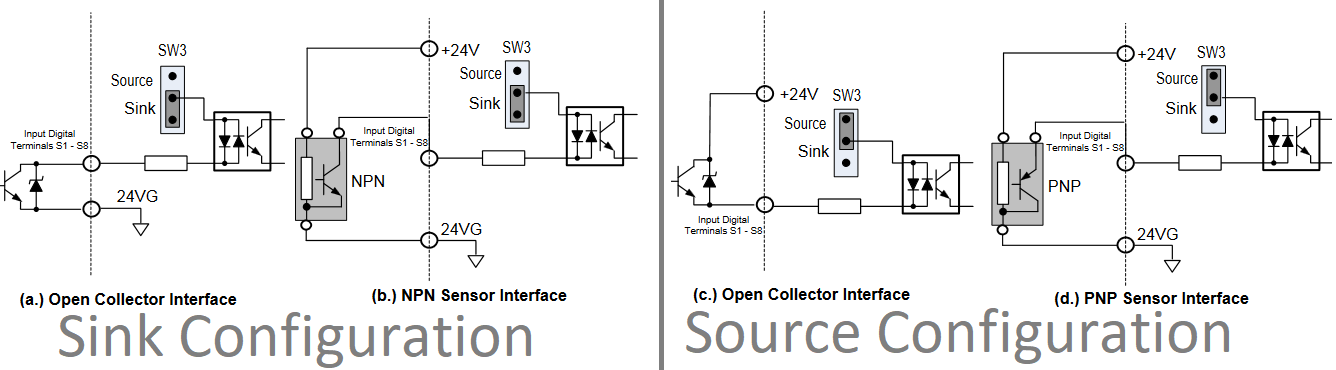
Sinks and sources are often used in digital circuits, where they are used to provide a path for current to flow between a power supply and a digital device, such as a microcontroller or a computer. They are also used in analog circuits, where they are used to provide a path for current to flow between a power supply and an analog device, such as an amplifier or a sensor.
What is Sink Source circuit?
In electronics, a sink-source circuit is a circuit that uses a sink and a source to provide a path for current to flow between a power supply and a load. The sink is a device or circuit that provides a path for current to flow from the source to ground, and the source is a device or circuit that provides a path for current to flow out of the power supply.
A common example of a sink-source circuit is a transistor circuit, in which a transistor acts as both a sink and a source. In a transistor circuit, the transistor can be used to control the flow of current between the power supply and the load by switching the transistor on and off.
Another example of a sink-source circuit is a power supply circuit, in which a voltage regulator acts as both a sink and a source. In a power supply circuit, the voltage regulator controls the flow of current between the power supply and the load by regulating the voltage supplied to the load.
Sink-source circuits are commonly used in a variety of applications, including digital circuits, analog circuits, and power supply circuits. They are used to control the flow of current between a power supply and a load, and to regulate the voltage supplied to the load.
Your shopping cart is empty!