
What causes data loss in memories?
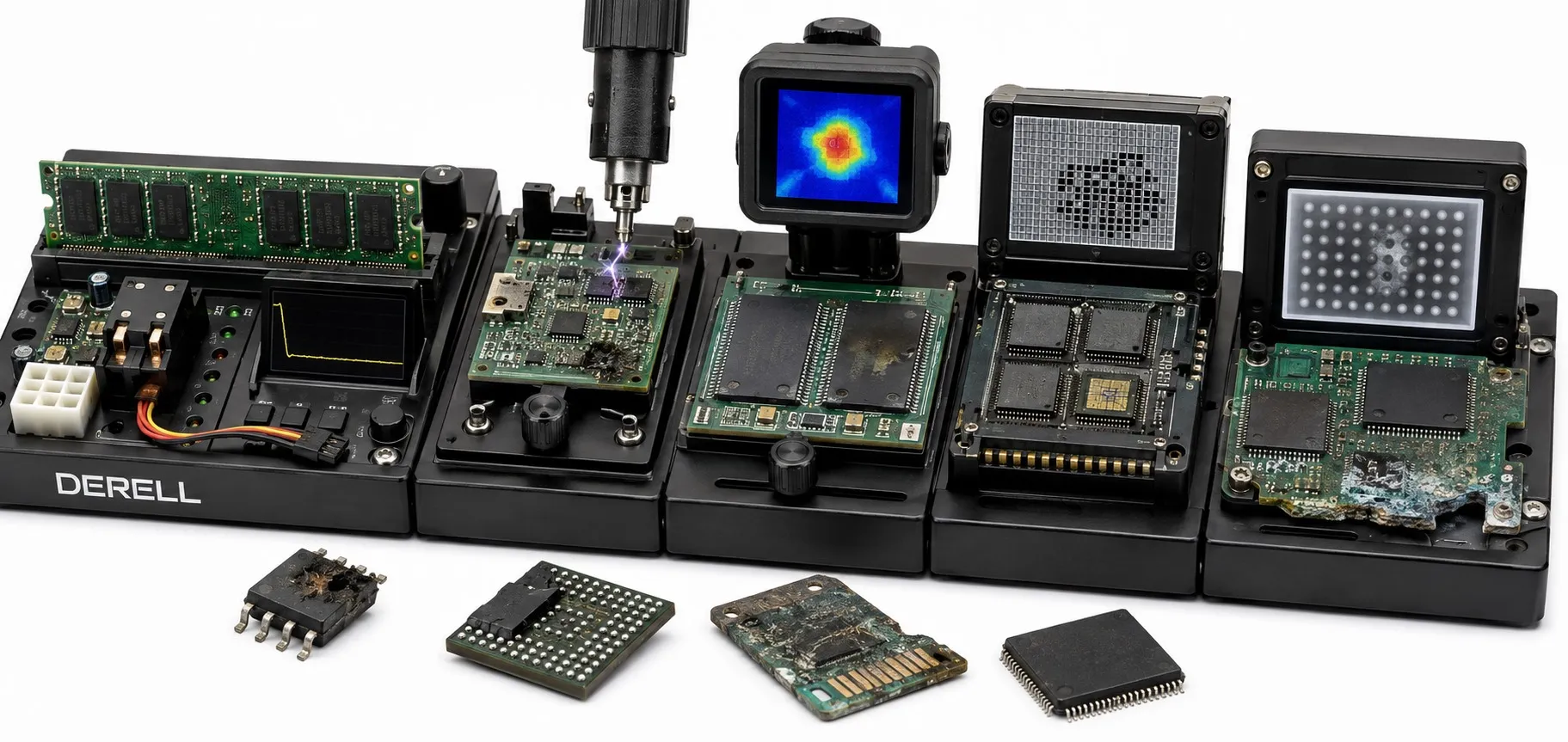
Find out whether data was lost, overwritten or never saved
Memory data can be lost through power interruptions, incomplete writes, cell wear, unsuitable temperatures, software faults or hardware failure. Sometimes the bits remain stored but cannot be accessed; sometimes a new value never reached persistent storage. Start by identifying the memory's role in the system and the event that preceded the missing data.
1. Volatile memory needs a continuous supply
Ordinary RAM holds working data while powered. SRAM and DRAM do not preserve their contents without power, and DRAM also needs regular refresh. That behaviour is not evidence of a defective chip. Measurements, calculation results and communication buffers can disappear on restart if they were never transferred to persistent storage.
In a battery-backed SRAM implementation of NVRAM, a depleted battery or failed backup supply can cause loss. Systems that automatically copy working memory to non-volatile storage need enough energy to complete that transfer. Understanding how persistence is provided tells you which part of the system to check.
2. A write needs valid power until it finishes
Flash and EEPROM retain data without power, but programming requires the specified supply conditions. An interruption can leave a new record incomplete. Low voltage can also disrupt the processor. Appropriate brownout reset and write inhibition matter; a reset circuit does not, by itself, guarantee completion of an update already in progress.
If the design saves data after detecting power failure, it must budget the remaining time and energy. Alongside power consumption, account for record size and worst-case write duration. Losing an unsaved change is different from corrupting the previous valid record.
3. Repeated programming and storage conditions matter
EEPROM and flash have specified write or program/erase endurance. A counter repeatedly saved to one location, or frequently updated record metadata, can wear sooner than the rest of the memory. Distributing writes and avoiding unnecessary updates reduces that workload. There is no universal cycle rating for every memory device.
Data retention is a separate specification. Temperature and previous cycling can affect retention, particularly in charge-storage technologies. Read the manufacturer's guarantee together with its stated conditions. A favourable capacity and speed specification does not establish that data will remain reliable for years.
What a power interruption means for a cycle counter
Suppose a controller has persistently saved 1,250 completed cycles. The next cycle brings the running count to 1,251. What survives depends on when power fails:
| Point of interruption | Possible result | What it means |
|---|---|---|
| New value exists only in RAM | Last valid record: 1,250 | The latest cycle was not committed. |
| Existing record is being overwritten | Incomplete or inconsistent record | The count and related fields may not form a valid record. |
| New record is completed and verified | Last valid record: 1,251 | The update has become persistent. |
A more resilient design preserves the previous valid record while writing a new one elsewhere. It checks information such as sequence number, format version and CRC, then accepts the completed record. In flash, placing both copies in the same erase block can undermine that protection. This is an illustrative design approach: write ordering and completion markers must suit the device, and interruption tests should cover the update's different stages.
4. NAND requires error and block management
NAND flash designs must account for bit errors, bad blocks and read disturb, which can arise from repeatedly reading the same region. ECC requirements and block management are device-specific. Controllers handle much of this work in SSDs, SD cards and eMMC; a raw NAND design assigns those responsibilities differently. A controller failure can also make stored data inaccessible even when the cells still contain it.
5. Software and interface faults can imitate memory failure
Wrong addresses, buffer overruns, incorrect record lengths and concurrent writes can alter data in healthy memory. Factory resets, formatting and firmware updates may erase records or introduce an incompatible storage format. Fixed contents in the ROM family behave differently from rewritable settings; an immutable OTP area does not protect the device's other stored records.
Noise, poor connections and interface timing errors can instead produce incorrect read results without necessarily changing the stored cells. Different results from repeated reads of one address are a reason to investigate the supply and communication path as well. Also check whether the operation actually finished and whether the memory reported an error.
6. Non-volatile does not mean immune to faults
FRAM and MRAM can address demanding write workloads, but neither automatically prevents a wrong-address write or an interrupted update spanning several fields. Electrical overstress, physical damage and connection failures can affect different technologies. Some memories can also suffer a particle-induced bit change without permanent damage to the chip.
Use the symptom to guide the investigation
Loss tied to power interruptions calls for checking save timing, backup energy and startup behaviour. Repeated faults in one region warrant examining write workload, addressing and cell errors. Changing read results also point toward supply or interface checks. These are investigation paths rather than definitive diagnoses. Preserve a readable copy of existing records; if recovery is the goal, assess the consequences before resetting, formatting or rewriting the device.
Technical references: Microchip — EEPROM power interruptions · Microchip — EEPROM endurance · Micron — NAND, ECC and read disturb · TI — Soft errors · TI — Storage software for interrupted power · Microchip — CRC integrity checks