
What is a solar panel and how does it work?
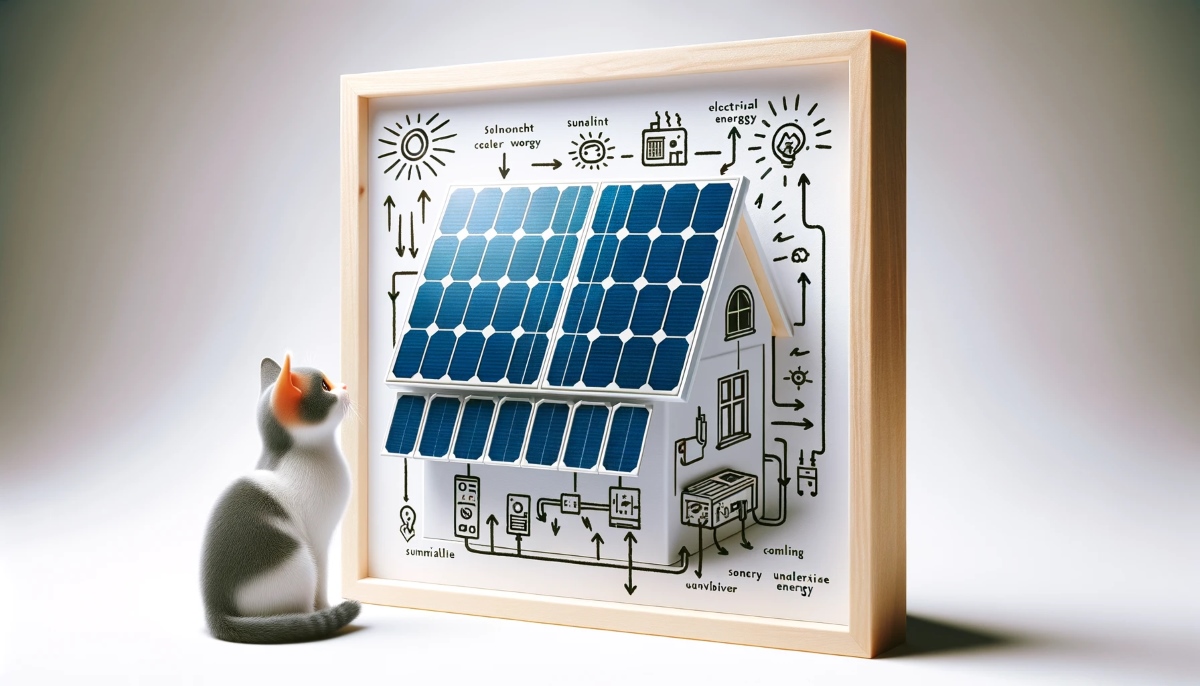
Hello, friends of solar energy,
A solar panel, also known as a photovoltaic (PV) module, is a device designed to absorb the sun's rays as a source of energy for generating electricity or heating. A solar panel works by allowing particles of light, or photons, to knock electrons free from atoms, generating a flow of electricity.
The term "photovoltaic" (PV) generally refers to the process of converting solar energy into electrical energy. The term is derived from the Greek word "phōtos" meaning "light" and Italian physicist Alessandro Volta, after whom the unit "volt" is named. Thus, the word "photovoltaic" literally means "voltage of light."
The photovoltaic process occurs when a material absorbs the energy of light and converts it into an electric current. This typically happens in semiconducting materials - often silicon-based solar cells. These cells absorb the energy of light by knocking electrons from the bonds of atoms and pushing the electrons in one direction with an electric field. This results in the formation of an electric current. This is called the "photovoltaic effect."
Therefore, a "photovoltaic system" typically includes solar panels, an inverter (to convert DC to AC), mounting hardware, and possibly an energy storage device (like a battery). These systems can be used to provide the electricity used in homes and businesses or used on a larger scale to provide power to the energy grid.
Here's a more detailed breakdown of the process:
Absorption of sunlight: Solar panels are made of several smaller units called photovoltaic cells. Each photovoltaic cell is essentially a sandwich made up of two slices of semi-conducting material, usually silicon. When sunlight hits these cells, it gets absorbed by the semiconducting material.
Generation of electron-hole pairs: Silicon is a semiconductor, and for it to work effectively in solar cells, it needs to have impurities—other atoms mixed in with it. This process is called doping. The bottom layer of the silicon in a solar cell is doped to have slightly more atoms that contain an extra electron (N-type silicon), while the top layer is doped to have slightly more atoms that contain one fewer electron (P-type silicon). The boundary layer between these differently doped silicon layers is called the P-N junction. As sunlight hits the cell, its energy is absorbed by the silicon, freeing electrons and creating "holes" where electrons used to be.
Creation of electric field: The P-N junction in between the layers of silicon creates an electric field. When sunlight knocks an electron free, this field will push that electron out of the silicon junction.
Generation of current: The mobile electrons are collected by thin metal fingers at the top of the cell. From there, they travel down a wire, producing electricity. As the electrons leave the solar cell, they need to be pushed back to replace the ones that were freed. This is achieved by connecting the solar cell to a load, which could be a battery, a light bulb, or the power grid. This complete circuit allows electrons to flow back into the cell to fill the hole that was left when sunlight first knocked an electron free.
Power grid or battery storage: Once the electricity is generated, it can either be used immediately, stored in batteries for later use, or fed into the power grid.
So, solar panels work by exploiting the fundamental properties of semiconducting materials to convert light energy into electric energy. They're an important tool in efforts to produce clean, renewable energy.
Expanding the potential of solar energy and solar systems with interesting and speculative questions can be very exciting. Solar energy has already become a part of our lives, even if it undergoes transformation in the future. Here are some example questions from our visitors:
- What is a solar panel and how does it work?
- How long does it take to install solar panels?
- What type of roof is required for solar panel installation?
- How often should solar panels be maintained?
- How long do solar panels last?
- What are the different types of solar panels (monocrystalline, polycrystalline, thin film, etc.), and what are the differences between them?
- How is the efficiency of solar panels measured?
- How do weather conditions affect the efficiency of solar panels?
- Can solar panels produce energy without sunlight (at night or during cloudy weather)?
- Do I need an inverter in my solar panel system?
- What is the difference between string inverters and micro-inverters?
- What is the environmental impact of solar panel systems?
- What is the cost of installing solar panels, and how long will it take to recoup this cost?
- What incentives can I get from the government or other sources for installing solar panels?
- What can I do to increase energy efficiency in solar panel systems?
- Solar systems with interesting and speculative questions !!
- How about I put a solar panel on the roof of my car?- Movies and TV shows with Solar energy?
+ Back to solar system main page -
These questions often include those that many people may have in mind about Solar energy. Each user or student will have their specific questions depending on a particular situation or application. The answers are not binding or entirely definitive. "You are welcome to share the article above, as long as you provide the appropriate attribution.02/2020"
Your shopping cart is empty!