
How is the efficiency of solar panels measured?
Hello, friends of solar energy,
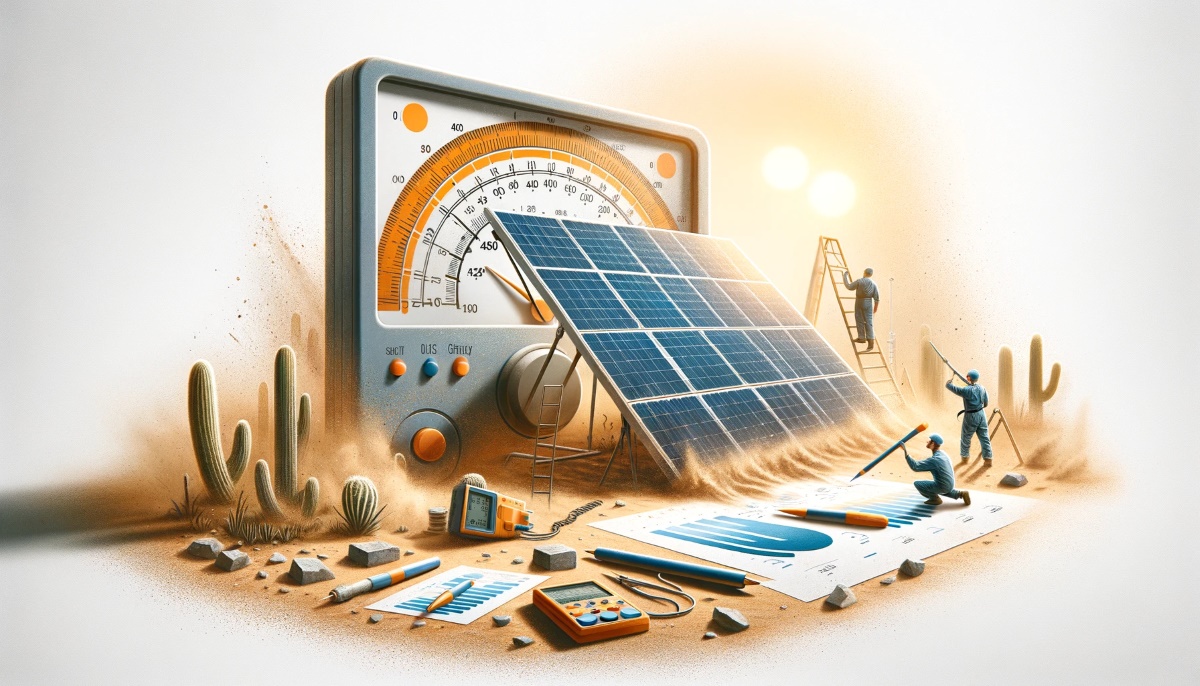
The efficiency of a solar panel refers to its ability to convert sunlight into usable electricity. It is usually expressed as a percentage which represents the power output in watts divided by the total amount of sunlight incident on the surface of the panel, under standard test conditions (STC).
Standard Test Conditions are defined as:
- Light intensity of 1000 watts per square meter (roughly the amount of sunlight at noon on a clear day)
- Solar spectrum of AM 1.5 (air mass)
- Panel temperature of 25 degrees Celsius (77 degrees Fahrenheit)
For example, if a solar panel has an efficiency of 20%, this means that 20% of the sunlight that hits the panel is converted into usable electricity.
In practical terms, this percentage directly influences how much electricity can be produced. For instance, two solar panels may be the same size (say, one square meter), but if one panel has an efficiency of 15% and the other has an efficiency of 20%, the second panel will generate more electricity under the same conditions.
However, it's important to note that while higher efficiency often means more power generation, it doesn't always mean better. Depending on installation conditions, even lower-efficiency panels can meet an energy need more economically, particularly where ample space is available. Furthermore, higher-efficiency panels often come at a higher cost, so the balance between efficiency and cost is also an important consideration.
Expanding the potential of solar energy and solar systems with interesting and speculative questions can be very exciting. Solar energy has already become a part of our lives, even if it undergoes transformation in the future. Here are some example questions from our visitors:
- What is a solar panel and how does it work?
- How long does it take to install solar panels?
- What type of roof is required for solar panel installation?
- How often should solar panels be maintained?
- How long do solar panels last?
- What are the different types of solar panels (monocrystalline, polycrystalline, thin film, etc.), and what are the differences between them?
- How is the efficiency of solar panels measured?
- How do weather conditions affect the efficiency of solar panels?
- Can solar panels produce energy without sunlight (at night or during cloudy weather)?
- Do I need an inverter in my solar panel system?
- What is the difference between string inverters and micro-inverters?
- What is the environmental impact of solar panel systems?
- What is the cost of installing solar panels, and how long will it take to recoup this cost?
- What incentives can I get from the government or other sources for installing solar panels?
- What can I do to increase energy efficiency in solar panel systems?
- Solar systems with interesting and speculative questions !!
- How about I put a solar panel on the roof of my car?- Movies and TV shows with Solar energy?
+ Back to solar system main page -
These questions often include those that many people may have in mind about Solar energy. Each user or student will have their specific questions depending on a particular situation or application. The answers are not binding or entirely definitive. "You are welcome to share the article above, as long as you provide the appropriate attribution.02/2020"
Your shopping cart is empty!